

![[HERO] Your AI Just Got Legs. Now It Doesn't Need You in the Room.](https://substackcdn.com/image/fetch/$s_!C6FR!,f_auto,q_auto:good,fl_progressive:steep/https%3A%2F%2Fsubstack-post-media.s3.amazonaws.com%2Fpublic%2Fimages%2F31c68e7a-bafe-4a03-b167-9b1cb0c7c68a_1536x1024.webp "[HERO] Your AI Just Got Legs. Now It Doesn't Need You in the Room.")
Update — April 2026: When I wrote this, Dispatch was the big leap — AI you could trigger remotely. Three weeks later, Anthropic pushed it further.
Claude Managed Agents launched in public beta on April 8. The short version: instead of you triggering tasks manually via Dispatch, you define an agent that runs them autonomously on a schedule or in response to events. No ping required. It’s the “Night Shift” section of this post, but without the human in the loop.
The catch — and it’s a real one — is that Managed Agents is API-only at launch. No Cowork UI, no consumer access. If you’re not a developer, you’re watching from the sidelines for now. But the direction is clear: the manual trigger step Dispatch introduced is already becoming optional.
There’s a related story here worth reading. Anthropic also shipped Claude Buddy around the same time — a virtual pet embedded in the terminal that tracks how hard your agent is working. It sounds cute. It’s actually a pretty deliberate signal about where Anthropic thinks this is all going.
If you’ve ever used Claude Cowork, you know the feeling.
You set up a workflow. You spent an hour teaching Claude how to navigate your specific file naming conventions. You finally got it to “do the thing.” And then… you had to sit there and babysit it anyway. Because Cowork only worked when you were at your desk, laptop open, eyes glued to the progress bar.
Which meant you weren’t really delegating. You were supervising.
That changes today. Claude Dispatch dropped this week as a research preview, and it is: hands down: the most important update since the original Cowork launch. It’s the moment AI stops being a tool you use and starts being a teammate that works.
The Chatbot Just Grew Legs
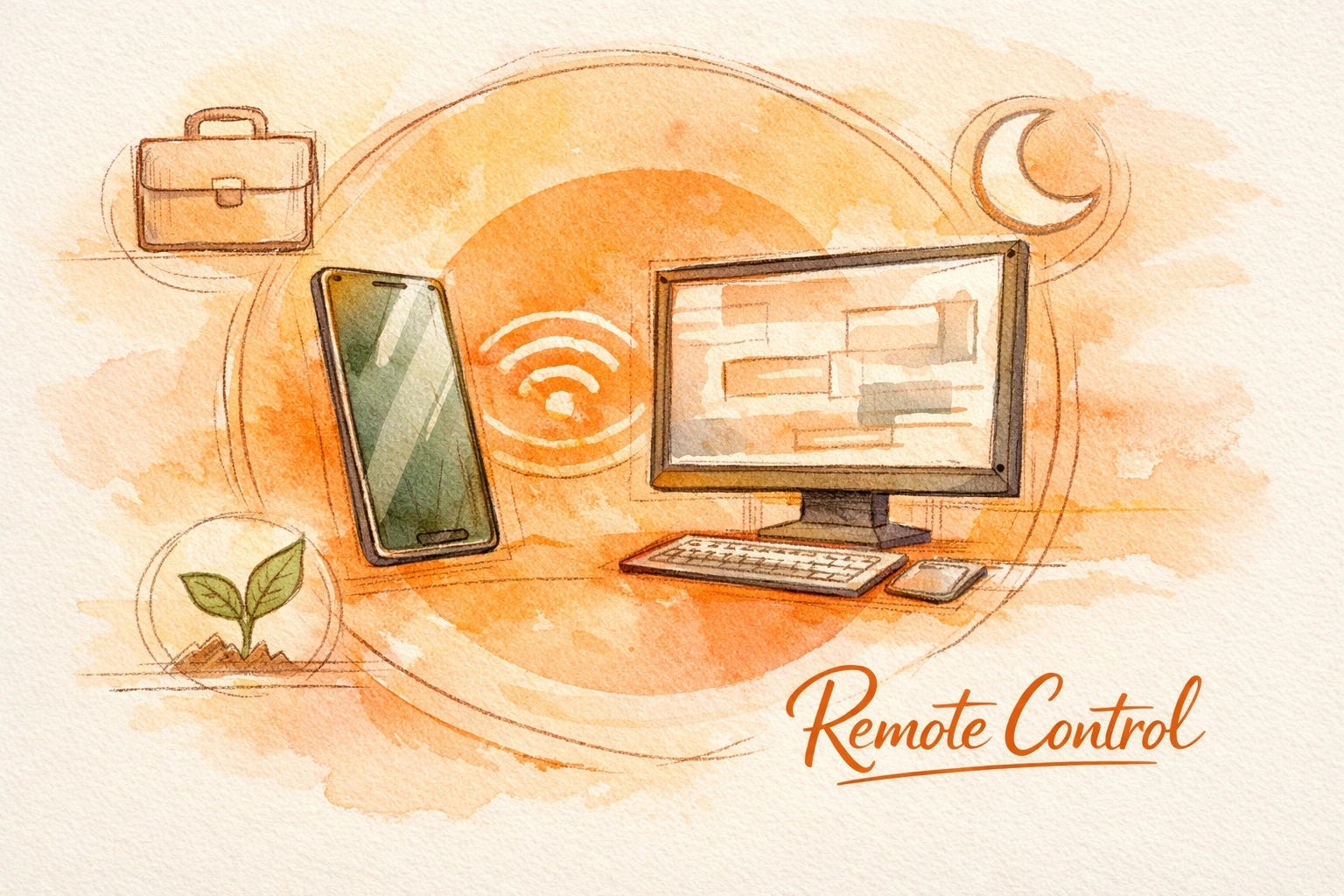
Claude Dispatch does something deceptively simple: it lets you text your desktop AI from your phone.
That’s it. That’s the whole pitch. But if you’re a founder or an operator, you know that “simple” is often the code word for “revolutionary.”
Here is the shift: We are moving from Synchronous AI (you watch it work) to Asynchronous AI (it works while you live your life).
Imagine you’re out at dinner. You suddenly remember you need a performance report pulled for a 9:00 AM meeting. In the “Before Times” (last Tuesday), you’d either cut dinner short, ruin your sleep, or scramble in the morning. With Dispatch, you pull out your phone, message your Claude Cowork session, and put it back in your pocket.
By the time you get home, the report is sitting on your desktop. Finished. Polished. Waiting.
What It Actually Is (The No-BS Tech Specs)
Let’s be clear: Dispatch is not a mobile AI. Your phone isn’t doing the heavy lifting. Your Mac or PC is the engine: it’s the one reading the files, running the browsers, and executing the local automations.
Think of it as a walkie-talkie to a computer that’s already running.
If your laptop goes to sleep or you lose your internet connection at home, Dispatch goes dark. It’s a remote control, not a cloud instance. However, that distinction matters less than you think. Why? Because every workflow you’ve already built in Cowork: every repetitive, soul-crushing task you’ve already taught Claude: is now triggerable from anywhere.
The setup is absurdly fast (we’re talking 90 seconds):
Update Claude Desktop.
Navigate to Cowork.
Click “Dispatch” to generate a QR code.
Scan it with your phone.
Done. No API keys. No OAuth nightmares. No 2 AM debugging sessions.
Why This Matters: The “Atlas” Parallel
While Anthropic is giving Claude “digital legs,” the physical world is catching up. At CES 2026, we saw the Boston Dynamics Atlas demonstrating autonomous battery swapping and independent navigation. It doesn’t need a human in the room to stay powered or stay on task.
We are seeing a convergence of Autonomy.
Whether it’s an Atlas robot learning a task in under a day or Claude Dispatch handling your file organization while you’re at the gym, the message is the same: The requirement for “Human-in-the-loop” is rapidly becoming “Human-on-the-edge.”
Anthropic built Cowork in ten days and shipped Dispatch six weeks later. That pace is screaming at us. Today, your computer has to be on. Tomorrow? We’ll be looking at always-on cloud agents that run 24/7 without a single piece of hardware in your office.
The chatbot has hands. Now it doesn’t need you in the room.
Max subscribers can try Dispatch right now. Pro access rolls out in the next few days.
The Deep Dive: How to Actually Use Dispatch
(And What I’d Set Up First)
For founders and operators who want to stop reading about AI and start having it work while they sleep.
Step 1: The Mental Model Shift
Here is where 90% of people will fail with Dispatch: they will treat it like ChatGPT.
