

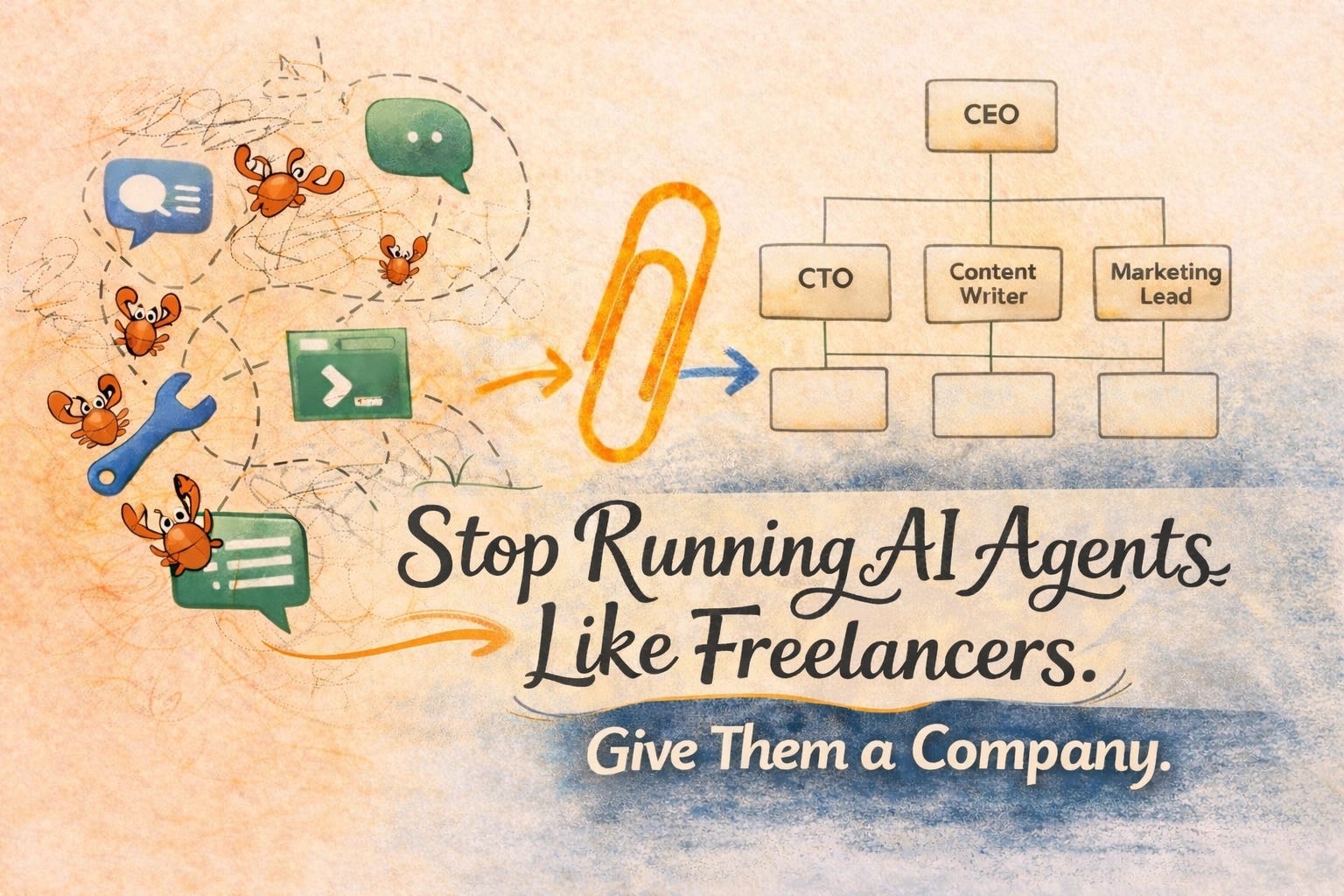
I recently published my breakdown of Perplexity Computer vs OpenClaw — the tenant model versus the operator model. The response was wild. Dozens of you reached out saying you’d gone the OpenClaw route, you were running agents on your own hardware, and you were… struggling.
Not because OpenClaw is bad. It’s not. OpenClaw is one of the most powerful open-source agent frameworks out there. But here’s the thing nobody tells you before you spin up your first self-hosted agent:
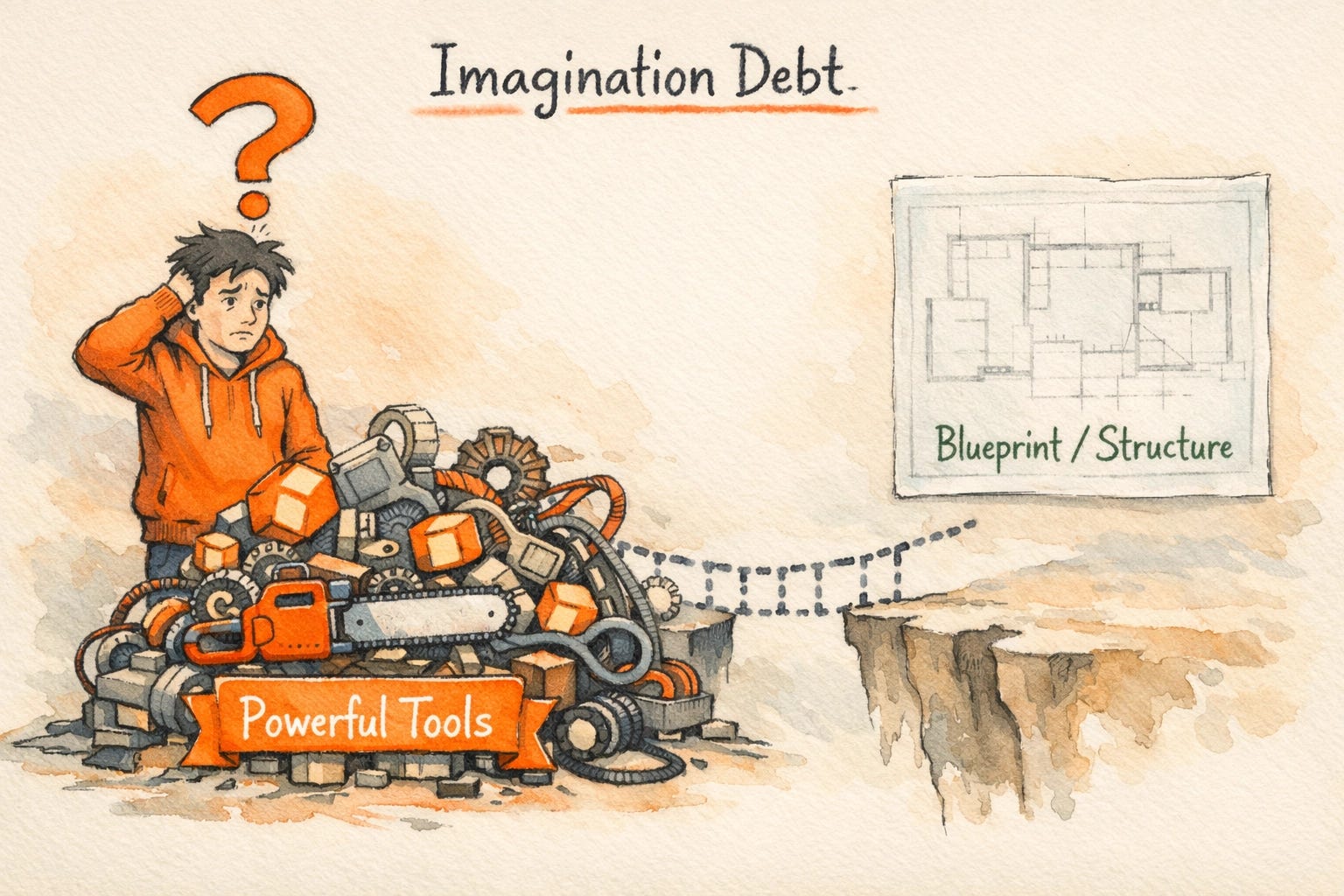
OpenClaw gives you a chainsaw. It does not give you a blueprint for the house.
You install it, connect your models, wire up your tools, and then — you stare at a blank canvas. Now what? How do you coordinate five agents? Who reports to whom? What happens when one of them burns $47 in tokens on a hallucinated loop at 3 AM? Who’s watching?
If you’ve been there, I want to introduce you to something that clicked for me harder than anything I’ve tested this year: Paperclip.
The Problem With OpenClaw (That Nobody Talks About)
Let me be clear: I love OpenClaw. I’ve written multiple guides on it. I run it. But after months of hands-on experience, I’ve come to a conclusion that might be uncomfortable for some of you:
OpenClaw requires your imagination to do the hard work.
That sounds like a feature, and in some ways it is. But for most solopreneurs and small operators, it’s actually the biggest bottleneck. Here’s why.
When you set up OpenClaw, you’re handed the raw ingredients — a framework for connecting models to tools. But there’s no structure. No mental model for “this agent is the content writer, this one handles SEO, this one manages the schedule.” You have to invent all of that from scratch. You have to think about:
Organization: How do agents relate to each other? Who delegates to whom?
Configuration: Wiring tools, managing credentials, defining workflows — all before you get a single useful output.
Guardrails: No built-in budgets. No cost tracking. No governance. If an agent goes rogue, you find out when your API bill arrives.
Observability: What did your agent actually do last night? Why did it make that decision? On vanilla OpenClaw — good luck figuring that out.
Each of these problems is manageable on its own. Together, they compound into what I call “imagination debt” — the gap between what OpenClaw can do and what you can actually figure out how to make it do.
Enter Paperclip: The Org Chart Your Agents Were Missing
Paperclip is an open-source orchestration layer for AI agents. But that description undersells it. Here’s what it actually is:
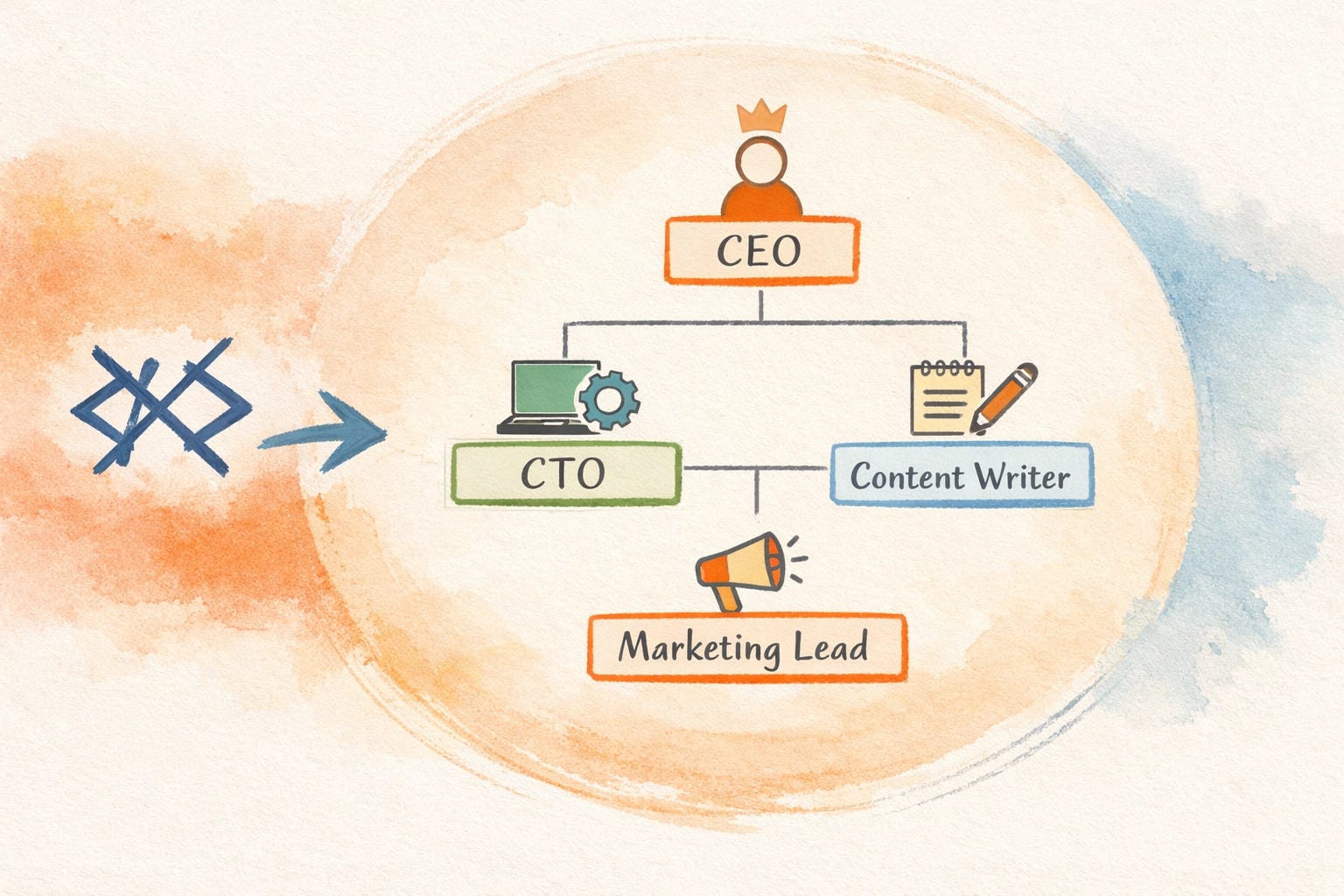
Paperclip models your AI agents as a company.
Not metaphorically. Literally. You define an org chart with a CEO, a CTO, a content writer, a marketing lead — whatever roles your business needs. Each role maps to an agent (OpenClaw, Claude Code, Cursor, Codex, a shell script — Paperclip doesn’t care). You set goals, assign budgets, and let the hierarchy manage delegation.
When I first saw the org chart interface, something clicked that had never clicked with OpenClaw alone. Suddenly I wasn’t thinking about “agents” — I was thinking about roles. And roles are something every solopreneur already understands. You’ve been doing all those jobs yourself. Now you’re hiring AI to do them. Paperclip makes that metaphor real.
What Paperclip gives you that OpenClaw doesn’t:
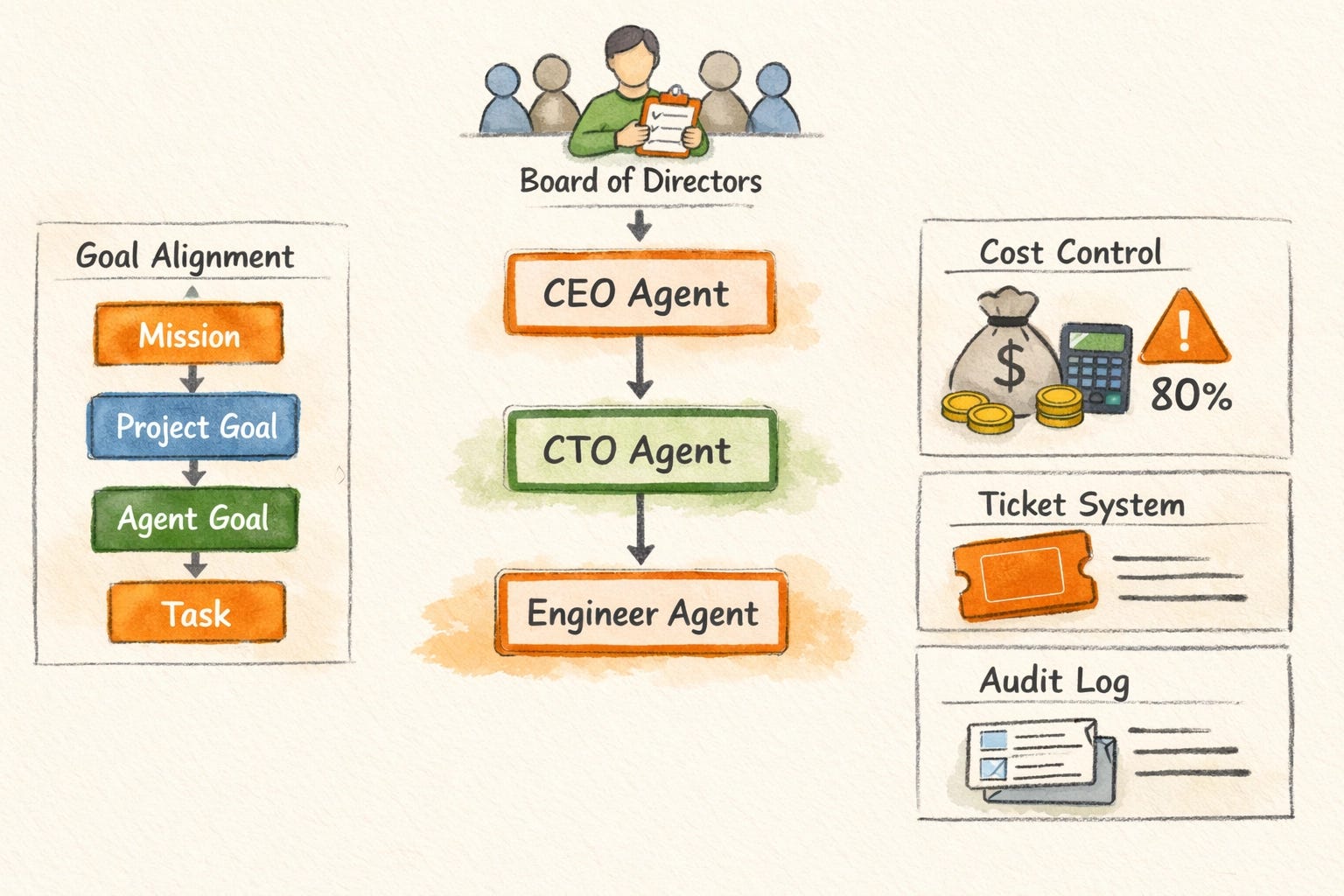
Org Charts & Hierarchy — Agents have a boss, a title, and a job description. Delegation flows up and down. The CEO agent can assign work to the CTO agent, who delegates to the engineer agent.
Goal Alignment — Every task traces back to the company mission. Your agents don’t just know what to do — they know why. Context flows from the company mission → project goal → agent goal → individual task.
Cost Control — Every agent gets a monthly budget. When they hit it, they auto-pause. You get warned at 80%. No more waking up to a surprise $200 API bill because an agent got stuck in a loop.
The Ticket System — Every instruction, every response, every tool call and decision is recorded with full tracing. Immutable audit log. Nothing happens in the dark. This was my second “aha moment” — I could finally see what my agents had done and why.
Heartbeats — Agents wake on a schedule, check their work, and act. No more manually kicking off recurring jobs. Your content writer checks in every 4 hours. Your SEO analyst runs every 8. It just… happens.
Governance — You’re the board of directors. Agents can’t hire new agents without your approval. The CEO can’t execute a strategy you haven’t reviewed. You can pause, override, reassign, or terminate any agent at any time.
Paperclip Doesn’t Replace OpenClaw. It Promotes It.
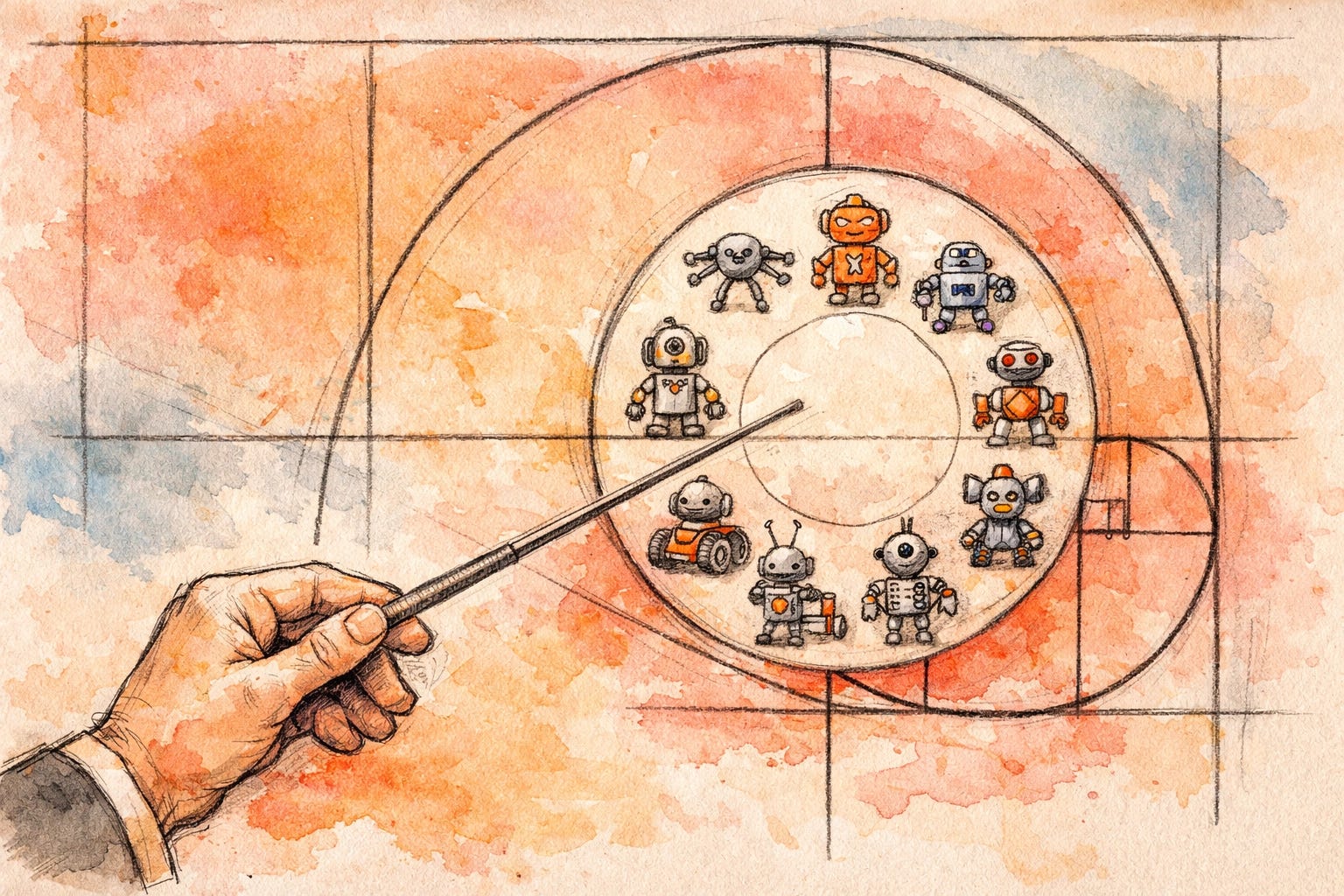
Here’s the key insight: Paperclip is not a competitor to OpenClaw. It’s the management layer that sits on top of it.
Paperclip’s “Bring Your Own Agent” model means your existing OpenClaw agents, your Claude Code sessions, your Cursor workflows — they all plug in. Paperclip just gives them an org chart, a budget, and accountability.
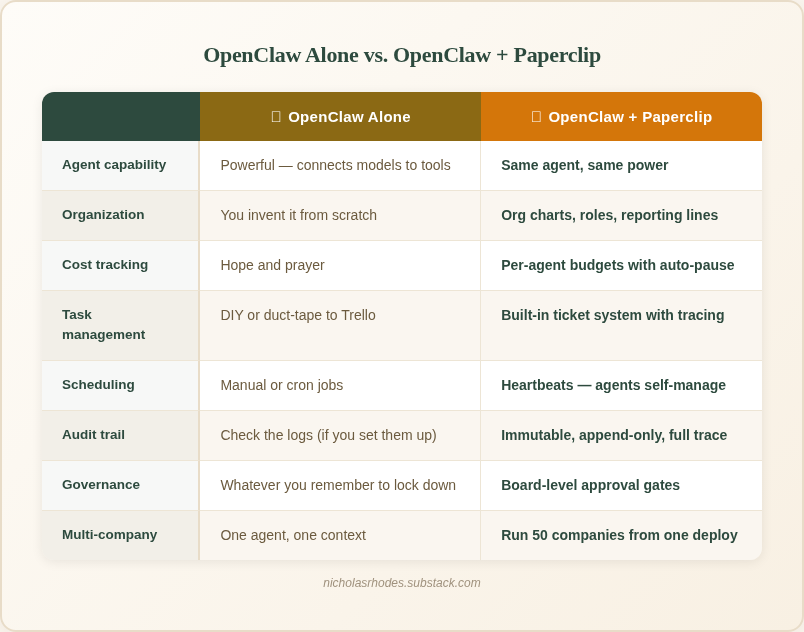
Think of it this way: Your agents stay just as powerful. Paperclip doesn't touch their capabilities. What changes is everything around them. On OpenClaw alone, you're inventing organization from scratch. With Paperclip, you get org charts, roles, and reporting lines out of the box. Cost tracking goes from 'hope and prayer' to per-agent budgets that auto-pause before you blow through your API credits.
The FAQ on Paperclip’s site actually addresses this directly: “How is Paperclip different from agents like OpenClaw or Claude Code? Paperclip uses those agents. It orchestrates them into a company.”
The Setup Is Shockingly Easy
One of my biggest frustrations with OpenClaw was the initial setup — the config files, the credential juggling, the Docker containers. Paperclip went in a different direction.
One command:
npx paperclipai onboard --yesThat’s it. It walks you through database setup, auth, and your first company. No Paperclip account required. MIT-licensed. Self-hosted. And here’s the part that sealed it for me: it works beautifully on a cheap VPS.
I set mine up on a Hostinger VPS and had it running in under 12 minutes. The embedded Postgres handles everything locally. When you’re ready to scale, point it at your own database. But for a solopreneur running 5-10 agents? The basic setup is more than enough.
It also natively supports Claude Code and OpenAI OAuth — which means your two most likely agent backends just work out of the box. No adapter hackery needed.
The Missing Piece: Give Your Agents a Memory
Here’s where the stack gets really interesting. You’ve got Paperclip handling the org chart and governance. You’ve got OpenClaw (or Claude, or Cursor) handling execution. But there’s still a gap: your agents forget everything between sessions.
Every time an agent wakes up on a heartbeat, it starts fresh. It doesn’t remember your preferences, your project context, or the decision you made yesterday. Sound familiar?
This is where Mirror Memory enters the picture.

Mirror Memory is a persistent memory layer built on the Model Context Protocol (MCP). You capture thoughts — by text, voice note, or chat — and every AI tool you use can reference them. Your OpenClaw agent, your Claude sessions, your Cursor workflows — they all share one memory that belongs to you.
“OpenClaw gives your AI hands. Mirror Memory gives it a brain.”
In the Paperclip context, this is massive. Imagine your CEO agent reviewing strategy and having access to every decision you’ve ever logged. Your content writer knowing your brand voice, your preferences, your past feedback — without you re-explaining it every session. Your engineering agent remembering the architectural decisions from three sprints ago.
Setup is a single config snippet in your agent:
skills:
  mirror-memory:
    type: "mcp"
    command: "npx @mirrormemory/mcp-server"
    env:
      MM_API_KEY: "your_api_key"
Free tier gets you 100 memories per month. Solo Pro is $9/month for unlimited. For a tool that makes every agent in your Paperclip org chart actually remember who you are and what you’re building, that’s a no-brainer line item.
The 2026 Solopreneur Stack
Here’s the stack I’m converging on, and I think it’s where the smartest operators are heading:
Paperclip — The orchestration layer. Org charts, budgets, governance, tickets. The “company” your agents work inside.
OpenClaw / Claude Code — The execution engines. The agents that actually do the work — write code, draft content, run analysis, manage campaigns.
Mirror Memory — The persistent brain. Every agent shares context. Nothing gets forgotten. Your preferences, decisions, and knowledge follow you across every tool.
A cheap VPS — Hostinger, DigitalOcean, whatever. Self-host the whole thing for less than the cost of one SaaS subscription.
Total cost? Your API keys + ~$5-15/month for hosting + $9/month for Mirror Memory. Compare that to $200/month for Perplexity Computer, and you’re getting more control, more customization, and more capability for a fraction of the price.
The trade-off is your time. But with Paperclip handling the orchestration overhead that used to eat your weekends, and Mirror Memory eliminating the “re-explain everything” tax — that trade-off is getting very, very small.

The Bottom Line
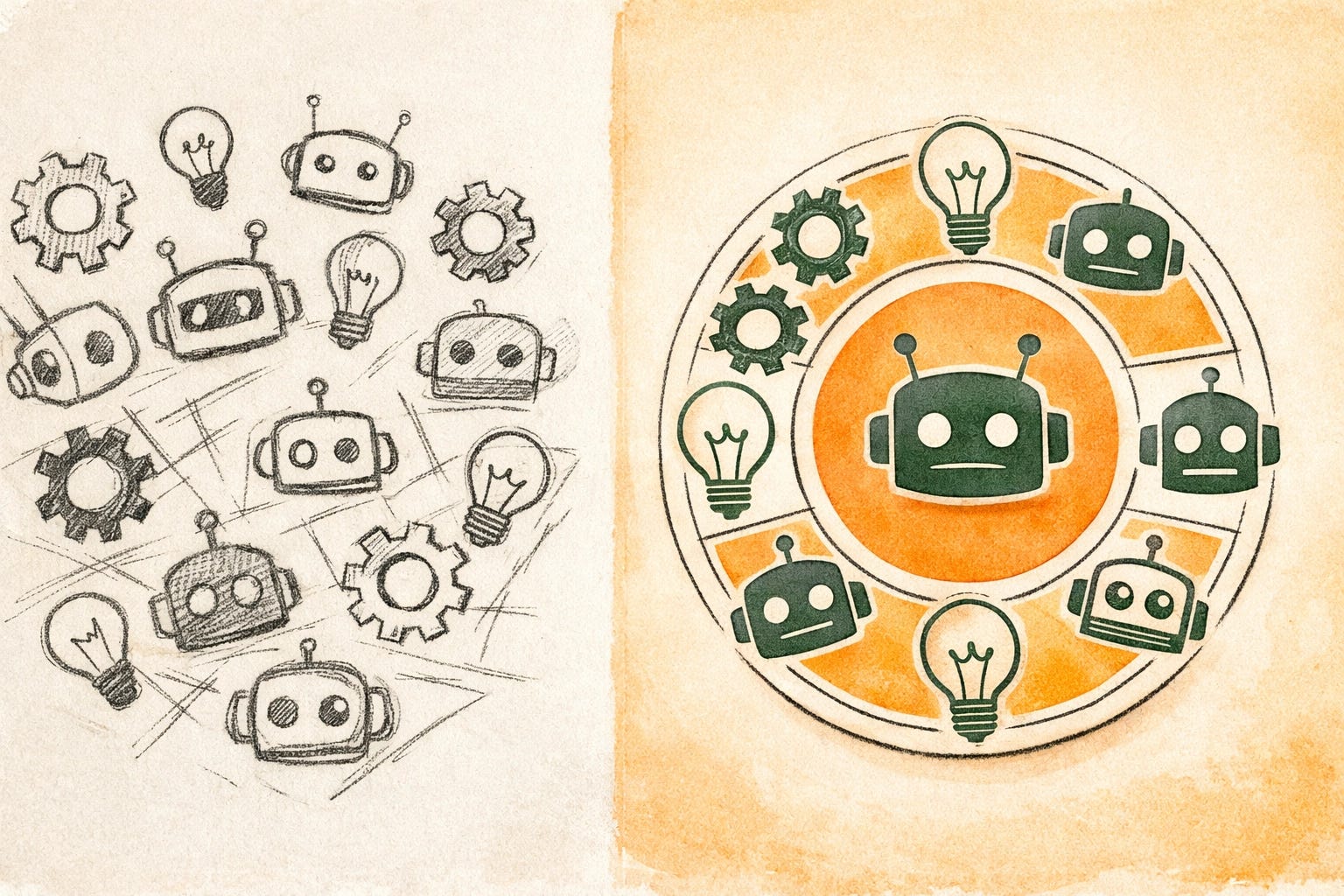
If you’re running OpenClaw today and feeling like you’re herding cats, the problem isn’t OpenClaw. The problem is that you’re trying to run a company without a company structure.
Paperclip gives your agents the thing every team needs: a boss, a budget, and a reason to show up.
OpenClaw is still the engine. It’s still powerful. But engines don’t drive themselves. Paperclip is the driver’s seat, the GPS, and the dashboard all in one. And Mirror Memory makes sure nobody in the car has amnesia.
Stop running your AI agents like freelancers you found on Fiverr. Give them a company. Give them structure. Give them memory.
Your 3 AM manual work sessions are about to become a memory too.
Already running OpenClaw? Tell me in the comments what’s been your biggest pain point. And if you’ve tried Paperclip, I want to hear what clicked (or didn’t). Let’s figure this out together.
For more on getting started with AI agents, check out my Day-0 Playbook for mastering OpenClaw and my guide to running OpenClaw on frontier models. If you’re brand new to AI altogether, start with Nano Banana 101.