

Scarlett Johansson’s recent statement regarding her interactions with Sam Altman and the strikingly similar voice used in OpenAI’s ChatGPT 4.0 system, named ‘Sky,’ has stirred up significant debate about the ethics of AI and digital likeness. As someone deeply embedded in the AI and event technology space, this issue strikes a personal and professional chord with me.
Mixed Reactions: Navigating Complex Emotions
A. The Simplistic View:
At its core, I believe
no one deserves to have any part of their identity—visual, audio, thoughts, or otherwise—taken and used without their consent. The outrage is understandable and justified. As Johansson herself said, “When I heard the released demo, I was shocked, angered and in disbelief that Mr. Altman would pursue a voice that sounded so eerily similar to mine”.
B. The Public Figure Conundrum:
However, when considering the nature of being a public figure, I find the issue becomes murkier. Public figures inherently make their likeness and voice publicly available. This availability raises the question: Should these publicly accessible elements be restricted from reuse in creating something new? Analogous to an artist painting a picture of a public scene, why should an audio likeness be treated differently from a visual one?
C. My Personal Perspective:
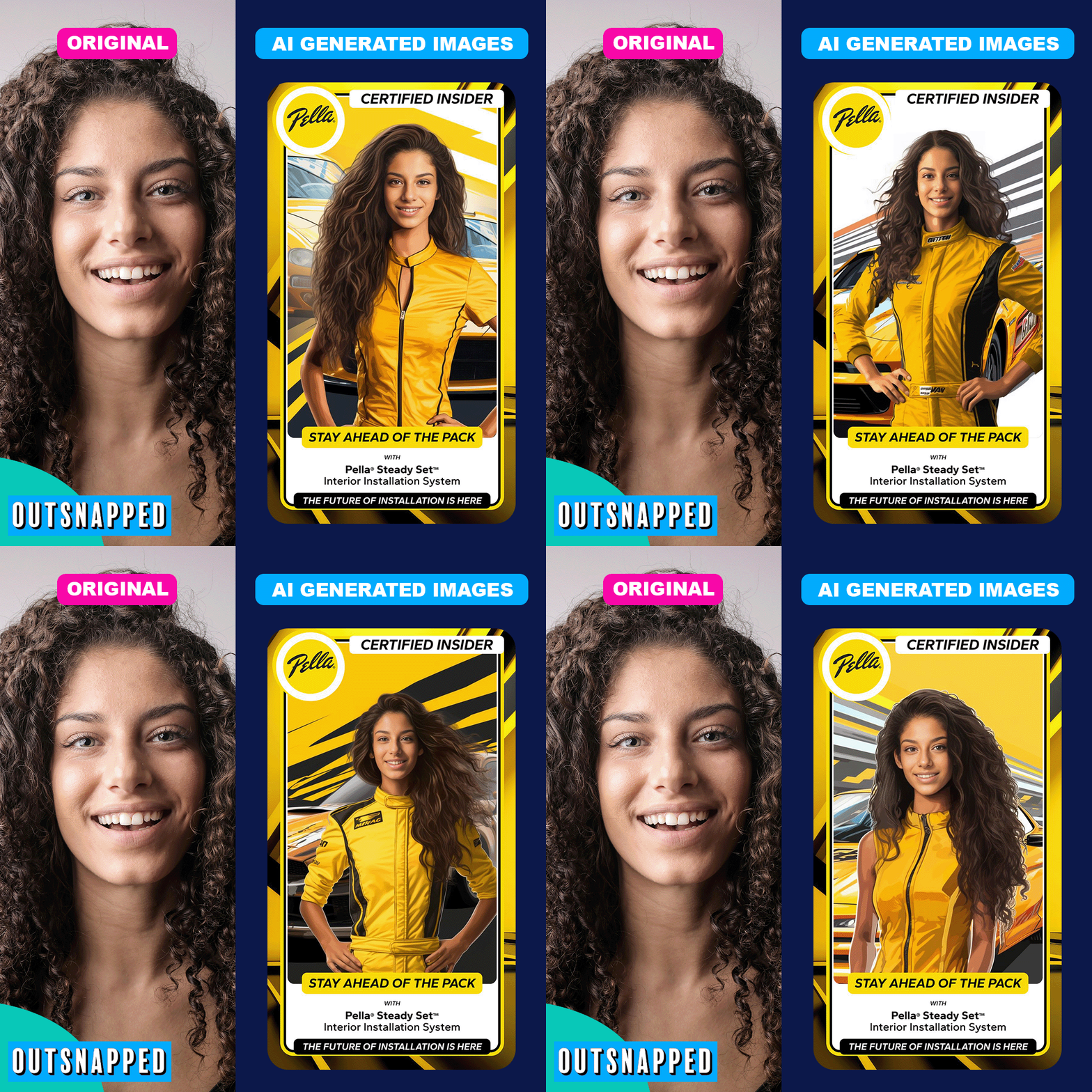
At OutSnapped, one of our core experiences, SnapShift.AI, involves transforming event guests’ photos into something new with AI. I feel a strong moral obligation to ensure our users know what they’re signing up for, and we operate within the boundaries of their consent. This practice highlights a crucial aspect of ethical AI usage—transparency and consent are non-negotiable.
Ethical Boundaries and the AI Industry
As someone experienced in the AI and event technology space, I believe the incident involving Johansson and Altman shines a spotlight on the current state of AI ethics and regulation. Over the past decade, we have seen the erosion of the concept of IP and ownership. Forget the fact that AI can already replicate others' IP—think more about the concept of a traditional photographer. Before digital cameras, no one would argue the ownership of a photograph—it was clearly the person who took the photo and owned the physical negative. Reproductions of the photo could be sold, but it was still clear there was an original (the negative).
With the introduction of iPhones and other smartphones, most people take dozens of photos per day, which are instantly replicated on CDNs around the world. Is there even an original? One could argue the original is taken on the device and no longer exists once it's copied to the cloud and deleted locally. In practice, people usually instantly share these photos across the internet on social platforms. Do they even feel ownership of the photo, or just the experience they documented?
Impact on the Relationship Between Tech Companies and Creative Professionals
I think this has already played out in many ways. Ultimately, tech companies seem to want to remove the idea of ownership. How many times have you received an alert on your iPhone requesting to give a random app full access to your photo library? In that moment, you are literally licensing your IP to that app to use as outlined in their TOS, which you likely never read. This trend will likely continue to strain the relationship between tech companies and creative professionals.
Influence on Future AI Projects and Legislation
Honestly, I think we haven't seen legislation, and we likely won't. These AI companies are spending billions of pre-revenue dollars on infrastructure, compute, and lobbying to ensure their futures (approx 154 billion U.S. dollars in 2023). The lack of legislation means that ethical practices are left to the discretion of individual companies. Johansson’s case is a reminder that we are still in a largely unregulated space: "Ms. Johansson is the latest high-profile person to accuse OpenAI of using creative work without permission" (NYT).

Steps Companies Can Take to Ensure Ethical AI Use
Companies can choose to respect IP or not. Some will play by the moral code we have lived by up to this point, but sadly, those who break the code will be more likely to succeed. The "do what you want now, and ask for forgiveness later" mentality is prevalent. In the case of Scarlett and Sam, Sam asked, and then seemingly went out of his way not to respect Scarlett's wishes—legally justified or not, this breaks the golden rule, the moral code we should all be living by. Are we entering into a new era of ask and do it anyways and justify why you're above everyone else's moral code later?
However, for those committed to ethical practices, transparency and consent are key. Companies should be clear about their use of AI and obtain explicit permission when using individuals' likenesses. Upholding these principles is crucial for fostering trust and ensuring that AI benefits society without infringing on personal identities.
In conclusion
while AI offers incredible possibilities, it also presents significant ethical challenges. The case of Scarlett Johansson and ChatGPT 4.0’s ‘Sky’ voice is a crucial example of why ethical considerations must keep pace with technological advancements. At OutSnapped, I remain committed to upholding these principles and encourage my peers to do the same.