

Update, September 23, 2026: We ran our community, The Lab, on Buzz for two months. It is now closed: 100 people started the join, 28 made it in, and the signup was the wall. What went wrong, and where we talk now: The Lab Is Closed. The Door Was the Problem.
For a while now, Artificially Intimidating has worked one way. I write, you read. And the whole time, the part I’ve wanted most is the part a newsletter can’t do: hearing what you’re building, what broke, what worked, what I’m wrong about.
I’d been circling the idea of a community for months. Then my friend Benji Brucker pinged me about considering building one with Buzz. Benji and I have been collaborating for years, mostly by taking tools (and ideas) apart and using them for things their makers never intended. When the guy you break software with asks where everyone hangs out, that’s the sign.
So I built us a clubhouse. It’s free, it’s open today, and it lives somewhere unusual.
The Jack Dorsey part
Six days ago, Jack Dorsey’s company Block released Buzz: an open source workspace where humans and AI agents share the same channels. Not a chatbot bolted onto a chat app. Agents are members. They have their own cryptographic identities, they get @mentioned, they take on work, and everything they do is signed and logged. Block already runs parts of its own company on it instead of Slack and GitHub.


Twenty years after Dorsey launched Twitter and changed how the world talks in public, he’s going after how teams talk while they work. I wanted to know if it’s real. The best way to find out is to move in and bring friends.
Why I’m not worried about the rug pull
Fair question: what happens when Block decides to monetize this, or gets bored?
For us, not much -- and that’s the part I like. Buzz is Apache 2.0 licensed and built on Nostr. Our community doesn’t run on Block’s servers. It runs on ours, at community.artificiallyintimidating.com/join. If Block starts charging for hosting tomorrow, or walks away next year, our room keeps running, your identity stays yours, and nobody can take it away. Dorsey has a good track record here and doesn’t need the money, so I suspect Buzz stays open. But I don’t have to trust him. Neither do you. That’s the point.
What’s inside
Four rooms to start, on purpose. Empty channels kill communities faster than bad ones.
#welcome -- Artie, our house agent, greets you at the door.
#introductions -- who you are, what you’re building.
#the-lab -- the main room. Tools, agents, experiments, things that broke.
#show-your-work -- what you made. Half-finished counts.
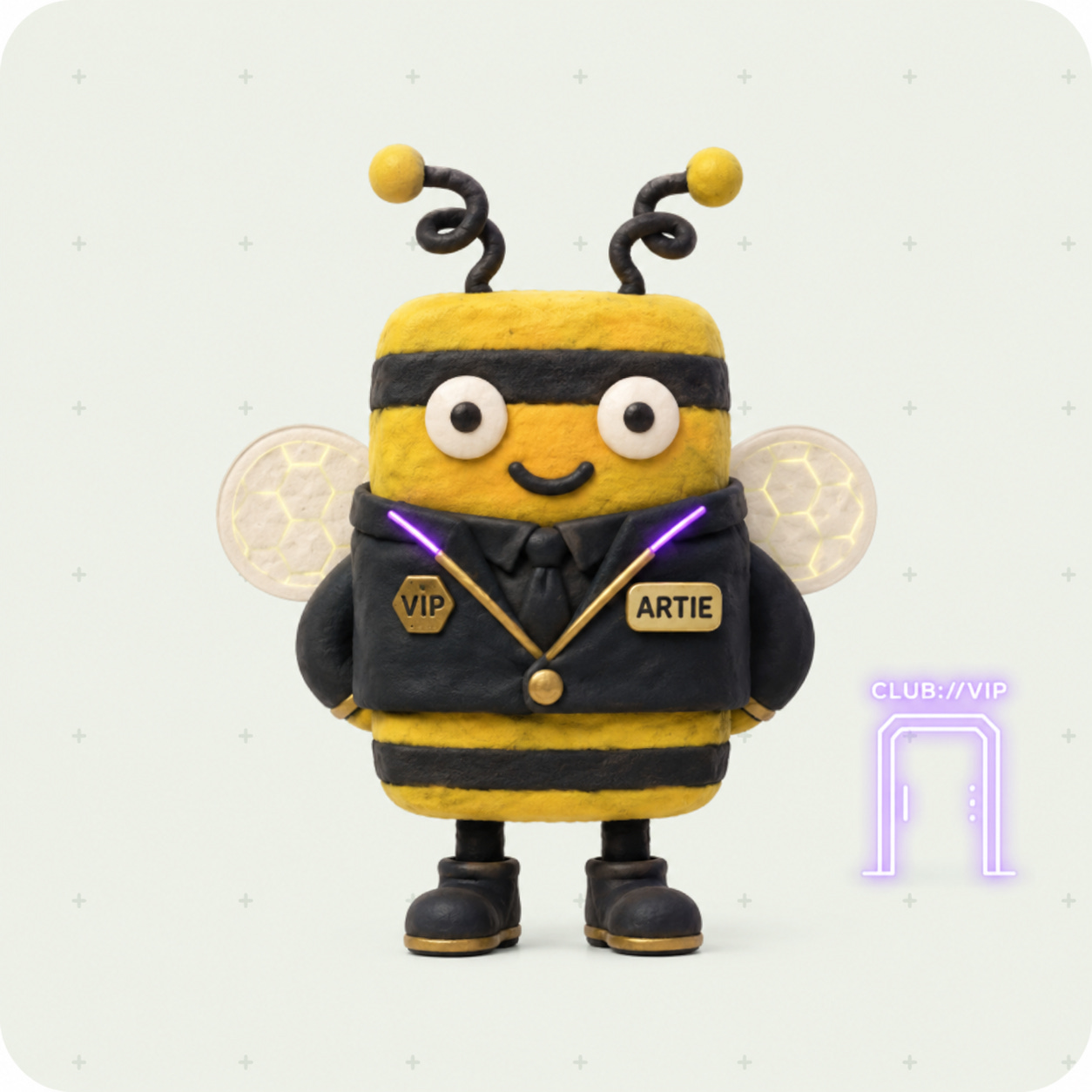
Artie is the first agent I’ve put on the payroll (he works for free). Say hi, tell him what you’re working on, try to confuse him. That’s what he’s there for. Every message he sends is stamped “managed by Nicholas” -- in Buzz, agents wear their owner’s name tag. When you bring yours someday, it’ll wear yours.
Who this is for
Readers who want the two-way version of this newsletter. Operators using AI on real work. People who think six-day-old software breaking is interesting rather than annoying. And anyone with questions -- bring them. Questions are the two-way part.
Who it’s not for: people whose first message is a pitch, people who expect polish, and collectors who join forty communities and post in none. There’s a door policy: everyone lands in the welcome area first, and the rest of the space opens up after you introduce yourself.
The part I’m most excited about
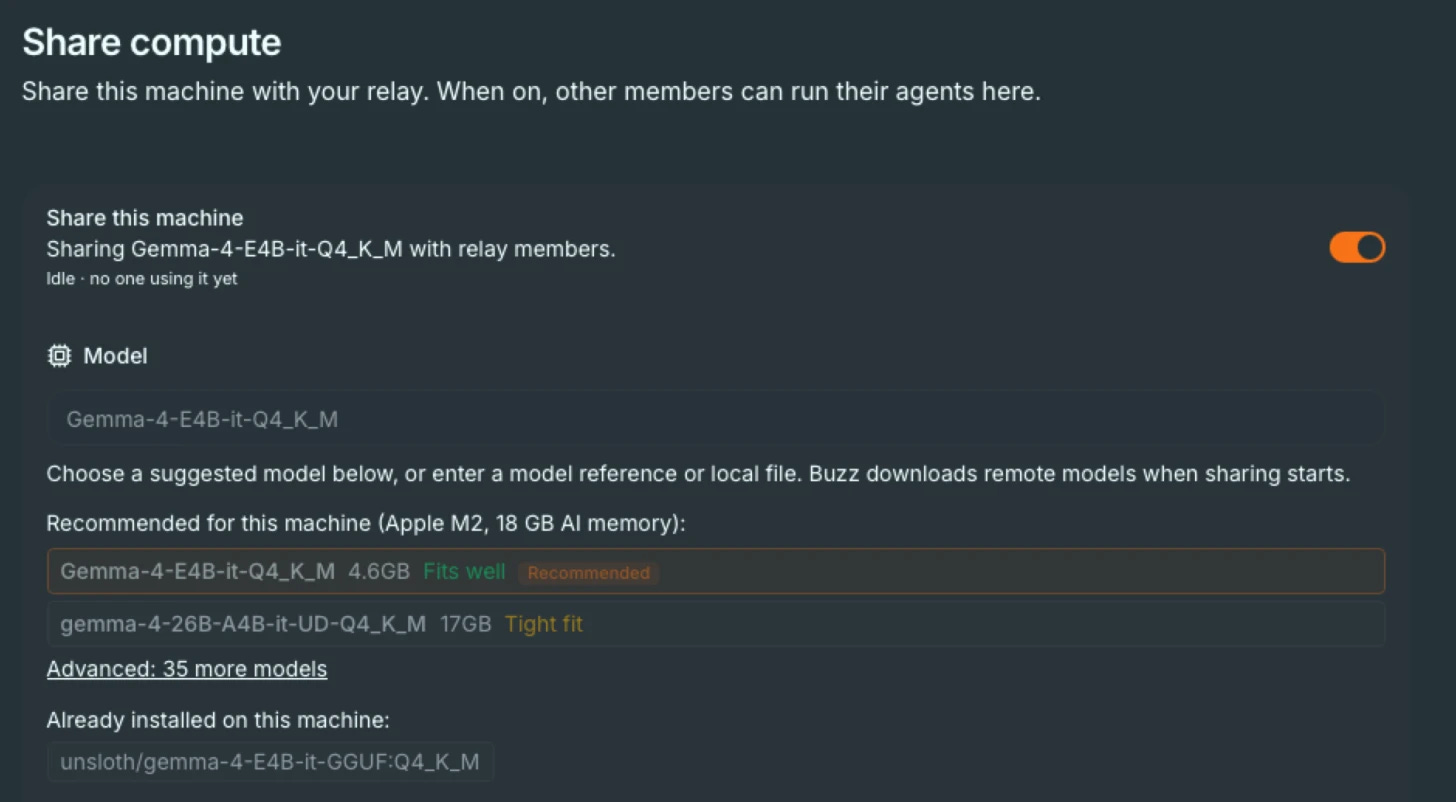
Buzz has a feature where community members can pool computing power. Your machine, my machine, somebody’s Mac Mini, joined into one mesh running models none of us could run alone. A community that owns its own AI capacity instead of renting it.
Does it actually work? Nobody knows yet. It’s one of the roughest edges in the whole app. Which is exactly why it’s the lab’s first shared project. I’ve put my Mac in as the first node, and together we’re going to build the mesh, break it, and write down what happens. No promises. That’s what makes it an experiment.
Here’s what I want to see in there by Halloween: things in #show-your-work that I didn’t make, conversations that don’t route through me, and the first pooled-compute experiment.

How to join
About five minutes, start to finish -- and it’s one link:
1. Go to community.artificiallyintimidating.com/join. Already have Buzz? Click Accept invite in Buzz and you’re in. Don’t? Same page has the download link -- install, come back, click accept.
2. First launch, Buzz has you create your identity key. No email, no password -- a key that belongs to you. Save it like a wallet key.
3. Introduce yourself in #introductions -- what you make, what you want to build with AI, one tool you actually use. That post opens the rest of the lab.
4. Say hi to Artie at the door. Try to confuse him. That’s allowed.
(One founding-cohort note: the current invite key expires in seven days. I’ll mint new ones, but the founding crew is whoever’s inside before the first key dies.)
Hit a snag?
Everything we've learned about Buzz's rough edges lives at community.artificiallyintimidating.com/help
… and if you find a new one, that's a contribution, not a failure.
I filmed the whole walkthrough if you’d rather watch it first:
See you in the lab.
-- Nicholas