

“I Keep Hearing About Hermes Agent. What Do I Actually Need to Know?”
If you hang out anywhere near AI‑Twitter, agents Discords, or founder group chats, you’ve probably noticed a new name that keeps popping up:
Your feed might look something like:
“Hermes killed my $497/mo automation stack.”
“Persistent AI that runs 24/7 on a $5 VPS.”
“Finally, an agent that learns instead of just hallucinating with tools.”
If you’re busy actually building things, you don’t have time to watch six YouTube explainers and trawl Reddit just to decode yet another “agent OS.” So here’s the short version:
This is what Hermes Agent is, why people care, and how it compares to stuff like OpenClaw—in founder‑friendly terms.
1. What is Hermes Agent, in one sentence?
Hermes Agent is an open‑source AI agent from Nous Research that doesn’t forget anything, runs 24/7 on your own infrastructure, and literally writes and rewrites its own skills as it learns your workflows.
That’s it. That’s the pitch.
Where a normal “AI assistant” is a fancy stateless chat window, Hermes is much closer to an operator that lives on a VPS, remembers what it did last week, and gets better at doing your jobs over time.
2. Why is everyone suddenly talking about it?
A few reasons:
The team: Hermes Agent is built by Nous Research, the people behind the Hermes‑3 model family based on Llama 3.1 and trained with their Atropos RL stack for better tool use and planning. This isn’t a random GitHub toy.
The timing: It dropped in early 2026, exactly when people were getting burned out on “agent wrappers” that still forget everything and can’t run reliably in real environments.
The demos: Early explainers show Hermes running continuously in Docker, maintaining a long‑lived shell, spawning sub‑agents, and improving its own skills as it goes.
In other words: it looks like the thing people wanted when they first heard “AI agent,” not just another chat UI with buttons.
3. What actually makes Hermes different?
Under the hood there are a lot of clever details, but from a “should I care?” perspective, three ideas matter.
3.1 It never starts from zero
Hermes is built around a multi‑layer memory system:
Tier 1 – Active memory: a compact slice of key facts & preferences (hundreds of tokens) injected into every prompt.
Tier 2 – Archive memory: a SQLite/FTS5 database storing every conversation and task, which Hermes can query and summarize when it needs older context.
User model (“Honcho”): a user‑modeling subsystem that tracks how you work, what you correct, what you care about, and uses that to steer behavior.
So instead of asking “Who are you again?” every session, Hermes is slowly building a model of you.
3.2 It writes its own skills
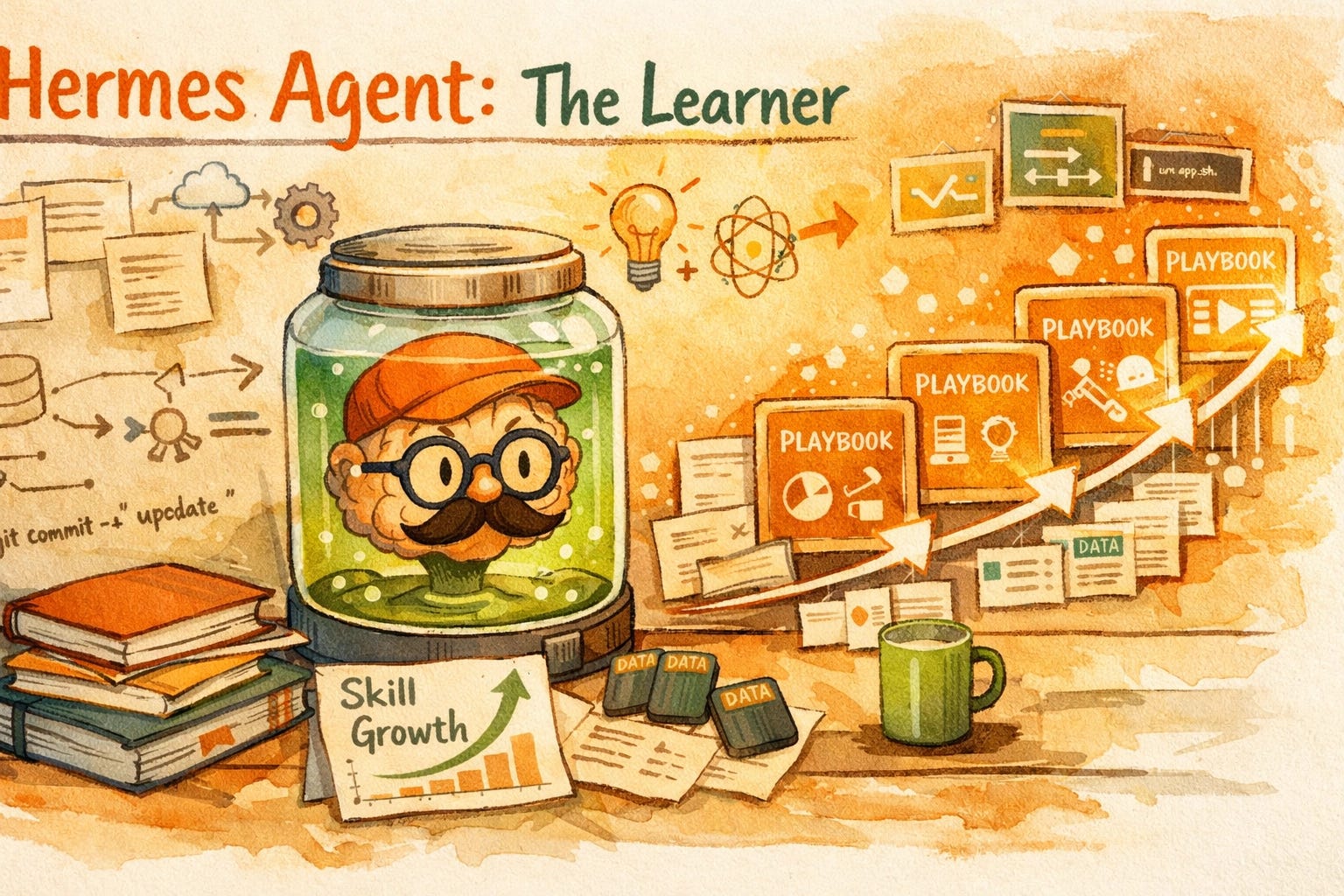
The real unlock is something called Skill Documents:
After Hermes solves a non‑trivial task—say, researching competitors or deploying a specific stack—it doesn’t just throw the trace away.
It writes down how it did it as a structured skill file (markdown‑like, following the agentskills.io standard).
Next time a similar request comes up, Hermes calls that skill instead of re‑inventing everything from scratch.
If it finds a better way, it literally rewrites its own skill file.
This is the “compounding agent loop” people are excited about: every real task you run becomes training data for the next one.
3.3 It lives where your work lives
Hermes is designed to run as a persistent service, not as a one‑off script:
It keeps a single long‑running shell, so if it
cds into a repo and activates a venv, that state persists across hundreds of tool calls.It runs in isolated backends: local machine, Docker, SSH to remote servers, HPC containers, or Modal serverless.
It connects to Telegram, Discord, Slack, WhatsApp, CLI, etc. through a gateway, so you can start a task on Telegram and get results in Slack without babysitting it.
Think less “AI in a browser tab” and more daemon that just keeps working while you’re in meetings.
4. Okay, but how painful is it to set up?
Surprisingly straightforward for what it does.
The rough flow, especially on a cheap VPS (Hostinger, Hetzner, whatever) is:
SSH in, run the installer
Official installer script that configures the Hermes CLI and bootstrap files in
~/.hermeson Linux/macOS.
Run the interactive setup wizard
Pick provider(s): OpenRouter, Claude, GPT, Gemini, or point it to a local backend like Ollama.
Set the shell backend (usually the local VPS shell).
Turn on tools (browser, web search, MCP servers).
Optionally wire in Telegram/Discord/etc. gateways.
Give it a real job, not a toy prompt
Something like: “Look at this repo and propose + implement a deployment plan on this VPS.”
Correct it. It will log what worked, what failed, and start turning that into skills.
Back up
~/.hermesThat directory is your skills, memories, and config. Move it to another box and your “brain” comes with it.
If you’re comfortable with SSH and running a few commands, you can go from “heard the hype” to “Hermes running 24/7 on a VPS” in an evening.
![[HERO] So You Don’t Have To Test Every Agent Framework: Hermes vs OpenClaw in 2026](https://substackcdn.com/image/fetch/$s_!BZmI!,f_auto,q_auto:good,fl_progressive:steep/https%3A%2F%2Fsubstack-post-media.s3.amazonaws.com%2Fpublic%2Fimages%2F2282eec7-980d-4d04-ac9c-aa7a08ff2861_1536x1024.webp "[HERO] So You Don’t Have To Test Every Agent Framework: Hermes vs OpenClaw in 2026")
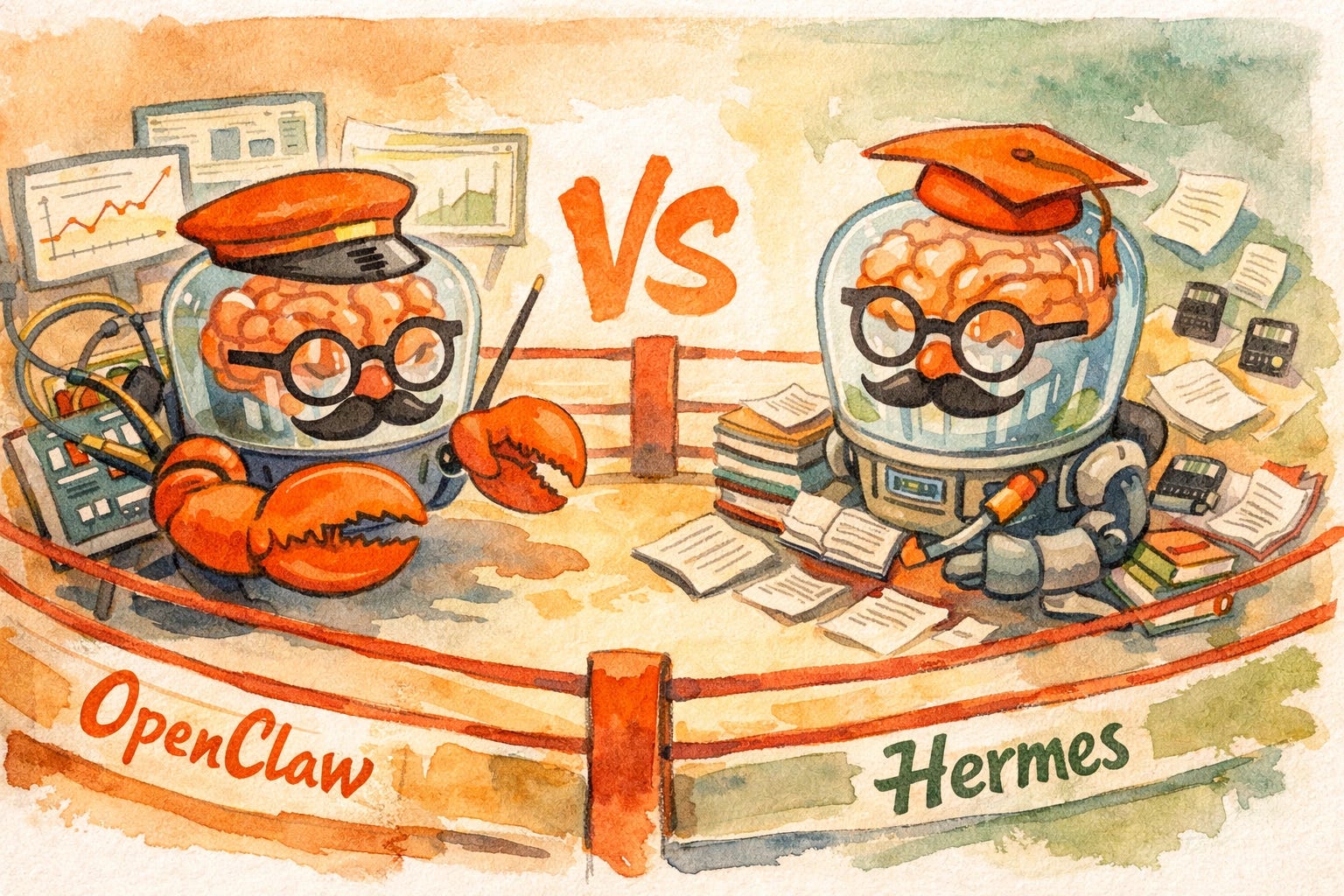
5. How does Hermes compare to OpenClaw?
You’ll see Hermes framed a lot as an “OpenClaw alternative” or “OpenClaw killer.” The reality is more nuanced and more useful.
5.1 Different jobs
OpenClaw is a local‑first agent orchestration framework with a big ecosystem of tools/skills and a strong story for governance and enterprise integration.
Hermes Agent is a self‑improving agent with built‑in memory, user modeling, and automatic skill learning.
In practice:
If you want a flexible fabric to wire models, tools, and channels together—especially in a team or org—OpenClaw is fantastic.
If you want a single agent that gets better at your business every week, Hermes is the one actually designed for that.
5.2 Why some people run both
A lot of power users are doing this:
Use OpenClaw as the conductor: routing tasks, handling auth, integrating with infra.
Use Hermes as the lead specialist: when a task really benefits from long‑term memory and learned skills, route it to Hermes via MCP or a custom tool.
You don’t have to go that far on day one. But it’s useful to know that “Hermes vs OpenClaw” is often really “Hermes and OpenClaw, in different roles.”

6. Who should actually care about Hermes?
You should probably care about Hermes Agent if:
You run a repeatable service business (agencies, studios, consulting, SaaS ops) where the same workflows happen over and over. Hermes will turn those into skills.
You already have a VPS or home server and are comfortable letting an agent operate in that environment, with guardrails.
You’re tired of re‑explaining your stack, your tone, and your preferences to generic chatbots every single time.
If you just want a nicer chat UI for ad‑hoc questions, Hermes is probably overkill. If you’re actively building pipelines and want an AI teammate that compounds instead of resets, Hermes is worth your attention.

7. “Just tell me what to do next”
If your brain is full and you want a concrete next step:
Pick a VPS you’re comfortable with (you can start as low as a cheap Ubuntu box).
Install Hermes Agent, run the setup wizard, point it at one strong model and one messaging surface you already use.
Assign it one real workflow from your business for a week and see if you can live with the friction of teaching it.
If you like what you see, then decide whether you want to:
Wire it into a broader orchestration layer like OpenClaw, or
Keep it as a standalone “brain” that quietly runs your background processes.
You’ll learn more about whether Hermes is “real” for you by giving it one honest job than by watching another comparison video.
And the next time you see “Hermes Agent is insane” in your feed, you’ll know exactly what that actually means.
A founder’s “Day 1” with Hermes on a Hostinger‑style VPS
Let’s make this concrete.
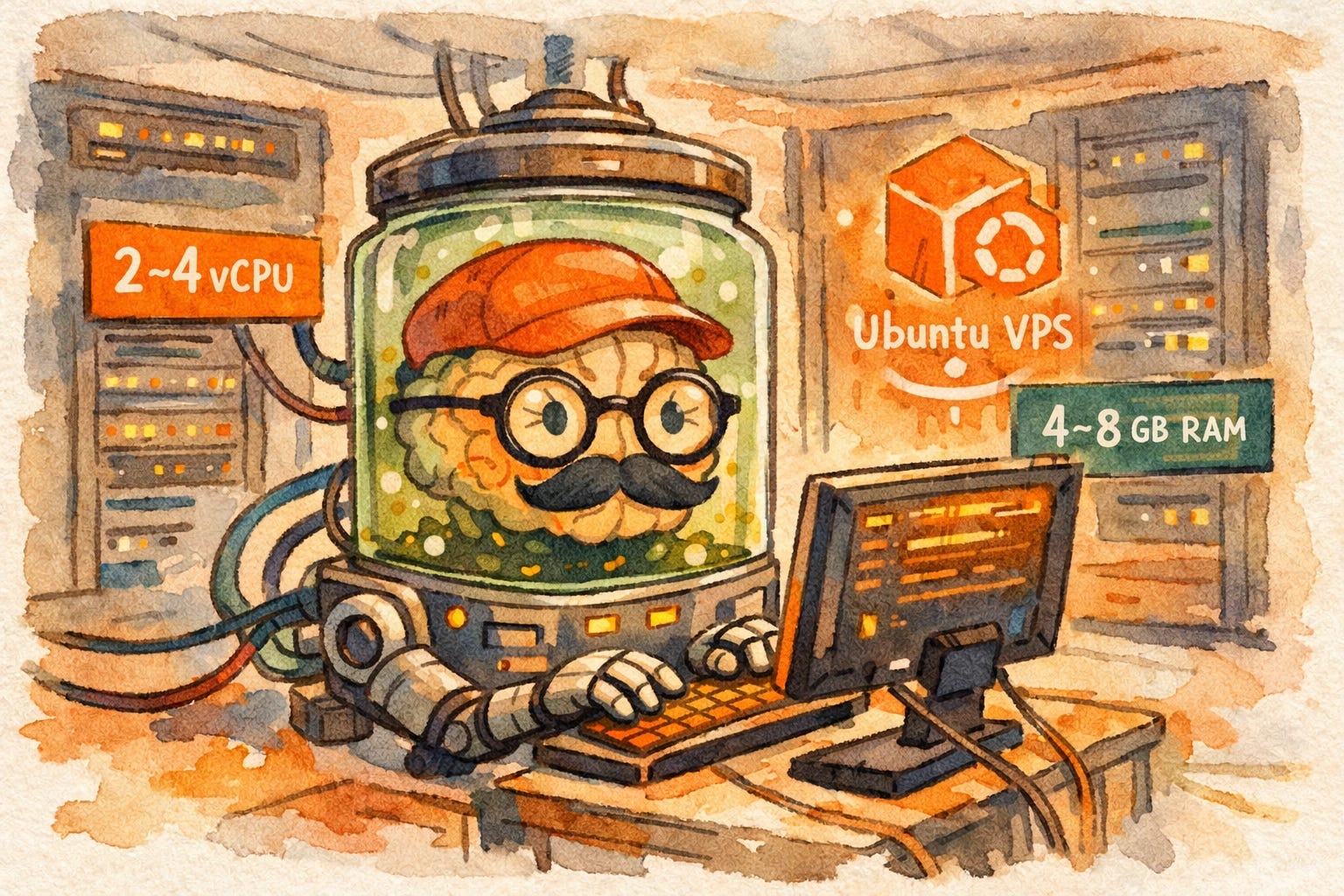
Say you grab an Ubuntu VPS on Hostinger (2–4 vCPU, 4–8 GB RAM). That’s more than enough to run Hermes as an always‑on agent with remote LLMs, and you can add local models later if you want.
A realistic Day 1 looks like this:
