

It's ironic that a company like Google, which prides itself on providing accurate and factual information, can leave businesses in the dark with no clear answers or support when issues arise. There is no excuse; my business runs on multiple licenses to Google Workspace, and many reputable sources, from the New York Times to Fortune Magazine to the leading online photography publication PetaPixel, confirm our existence. As part of the appeals process, we've uploaded our lease for our office space, our articles of incorporation, and multiple other pieces of proof that we exist, yet we are still unable to get our listing back. This irony underscores the importance of the changes needed to ensure a fair and reliable digital landscape for all.

The Importance of Online Presence
In today’s digital age, having your business listed on Google isn’t just beneficial—it’s essential. For a small businesses, appearing in search results can mean the difference between thriving and
merely surviving. Google’s search engine is often the first place potential customers go to find services, read reviews, and get directions. So, what happens when your business suddenly disappears from Google’s listings? The experience can be nothing short of a nightmare, leaving you scrambling for solutions and facing an opaque support system.
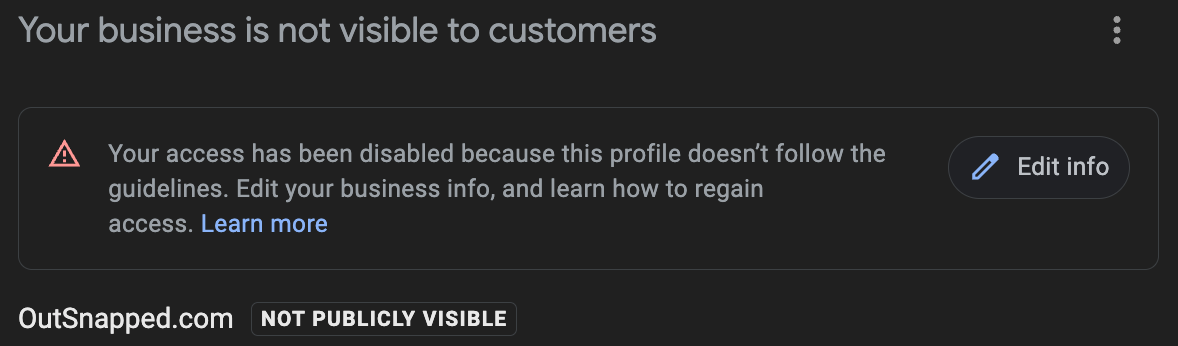
The Sudden Disappearance
Imagine starting your day with the usual routine, only to find that your business has vanished from Google. Panic sets in as you realize customers can no longer find your location or contact information. The immediate impact is a significant drop in inquiries and foot traffic, leading to an inevitable dip in sales. The initial shock is quickly replaced by a desperate need to understand why this happened and, more importantly, how to fix it.
The Unreachable Support
When you rely on Google to connect with customers, having your business suddenly removed from Google is devastating. The first step was trying to figure out why it was delisted, but there was no information available.
I began researching how to appeal the decision, eventually finding the right place to do so. Following the appeal process, I was informed that my business was in good standing and didn’t need an appeal. Frustrated, I tried to get in touch with a human at Google. Each support agent I connected with told me they couldn’t help and pointed me to the appeals page. Each support email I sent, several of which including a video showing the appeal process bug, received the same automated response directing me back to the same problematic page.
The Impact on Business
It's difficult to quantify the exact impact, but Google itself states that your ranking will be better if you are listed, which implies that not being listed significantly harms your visibility. Without being listed, our customer inquiries dropped, site traffic decreased, and sales took a hit. The uncertainty of not knowing when or if the issue would be resolved added to the stress.
Seeking Alternative Solutions
In my desperation, I turned to Google itself, diving into countless Reddit threads and online forums. Many offered costly services claiming they could fix the issue, but there was no guarantee. Ultimately, I found a small community of business owners who had also been "excommunicated" from Google. They suspected that their businesses had been improperly flagged by someone, possibly a competitor, leading to similar frustrating experiences

The Responsibility of Tech Giants
This experience highlights a broader issue: the immense responsibility that companies like Google have created for themselves. By becoming the gatekeepers of information and access, they wield significant power over the success and failure of small businesses. When these platforms cut costs to increase profits and fail to provide adequate support or transparency, it can have devastating consequences for business owners who rely on them. This situation underscores the need for more accountability and better minimum level of customer support from these tech giants.
Given their crucial role in connecting businesses with customers, it's not just a matter of convenience but a necessity. The impact on livelihoods and local economies is significant, and perhaps it's time to consider legislation that ensures these companies provide the proper customer service and support. By recognizing the critical role they play in the business ecosystem, we can push for a system that is fairer and more reliable for everyone.
Conclusion: Navigating the Digital Landscape
Navigating the complexities of maintaining an online presence can be daunting, especially when facing unexpected hurdles like being delisted by Google. This experience has shown how dependent we are on these platforms and the urgent need for better support systems. It’s crucial for business owners to remain resilient and proactive, seeking out community support and alternative solutions when necessary.
Suggestions for Improvement
To improve the current system, here are a few suggestions:
Enhanced Customer Support: Tech giants like Google should offer more accessible and responsive customer support, including real human interaction for complex issues.
Transparency in Processes: Clearer guidelines and transparency in their processes can help businesses understand and rectify issues more effectively.
Legislative Oversight: Considering the significant impact on businesses, there should be legislative measures to ensure these companies provide necessary support and accountability.
Community Support Networks: Building and participating in support networks with other business owners can provide valuable insights and assistance.
Navigating the complexities of maintaining an online presence can be daunting, especially when facing unexpected hurdles like being delisted by Google. This experience has shown how dependent we are on these platforms and the urgent need for better support systems. It’s crucial for business owners to remain resilient and proactive, seeking out community support and alternative solutions when necessary. By advocating for enhanced customer support, transparency in processes, and potential legislative oversight, we can work towards a digital landscape that is fairer and more reliable for all businesses.