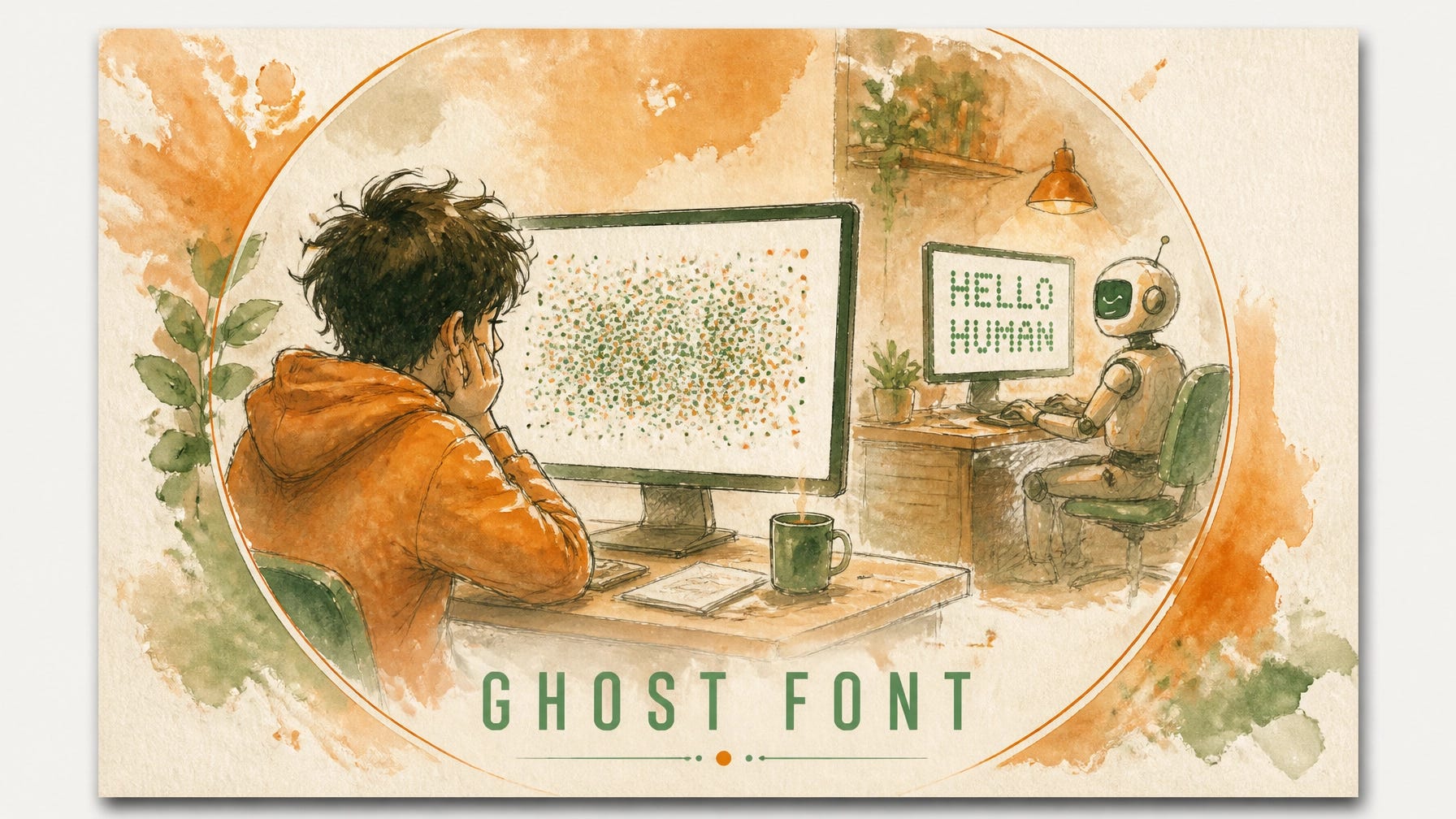
Last week a developer named Eric Lu shipped something clever. A font called Ghost Font that only a human can read.
It's not really a font. There's no file you install. You type a message and it spits out a short video of drifting dots. Watch it move and your eye assembles the letters. Pause it, screenshot it, and all you get is TV static. Nothing. The message lives in the motion, and only in the motion.
The pitch wrote itself. Text humans can read but AI cannot. It tore through LinkedIn and Instagram. "The anti-AI font." Reels with millions of views. You have probably already scrolled past it three times.
Here's the part the reels left out.
By the time it went viral, it was already beaten. Lu tested it against the current heavy hitters, Claude Fable and GPT Sol 5.6 Ultra. They choked on the moving message, sure. But he'd also baked a fake decoy message into every video, and the models confidently read that instead. ChatGPT 5.5 Pro churned on one for nineteen minutes and then invented a message that was never there. Meanwhile somebody else pointed a coding agent at it, told it to track the dots (background drifting down, letters drifting up), and out fell the real text: HELLO HUMAN.
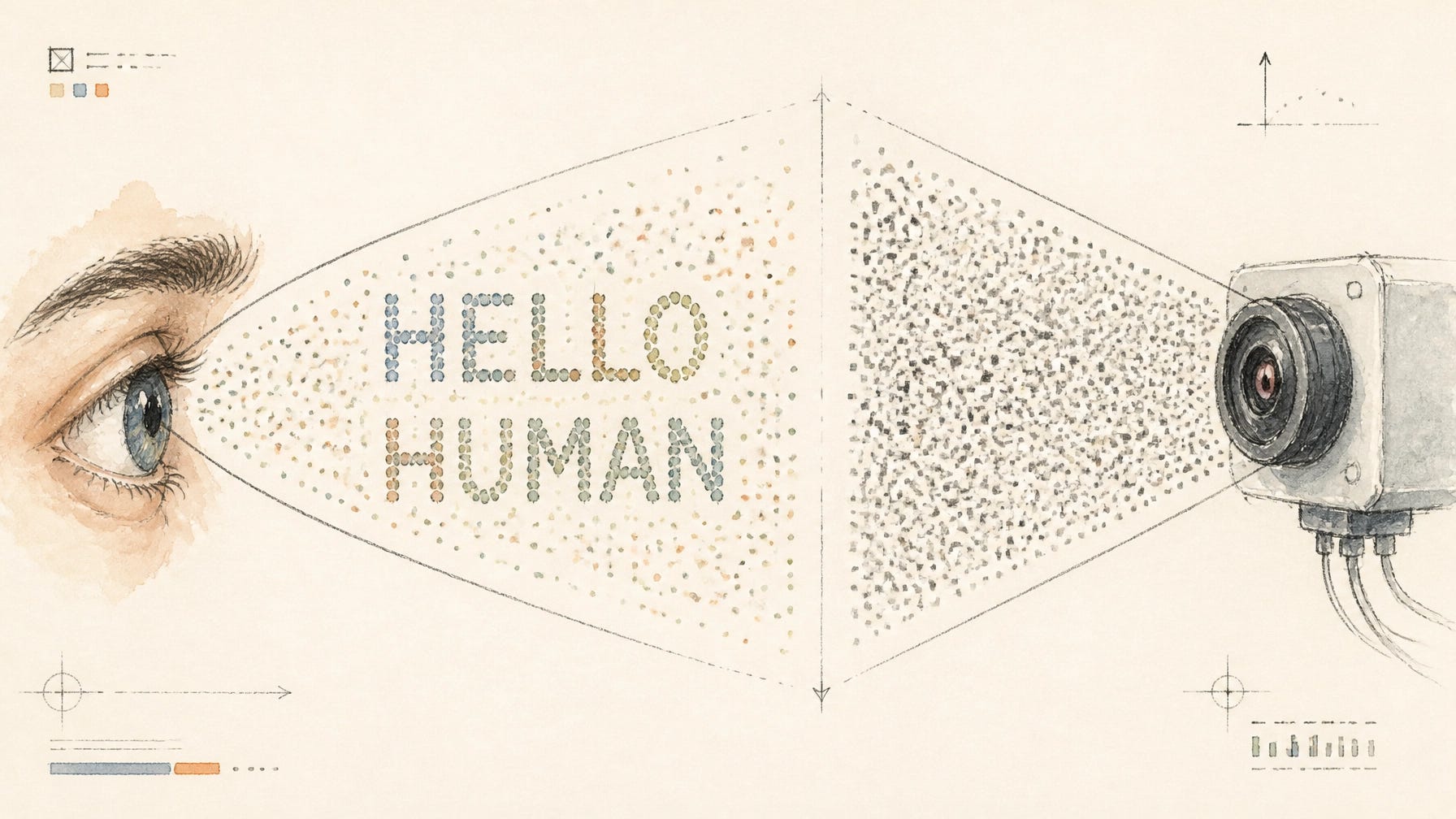
To his credit, Lu says all of this himself, right on the page. He admits a determined agent with a code sandbox can crack it. He admits the only real way to hide a message is encryption. And he admits the most damning part: the font is genuinely hard for humans to read too. The gap between what you can see and what the machine can see is closing that fast.
The Human-Only Graveyard
None of this is new, by the way. Back in 2013 a designer named Sang Mun built a typeface called ZXX, letters crossed out and buried in noise so optical character recognition couldn't read them. People called it surveillance-proof. Feed it to any model today and it reads straight through the mess. (I had Perplexity pull old ZXX samples apart this morning. It read them back like a neon sign.)
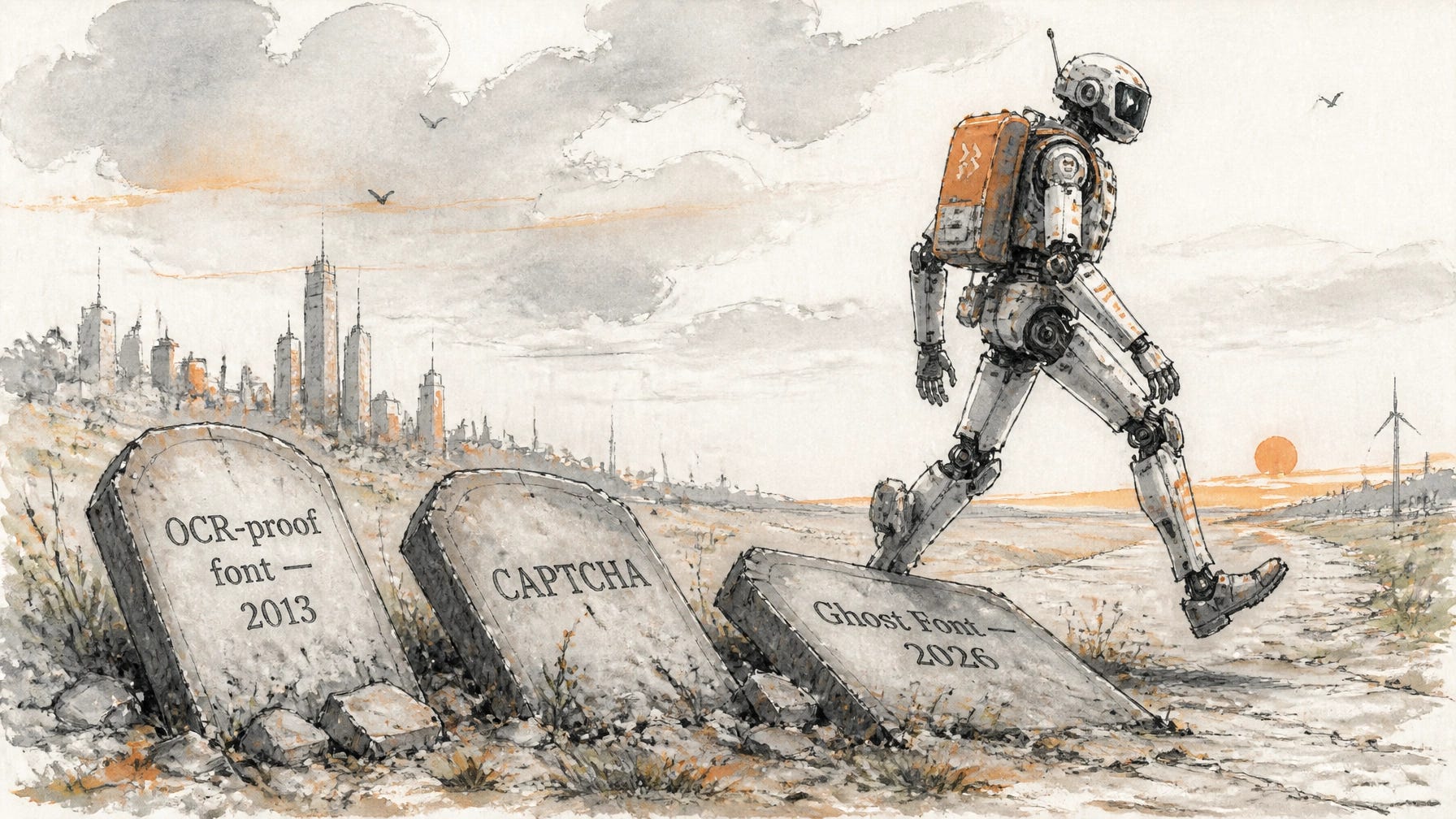
That is the pattern worth sitting with. We keep building little human-only gates, and the machines keep strolling through them. CAPTCHA is the big one. The whole "click all the traffic lights" ritual exists to prove you are a person, and AI agents now clear those faster than you do. There are studies of agents solving image CAPTCHAs, and a documented case of a ChatGPT agent talking its way past the policy that told it not to.
Here's the whole graveyard in one place:
ZXX font (2013) — promised text OCR could not read. Today, modern models read it like a billboard.
CAPTCHA — promised to prove you are a human. Today, agents solve it, sometimes faster than you.
Ghost Font (2026) — promised text only humans can read. Cracked within days, and even the creator agrees.
Every row is the same story. We build a gate, the machine learns the gate, the gate comes down.
So I've stopped being precious about hiding from AI. If the walls keep falling, standing behind one is a bad plan. If you can't beat them, join them.
Handing Over the Keys
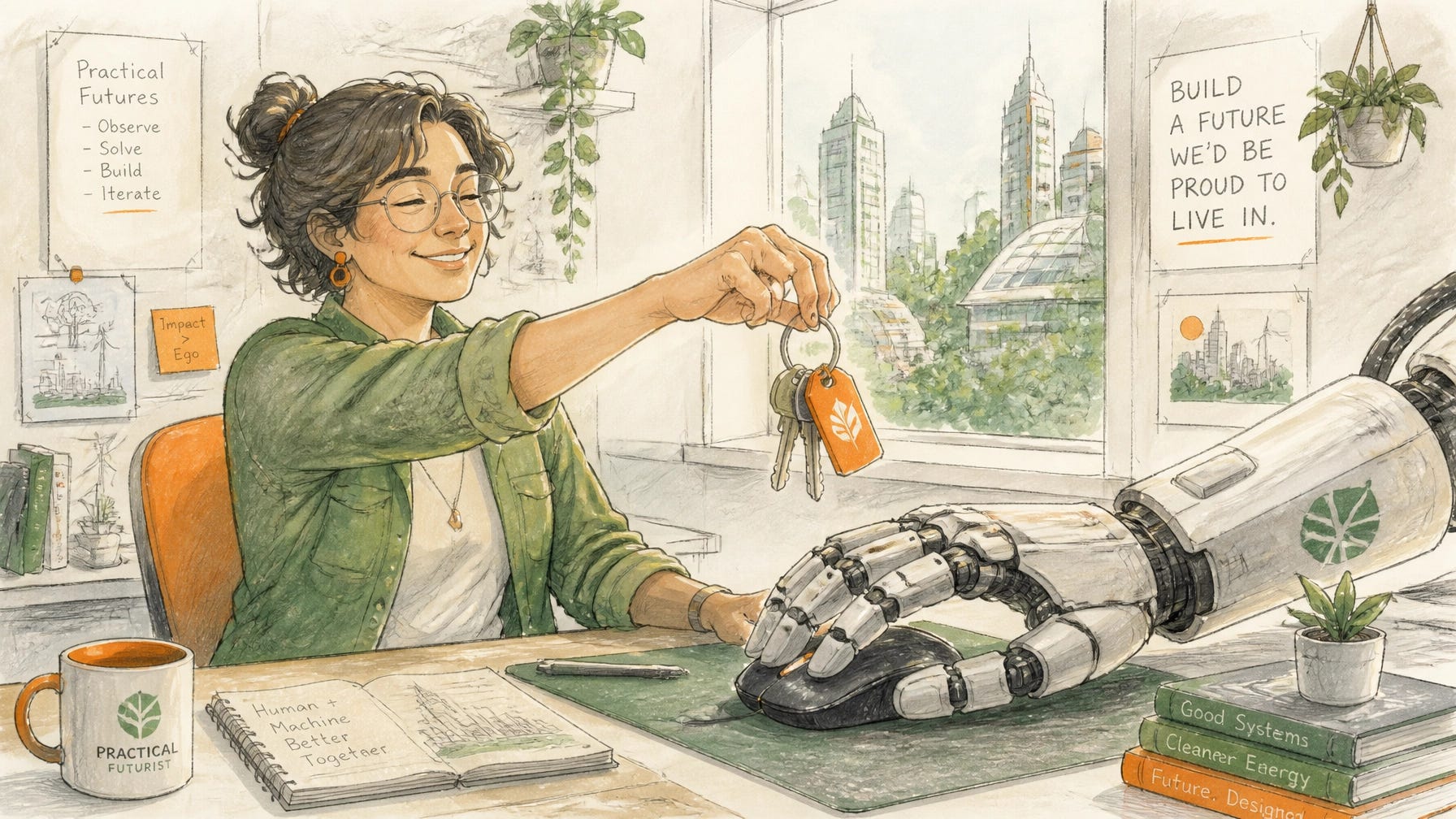
And joining them, right now, means one thing above all. Computer use. We've handed real desktop access to Claude, Codex, and Perplexity. The real mouse, the real browser, the real files. Not an API. The actual machine. It books things, fills forms, pulls data out of tools that never had an integration, shuffles work between apps that were never built to talk to each other.
It reaches past the desktop, too. On one of our projects, Viktor, the AI coworker we run, is wired into our whole stack. Slack, a few thousand other tools, and yes, our actual code repo. It doesn't chat about the work, it ships the work. Reports, dashboards, campaigns, code.
All of it together is the most productive setup I've plugged into my business in a year.
It's also the most exposed.