

If you've been feeling like your business is less of an "empire" and more of a collection of 50 different browser tabs and "Insufficient Credits" notifications, you aren't alone. I've been hands-on with the latest LLMs and agentic workflows for months now, and the realization I've come to is... well, it's a bit sobering.
We are currently living in an era of Digital Serfdom.
Most small business owners are "renting" their intelligence. We pay $20 a month to OpenAI, $30 to Midjourney, $15 to a scheduling bot, and another $50 to a CRM that promises "AI features" but mostly just gives us fancy autocomplete. We are essentially digital sharecroppers, tilling the land of big tech giants and hoping they don't raise the rent or change the rules of the algorithm overnight.
But there is another way. It's what I call the Maker's Path. It's the shift from being a renter to being a builder. It's about owning your infrastructure, your data, and your "Brain in a Jar."
The Brutal Reality of the "SaaS Tax"
Let's talk numbers, because the financial drain of the "SaaS Tax" is real. I've been auditing tech stacks for artificial intelligence consulting clients lately, and the math is getting ugly.
When you rely solely on third-party SaaS subscriptions, you are paying a massive premium for the "convenience" of their interface. You're being metered by the token, by the seat, and by the month. Research shows that businesses deploying their own on-premises AI infrastructure can see costs drop to one-third or even one-fifth of cloud-based options.
Think about that. If you're spending $1,000 a month across various AI-integrated tools, you could be doing the same work for $200.
Why is it so expensive to rent?
Token Markups: Cloud providers charge for every single interaction.
Egress Fees: Getting your own data back out of their system often costs extra.
Feature Bloat: You're paying for 100 features when you only use the "Brain" and the "Hands."
For small business AI tools to actually scale, they need to be predictable. You can't have a marketing agent stop working mid-month because you hit a "usage cap." When you own the hardware — even a modest workstation with a decent NVIDIA GPU — the cost is flat. The power is yours.
Meet the "Brain in a Jar" and the "Robotic Hands"
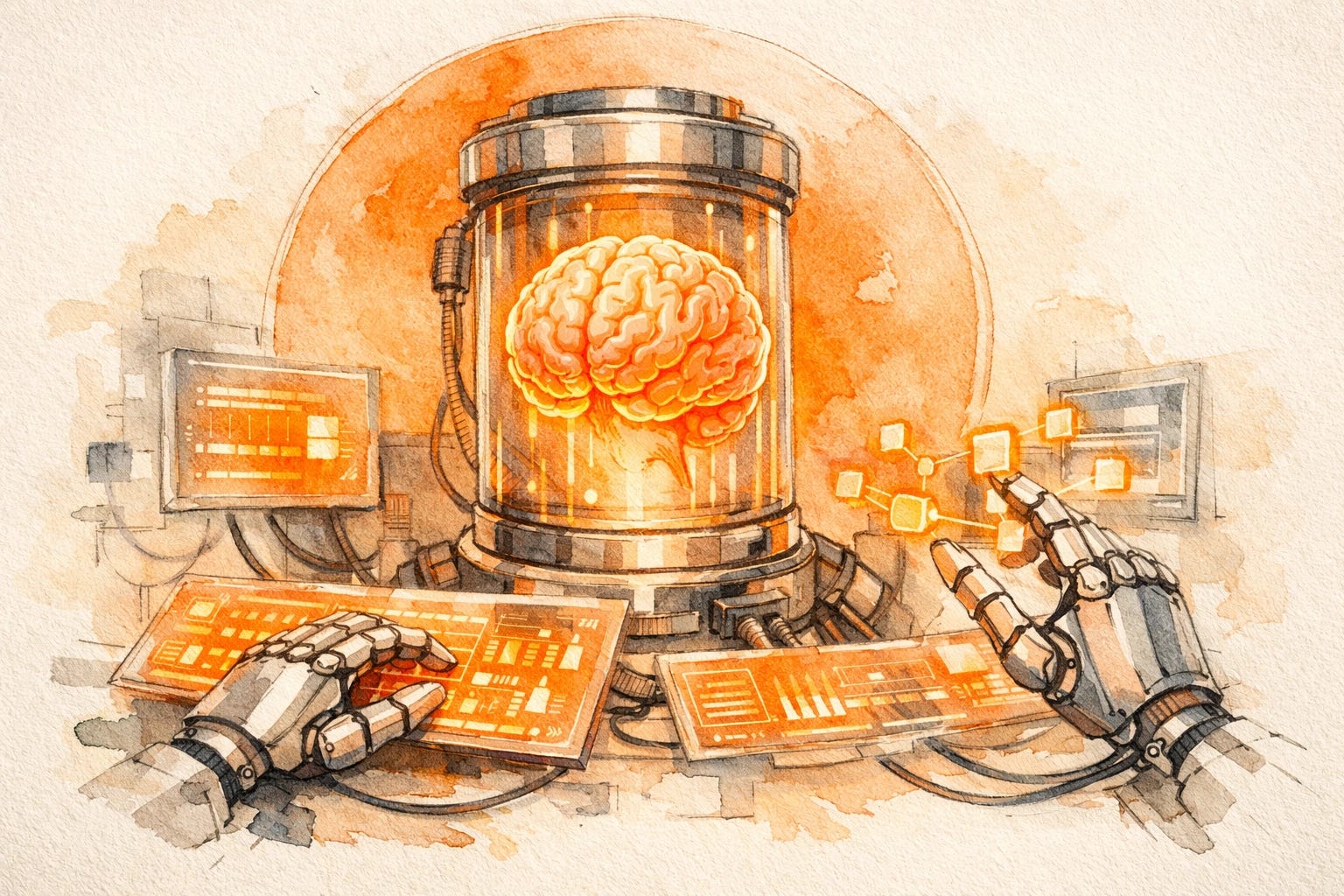
To understand why you need to build rather than rent, you have to understand the two core components of a modern AI setup: The Brain and The Hands.
1. The Brain in a Jar (Strategic Logic)
The "Brain" is the LLM (Large Language Model). It's the logic, the reasoning, and the "personality" of your AI. When you rent, you're using someone else's brain. You're asking a generalist brain to solve your specific business problems.
When you move to the Maker's Path, you treat the AI as a Brain in a Jar. You can swap the brains out. You can use a massive, high-IQ brain for complex strategy (like Claude 3.5 Sonnet) or a smaller, faster, "local" brain for routine tasks. The key is that you control the jar. You decide what the brain knows and how it thinks.
2. The Robotic Hands (Execution Agents)
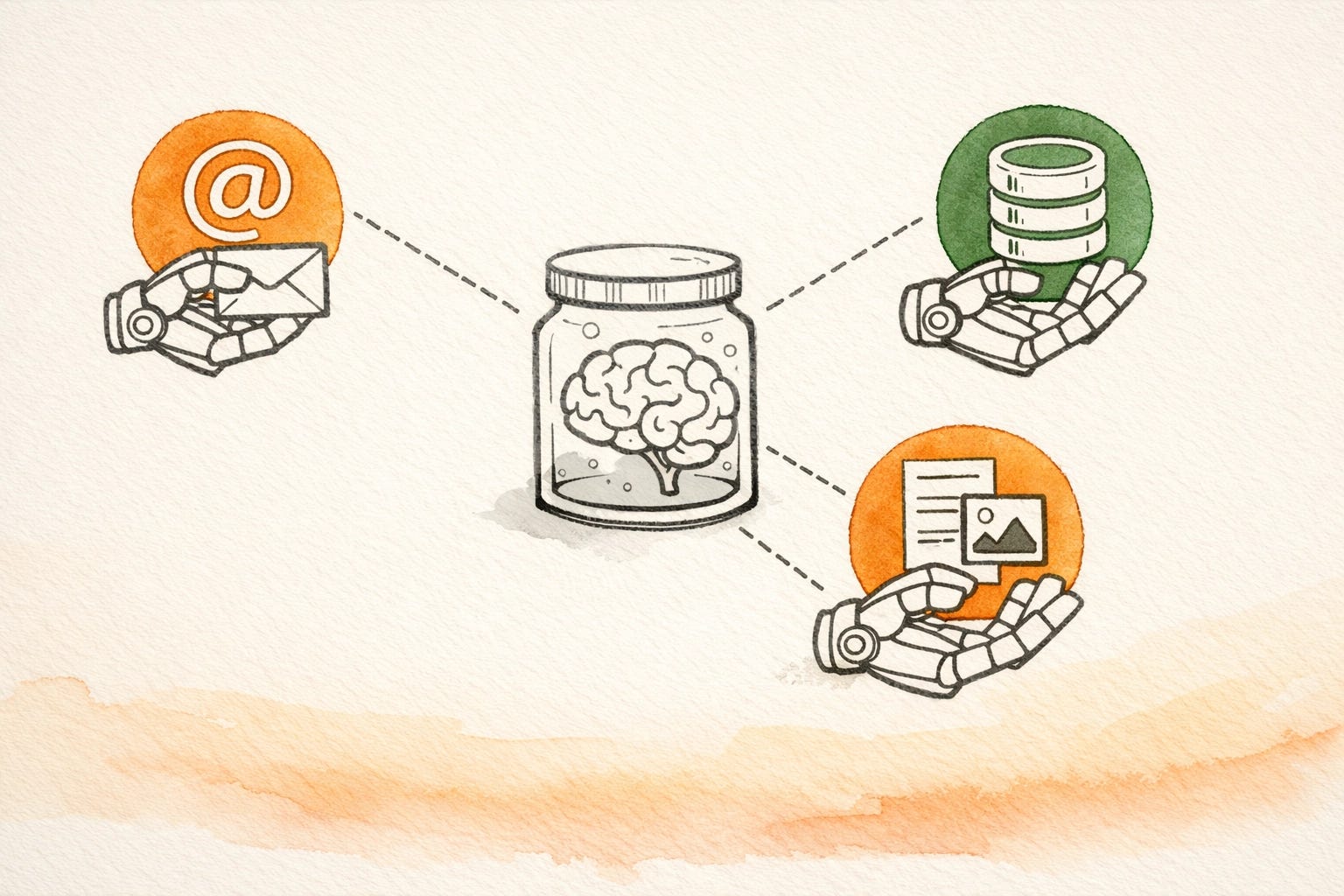
The "Hands" are your agents. These are the pieces of code that actually do the work: sending emails, updating spreadsheets, or generating images. In a SaaS model, the hands are tied to the platform. If you stop paying for the "All-in-One AI Marketing Suite," you lose the hands.
On the Maker's Path, you build your own Robotic Hands. Using tools like OpenClaw, you create agents that perform specific, repeatable actions. These hands don't care which "Brain" is giving them orders. They are your employees. They work for you, and they don't charge you a monthly subscription to exist.
The Philosophical Shift: Ownership vs. Serfdom
This isn't just about saving a few bucks on tech consulting for entrepreneurs; it's a fundamental shift in how we view digital assets.
In the "Renter" model, your data is the product. Every time you interact with a cloud-based AI, you are training their models on your proprietary business processes. You are literally making your competitors smarter.
In the "Builder" model, you achieve Digital Ownership.
Privacy: Your client data stays on your hardware or your private cloud instance.
Persistence: Your workflows don't break because a startup went bust or got acquired.
Customization: You can tune your "Brain in a Jar" to speak in your brand voice with 100% consistency.
Solving the "Goldfish" Problem: The Case for MirrorMemory.ai
One of the biggest frustrations with the current "Renter" model is what I call AI Amnesia. Have you ever spent three hours training a chatbot on your brand guidelines, only to have it "forget" everything the next time you open a new window?
It's maddening. 🫠
If your AI agents are going to be effective "Robotic Hands," they need a permanent, private memory. They need to remember that "Susan" is your top client and that you prefer your reports in Markdown format, not PDF.
This is where mirrormemory.ai comes in.
Instead of letting your agents live in a state of perpetual goldfish-memory, MirrorMemory gives your "Brain in a Jar" a long-term storage vault. It allows you to give your agents a permanent, private memory that you own. It solves the context problem by feeding the right data to the right agent at the right time.
It's the difference between hiring a temp who forgets your name every morning and having a loyal Chief of Staff who has been with you for a decade. If you want to dive deeper into why this matters, check out my post on why your AI has the memory of a goldfish.
How to Start Your Maker's Path
You don't need a $50,000 server rack to start being a builder. AI for small business has become incredibly accessible if you know where to look.
Stop the Leak: Audit your subscriptions. If you're paying for a "wrapper" (a tool that just puts a pretty interface on top of ChatGPT), cancel it.
Get a "Local" Brain: Experiment with running small models locally using tools like LM Studio or Ollama. See how much you can do without an internet connection.
Build Your First "Hand": Use a framework like Claude Code to automate one single, boring task.
Invest in Memory: Don't let your hard work disappear into the ether. Use a solution like MirrorMemory to ensure your agents grow smarter every day.
The Future belongs to the Builders
The "Digital Workforce War" is already here. The winners won't be the people with the most subscriptions; they will be the people with the most efficient, owned infrastructure.
When you own the Brain in a Jar and the Robotic Hands, you aren't just a user of AI technology trends: you are a driver of them. You become the AI thought leader in your own niche because you have a system that is uniquely yours, un-copyable by competitors, and shielded from the whims of Silicon Valley.
It's time to stop renting your intelligence. It's time to build your empire.
Are you still stuck in the "Renter" cycle, or have you started building your own local agents? What's the one task you'd love to hand off to a set of "Robotic Hands" today? Drop a comment or hit me up — I'm curious to see who else is on the Maker's Path.
Want to keep up with the latest in applied innovation?