

Anthropic launched something today that I genuinely couldn’t stop thinking about.
It’s called Claude Managed Agents. And if you’ve ever tried to build an AI agent — like actually deploy one that does real work while you sleep — you know exactly why this is a big deal.
Most “agents” we’ve seen so far are brittle. They live in a browser tab. They lose their train of thought if you refresh the page. Or, if you’re a developer, you know the nightmare: the persistent state, the session handling, the multi-step coordination. It usually takes months of engineering just to make sure the thing doesn’t fall over when it hits a snag.
Here’s what Managed Agents does: you describe an agent in plain English (or a YAML file if you’re into that), tell it what tools it can use and what guardrails to follow, and Anthropic’s infrastructure runs the whole thing. Long sessions. Autonomous work. Persistent state across disconnections. Multi-agent coordination for complex parallel work.
Anthropic just made all of that “the infrastructure’s problem.”
While in private beta, Notion used it to ship AI features 10x faster. Rakuten stood up agents across product, sales, marketing, finance, and HR in a week per deployment. Asana built “AI Teammates” that work alongside humans inside project management workflows.
Think about what that means for a small operator. The stuff enterprises are using to eliminate whole departments — it’s now available to you with an API key and a prompt.
We are moving away from “AI as a Chatbox” and toward “AI as Infrastructure.” You don’t talk to these agents. You employ them.
My Personal Hit List
Here’s where it gets interesting for someone like me: I’ve been looking for a way to replace Intercom for Pictor. It’s expensive. It requires a team to manage. And it still doesn’t do exactly what I need. With Claude Managed Agents, I could spin up a fully customized support agent — one that knows our product docs inside out, escalates the right things, and never takes a sick day — and have it running in days, not months.
For OutSnapped, I’d love to spend the $20k per year I spend on Hubspot on literally ANYTHING else. Ideally, they would bring their pricing back to reality before I have to renew in December, but in the meantime … I’m thinking about a sales agent that warms up old clients. Identifies who hasn’t booked in 12 months. Drafts personalized outreach. Follows up automatically. All the things a sales admin would do, running in the background while I’m focused on everything else.
This is the direction everything is going. The question isn’t whether to build with agents. It’s how fast you can get there before this becomes table stakes.
If You Build ONE Thing...
Stop thinking about AI as a way to write better emails and start thinking about it as a high-level data scientist you just hired.

The Revenue Intelligence Agent: upload every messy piece of customer data you have — emails, support tickets, CRM notes, Stripe history, lost-deal notes — and have an agent work through all of it to tell you where the money is hiding.
Not a summary. Actual conclusions: who’s about to churn and why, which dormant accounts look revivable, what your highest-LTV customers have in common that you’re not actively selling.
This used to require a $150k/year hire or a specialized SaaS tool that costs $2k a month. Now? It’s a managed agent away.
The Honest Part About Pricing
But — and this is the part I want you to actually read carefully — there’s a catch.
Currently Claude Managed Agents is API-only and I don’t see this changing.
Not Claude Max. Not your existing Claude subscription. You need an Anthropic API account, and you’re billed separately: standard token rates (Sonnet 4.6 is $3/million input, $15/million output) plus $0.08 per session-hour of runtime.
For a one-hour coding session with Opus 4.6 using 50K input and 15K output tokens? Anthropic’s own example puts the cost at about $0.70 per agent.

That’s not outrageous. But it’s not free. And the people framing this as “is it cheap?” are asking the wrong question.
The right question is: what is your time worth?
If a Claude agent can replace 10 hours a week of manual work — answering support tickets, drafting outreach, processing documents — and it costs you $50/month to run it, that’s one of the best hires you’ve ever made.
One more thing worth flagging: watch out for “teaching to the test” syndrome — where an agent optimizes for looking efficient rather than being efficient. It’s rare, but real. That’s what the session trace in the Console is for. Always review it.

Setting up the API account? Not hard. The bigger question is whether you’re willing to pay for it.
That’s how I’m thinking about this.
Why This Is Nothing Like ChatGPT

Before I walk you through setup, I need you to understand the actual difference — because if you’re thinking “this is just another AI chat thing,” you’ll underuse it badly.
ChatGPT is a conversation. You send a message, it responds, you send another. Every time you close the tab, the slate is wiped. It can’t run without you. It can’t use tools in sequence. It can’t pick back up where it left off. It definitely can’t work autonomously for three hours while you’re at dinner.
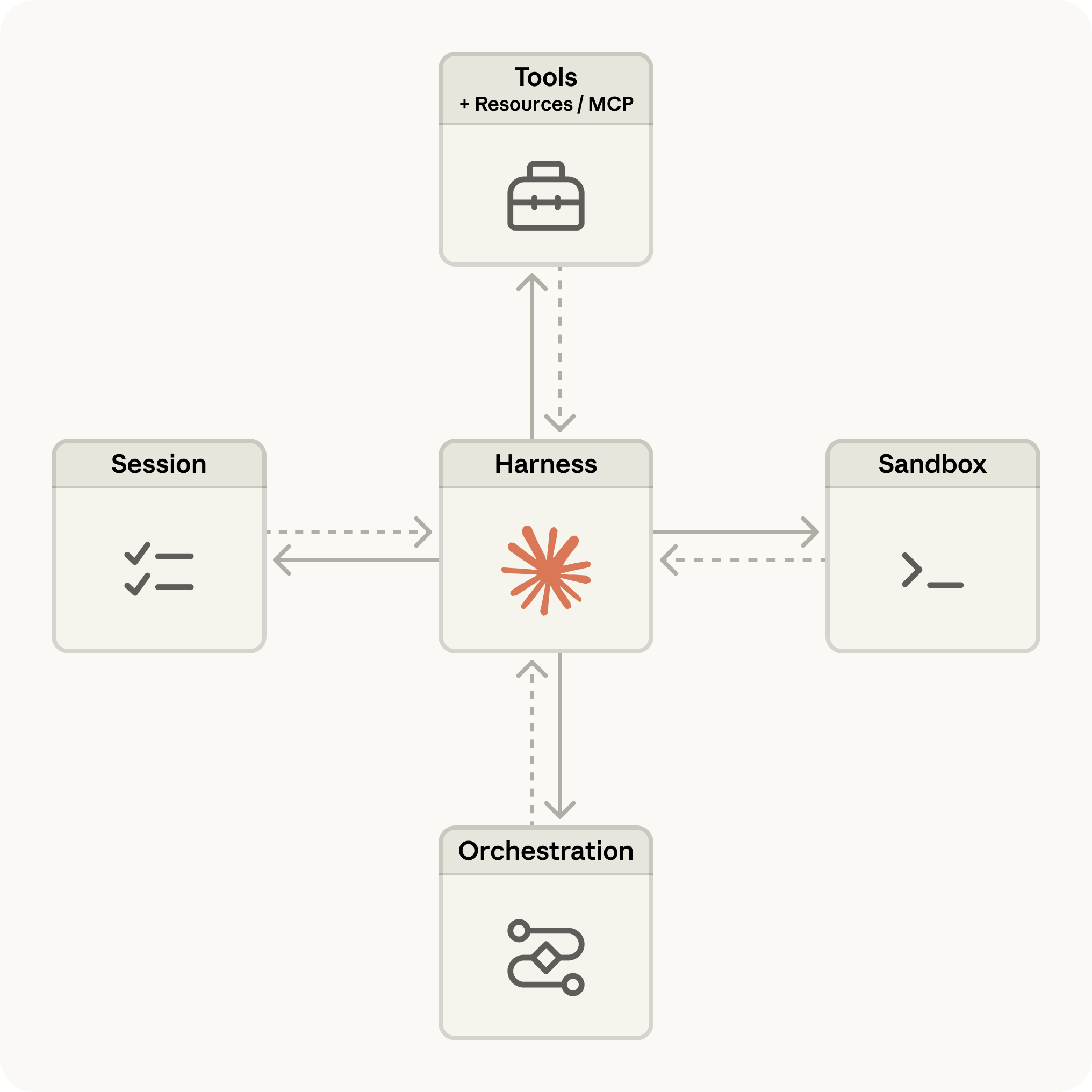
Claude Managed Agents is a runtime. You define what an agent is allowed to do, give it tools (web search, file access, code execution, API calls), and it executes multi-step workflows on its own — for as long as the task takes. Sessions persist through disconnections. State is maintained between runs. The platform handles the infrastructure: sandboxing, authentication, error recovery, audit logs.
The meaningful difference: you stop being in the loop.
With ChatGPT, you are always the operator. You write the prompt, you read the output, you copy it somewhere, you paste it somewhere else, you write the next prompt. It’s useful, but it’s still you doing the work.
With Managed Agents, you define the work once. The agent runs it, uses tools, handles errors, and delivers an output. You review the result — you don’t manage every step.
That’s not a feature upgrade. That’s a different category.
Step-by-Step: Your First Agent in Under an Hour
Step 1: Get your API account (5 minutes)
Go to platform.anthropic.com. Create an account. Add a payment method. You don’t need to load a huge balance — start with $20, you’ll use maybe $2–5 learning the ropes.
This is the thing that trips people up: you can’t use your Claude.ai login here. It’s a separate account. Think of Claude.ai (including Max) as the consumer product, and the Claude Platform as the enterprise/developer infrastructure. Same AI, completely different billing and access.
Step 2: Open the Claude Console and find Managed Agents (2 minutes)
Once you’re logged into console.anthropic.com, you’ll see Managed Agents in the left navigation. It’s in public beta — you may need to click through a brief onboarding confirmation.
Step 3: Define your first agent in plain English (10 minutes)
Click “New Agent.” You’ll see two options: natural language or YAML. Use natural language first.
Here’s an example definition you can copy, paste, and edit:
