

OpenAI hired the guy who proved AI agents need a file system. Today they shipped the first piece of his vision.
OpenAI launched something today called “Library.”
If you saw the announcement and thought, “Cool, I don’t have to re-upload my docs anymore,” you’re not wrong. But you’re also missing the point entirely.
Library is a persistent file storage layer inside ChatGPT. It lives in your sidebar. Every document, spreadsheet, presentation, and image you upload, or that ChatGPT generates for you, now saves to your account automatically. Files survive across conversations. Delete the chat, keep the files. Available to Plus, Pro, and Business subscribers. 512MB per file limit. Simple stuff, right?
Most tech reviewers are going to cover this as a nice quality-of-life update. “Oh cool, I don’t have to dig through old chats to find that PDF anymore.” And they’ll move on to the next shiny thing.
That is the wrong read.
What OpenAI actually just did is give ChatGPT the beginnings of a file system. And if you understand what that means for AI technology trends, you understand where all of this is going. We aren’t just looking at a better chatbot; we are looking at the birth of the AI Operating System.
Your AI Has Amnesia
Here’s something most people don’t realize about AI: it has no memory.
Not in the way you think of memory, anyway. When you close a ChatGPT conversation and open a new one, the AI doesn’t remember a single thing about you. It doesn’t remember your name, your business, the project you’ve been working on for three weeks, or that you prefer bullet points over paragraphs. Every single session starts from absolute zero.
(Side note: how do we actually know our memory works any differently? Maybe we’re all just running on context windows too — some simulation in a shoebox on a kid’s shelf, reloading our personality file every morning when the alarm goes off. But I digress.)
I’ve written before about why your AI has the memory of a goldfish, and today’s update is the first structural fix for that problem.
The only reason an AI tool feels smart and personalized is because someone or something loaded the right context into the session before it started working. This is the fundamental problem that every serious AI builder has been trying to solve.
The Moment It Clicked For Me
I use the Get Shit Done (GSD) framework by Glitter Cowboy (Lex Christopherson) for my development projects. It’s an open-source meta-prompting and context engineering system, basically a structured set of rules for how an AI should approach, plan, and execute work on a codebase.
But here’s what using GSD taught me: every time I opened a new session to pick up a project I’d been working on for weeks, the window was blank. The AI had no idea what we’d built yesterday. No memory of our architecture decisions, our conventions, or our progress. I had to re-teach the current session everything we’d done to date just to pick up where we left off.
GSD solves this with its ResumeWork functionality: giving the AI files to reload so it can reconstruct project context, rules, and task state. The framework is the memory. Without those files, every session is Day One.
That’s when I understood: The files aren’t a convenience feature. The files are the brain.
Enter OpenClaw
If that concept sounds familiar, it should. A developer named Peter Steinberger built an entire open-source AI agent around this exact principle.
OpenClaw — originally called Clawdbot — launched in November 2025 as a weekend project. Within weeks, it became the fastest-growing open-source AI agent in history. What made it special wasn’t any single feature. It was the architecture: persistent local memory stored as Markdown files, a skills system (directories with instruction files the AI loads on demand), sandboxed code execution, and integration with messaging platforms. This small improvement, made it feel like OpenClaw HAD A MEMORY like we perceive memory (well, at least most of the time).
OpenClaw’s entire thesis was simple: an AI agent needs a file system, memory that outlives the conversation, and the ability to actually do things — not just chat.
On February 15, 2026, OpenAI hired Steinberger. Sam Altman himself announced it, saying Steinberger would “drive the next generation of personal agents.” VentureBeat called it “the beginning of the end of the ChatGPT era.”
That was five weeks ago. Today, ChatGPT got a file system.
Connect the dots.
Library Is Step One
Let me spell out what is happening.
Library gives ChatGPT persistent state — files that exist independently of any conversation. That’s the foundation. It’s the equivalent of giving an employee a desk with drawers instead of making them work on a park bench with no pockets. (In this context, how silly do all of the open floor plan hot desks re-thinking of the modern office seem now?)
But a desk with drawers isn’t an employee. What comes next is what matters. If OpenAI follows the OpenClaw playbook — and they literally hired the guy who wrote it — the next moves look like this:
Deeper Memory Integration: ChatGPT won’t just store files; it will index them to remember your preferences, your projects, and your history in a structured way.
A Skills System: Packaged instructions the AI can load for specific tasks (e.g., “Load my Brand Voice skill”). You can see some of this DNA in Claude Cowork Projects.
Background Execution: Eventually, a ChatGPT that runs persistently in the background rather than only responding when you open a chat window.
Meanwhile, the Users Are Already Moving
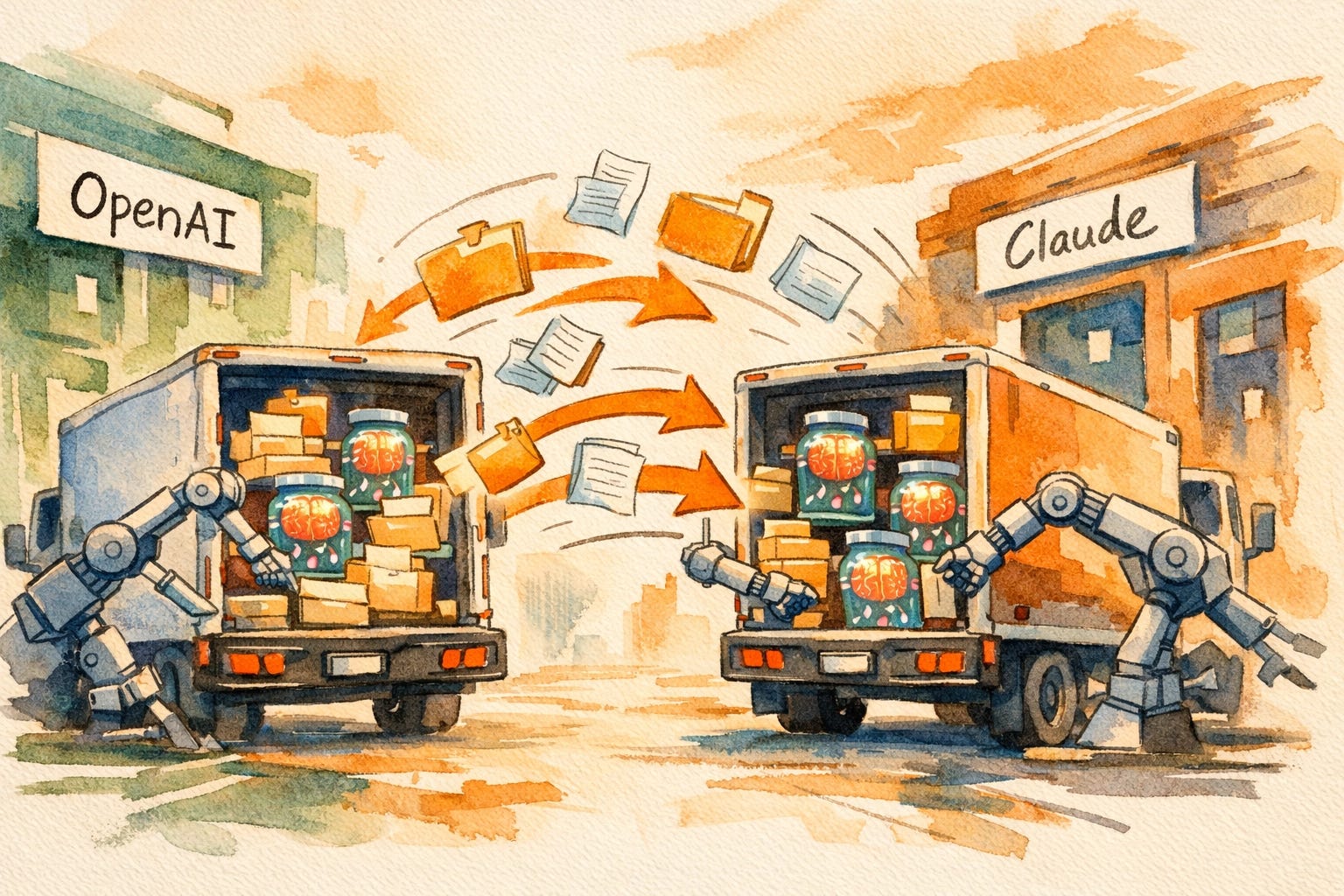
While OpenAI is laying the groundwork, users are migrating to tools that offer the agentic experience today.
According to recent data, Claude sessions surged 1,487% between mid-January and March 2026. Users are averaging 38 sessions per week with Claude versus 18 with ChatGPT. In workplace settings, Claude is driving double the session count.
Why? Because users are gravitating toward tools that already offer better handling of persistent context. Anthropic confirmed daily active users have more than tripled since the start of the year.
I don’t think this is a “ChatGPT is dead” story. I use multiple AI products — just like I use different cameras and lenses for different jobs in my photo booth business. I don’t know that there will ever be a one-size-fits-all. But the surge tells you something important: the people who use AI the hardest are gravitating toward tools that provide a “Business OS” feel.
What You Should Do About It
If you want to leverage AI for your small business, you can’t wait for the platforms to perfectly organize your life. You have to take control of your data layer now.
1. Document Your Workflows
Start by documenting how you like things done — your preferences, your processes, the rules you follow for recurring tasks. This is your portable AI memory. Whether you’re using ChatGPT or mastering the OpenClaw playbook, the frameworks you build today travel with you.
2. Use Library Now
If you’re a ChatGPT user, don’t wait. Upload your key reference documents — your brand guidelines, your templates, your project briefs. Start training ChatGPT on your context. Getting your files in there now means you’ll benefit first as the agent features roll out.
3. Invest in Your AI “Soul”
The biggest pain point in a diversified stack is that every tool learns you separately. Claude knows your voice, but Gemini doesn’t. This is why we are seeing a rise in “context portability” tools.
The goal is simple: Your AI context should belong to you, not the platform.
This is the exact reason we built Mirror Memory. It captures the preferences, writing styles, and institutional knowledge you build in one tool and makes it portable. If you want to switch from Claude to ChatGPT for a specific project, you shouldn’t have to “re-train” the AI on who you are.
The End of the Chatbot Era
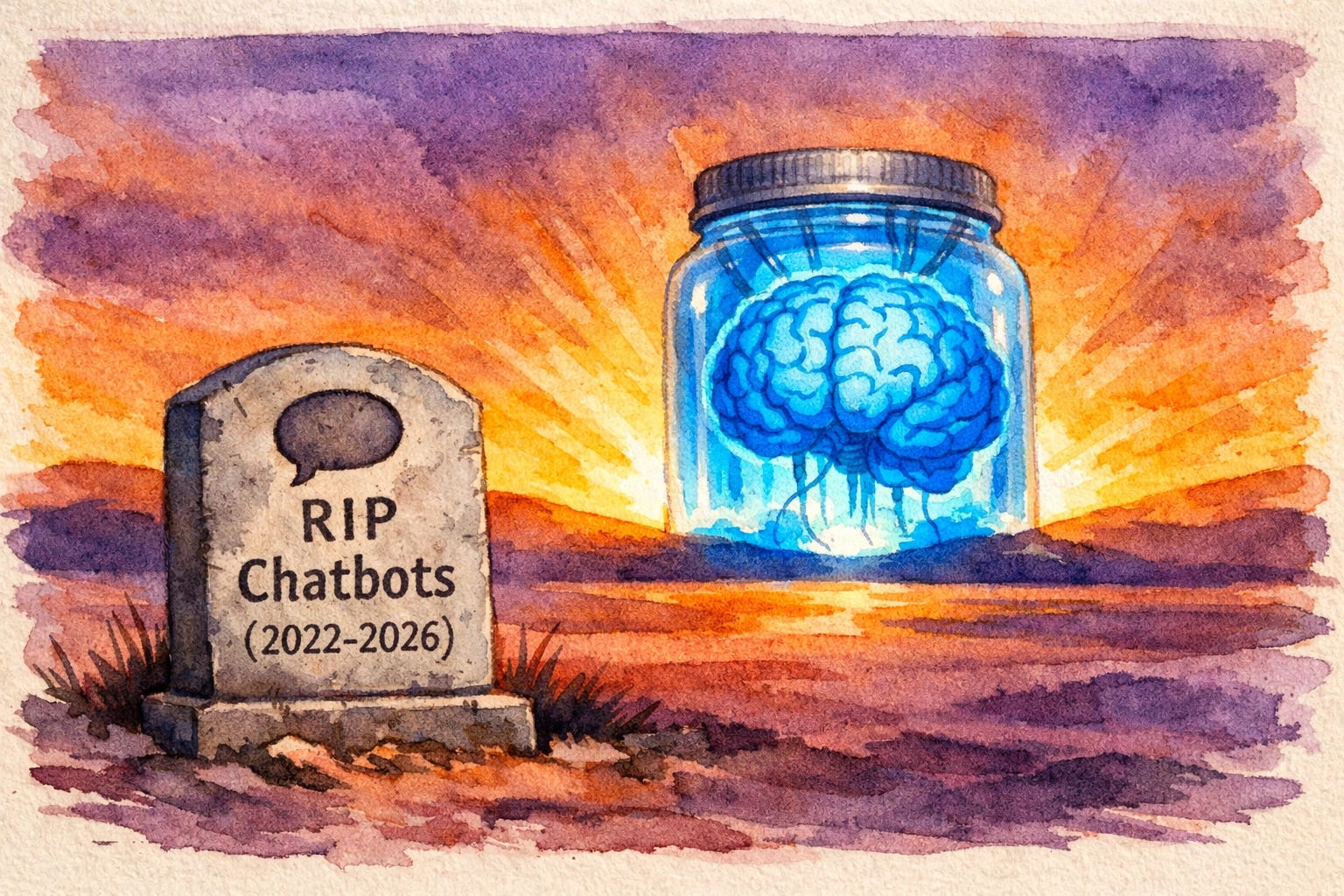
The chatbot era is ending. The agent era just got its filing cabinet.
The most important investment you can make right now isn’t picking the “right” AI tool. It’s owning your context. Document your workflows. Build your memory layer. Because when the next wave of agent features ships — from OpenAI, from Anthropic, from whoever — the people who already have their context organized are going to have a massive head start over everyone starting from scratch.
Own your context. Everything else follows.
Want to stay ahead of the curve?
Check out the Nicholas Rhodes Archive for more deep dives.
Listen to the latest experiments on the Nicholas Rhodes Podcast.
Learn how small businesses can 10x productivity using these exact frameworks.
Your precious ChatGPT is getting a brain!