


There’s a weird little reality about every agentic AI tool you’re running right now. The AI itself — Claude, GPT, whatever — lives in a data center. The brains are in the cloud. That part everyone knows.
But the execution? The part that actually runs your workflows, keeps sessions alive, coordinates tools, and makes things happen? That’s been running on your laptop. Your $3,000 computer has been playing middleman between you and a billion-dollar AI infrastructure and the whole thing falls apart the moment you close your lappy’s lid.
I’ve been hacking around this problem for months. I run VPS instances of Hermes, OpenClaw, and Paperclip in the cloud so they’re always on. I use JumpCloud to remote into my personal CPU when I’m not in front of it to access Cursor. It works. It’s also a maintenance headache that most of my readers can’t replicate.
Anthropic just solved this with Claude Managed Agents. And it’s the first step toward something bigger.
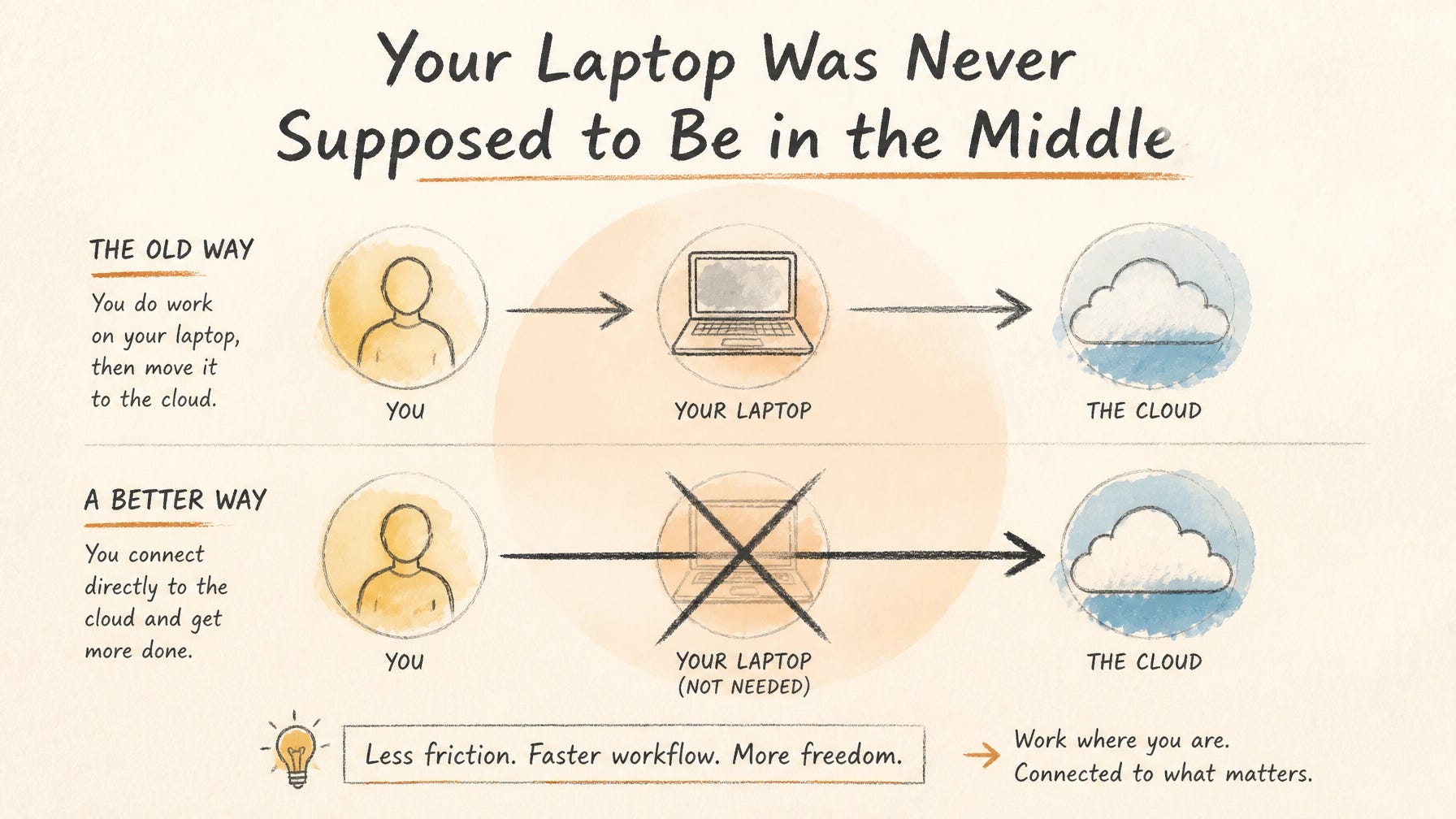
Your Laptop Was Never Supposed to Be in the Middle
Here’s the architecture problem nobody talks about.
When you run Claude Computer Use, or Claude Code, or most agentic AI workflows — Claude’s thinking happens at Anthropic’s servers. But someone or something has to orchestrate that thinking. Someone has to hand Claude the next file, trigger the next tool, keep the session going. Until now, that “someone” has been your local machine.
That’s backwards. Why would you pay for a cloud AI and then be required to babysit it from a local device?
Claude Managed Agents moves the orchestration layer to Anthropic’s infrastructure. Claude can now read files, browse the web, run code, coordinate sub-agents, and execute multi-step workflows for hours — without your machine being involved at all. Sessions persist through disconnections. Progress saves even if you close everything.
The AI is in the cloud. The execution is in the cloud. Your laptop is finally just a screen.
(A few weeks ago I wrote about running Claude Code off a USB drive — the most local setup possible. Managed Agents is the exact opposite end of that spectrum. Both have their place.)
This Is Happening Faster Than You Think
I don’t think we’re 5 years from this being normal. I think we’re already most of the way there, and Managed Agents is just the first mainstream-friendly version of a pattern that’s been quietly building.
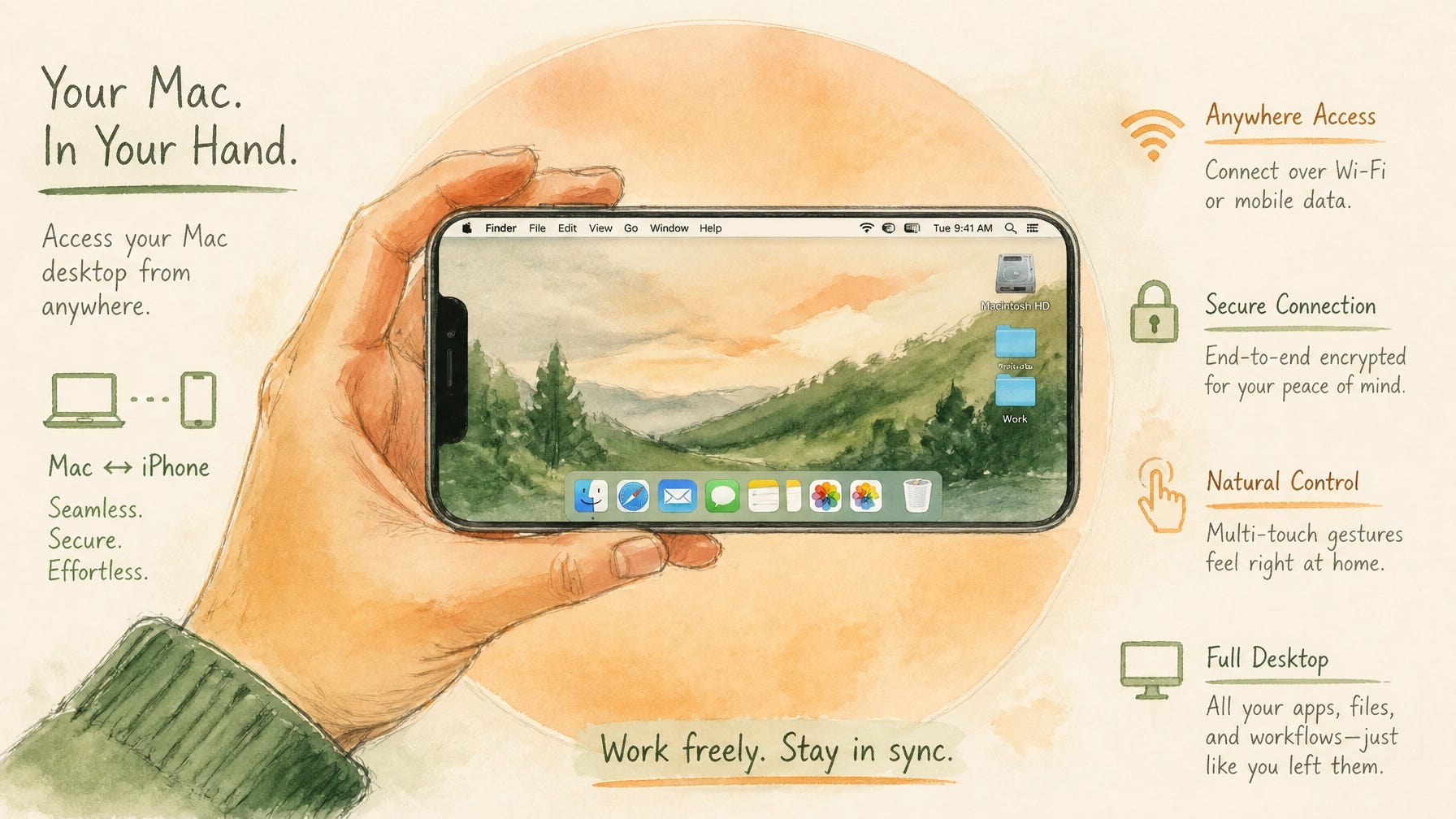
Look at what Apple is doing with iPhone Mirroring. Right now, you can control your iPhone or iPad from your Mac … but now imagine the next iteration where your Mac lives wherever you put it — home office, closet, turned on and connected — and instead your iPhone accesses it from ANYWHERE. I suspect we’re going to quickly move into the “computer” being stationary. The interface is what will move with you.
That’s the template. Next logical step is that all of your compute lives in a data center (or Anthropic’s servers), your portable device is how you interact with it, and the idea of “my computer needs to be on” becomes as dated as “I need to be at my desk.”
Most people think Managed Agents is a developer feature. It’s not. The two misconceptions I keep seeing:
“This requires coding.” It doesn’t. Anthropic shipped 10 ready-to-run templates in early May — pitchbook creation, KYC screening, month-end close work. You pick a template, configure some permissions, and hand it a task.
“It’s just a fancier chatbot.” It isn’t. A chatbot responds. A managed agent executes — for hours, autonomously, across tools and systems you’ve given it access to. It’s categorically different.
What It Costs (and Why the Number Is Surprising)
Pricing is consumption-based: standard Claude API token rates, plus $0.08 per session-hour for active runtime.
Run a 4-hour research and reporting workflow? That’s 32 cents in runtime overhead, plus whatever tokens Claude uses. For most tasks, you’re looking at a few dollars. For a task that would take you two hours to do manually, you’re probably looking at something under $5 total.
The question isn’t whether you can afford it. The question is what your time is worth.
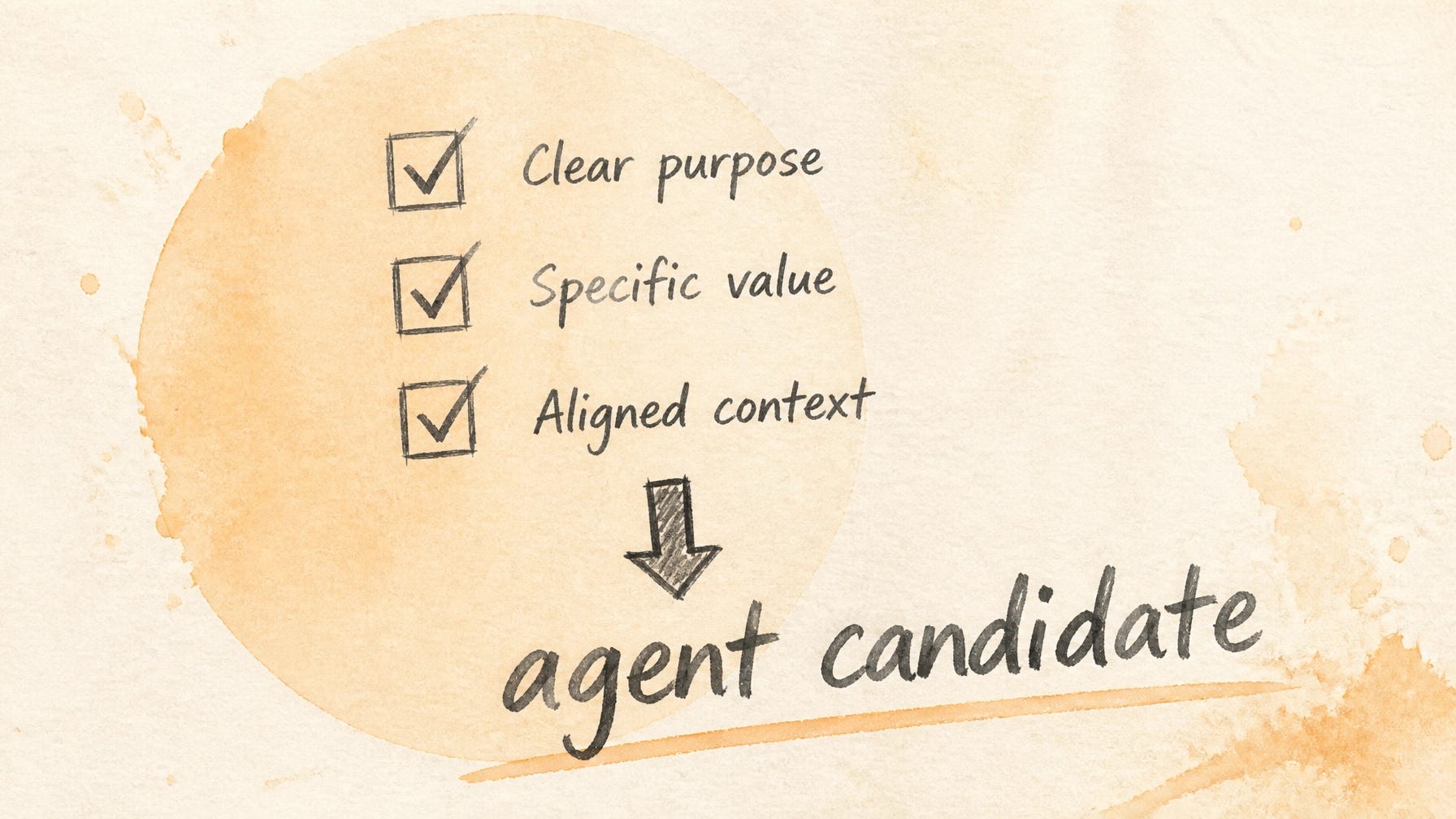
The Task Audit: How to Find Your First Agent Candidate
Before you open the Claude Platform and start clicking around, do this first.
