

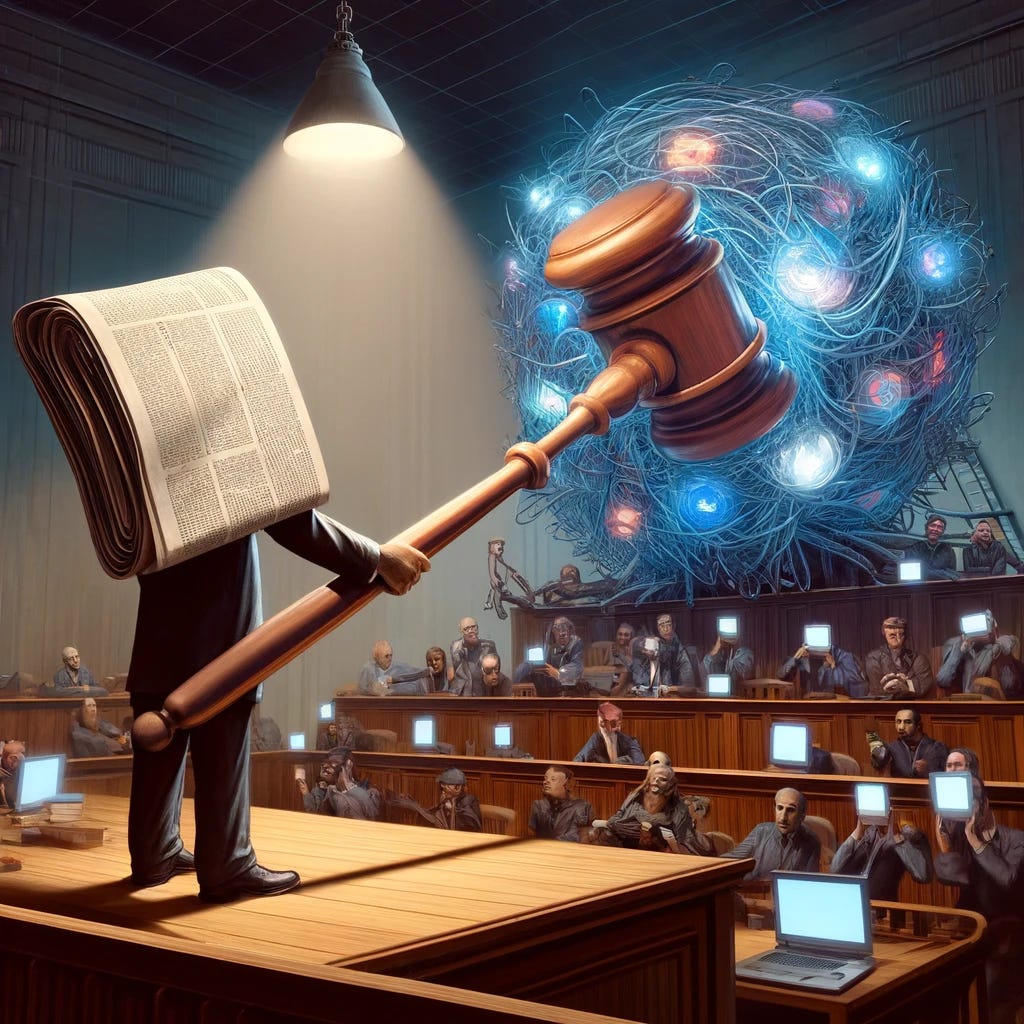
A growing number of creators, from prominent figures like Sarah Silverman, Jonathan Franzen, and John Grisham to countless others, are suing AI platforms for copyright infringement. These lawsuits, including the high-profile case of The New York Times vs. OpenAI and Microsoft (where billions are at stake), hinge on whether AI platforms can legally use copyrighted content without permission (for more on the NY Times case, see "The Times Sues OpenAI and Microsoft Over A.I. Use of Copyrighted Work").
A United Front Against the Machine?
Interestingly, many of the targeted AI platforms share board members, raising questions about potential collaboration between these companies. This begs the question: could creators present a more formidable challenge by consolidating their lawsuits into a united front?
Why This Matters
A collective legal approach could significantly amplify creators' voices against tech giants. This has the potential to reshape how AI platforms interact with creative content, setting crucial legal precedents for the future of AI-generated work.
Imagine a united front: All major newspapers refuse to grant access to their content for AI training unless compensated. This scenario could significantly alter the power dynamics:
Increased Bargaining Power: A single newspaper holds little leverage against a tech giant. But a collective refusal would force AI platforms to negotiate for access to a much larger pool of content, making it significantly more expensive and time-consuming to operate without paying.
Standardizing Rates: A unified approach could lead to standardized licensing fees for AI content training. This would create a fairer market for creators, ensuring they're adequately compensated for the value their work brings to AI development.
Setting Precedents: A successful collaboration could set a precedent for other creative industries, potentially leading to a larger movement demanding fair compensation from AI platforms that rely on copyrighted work.
This scenario highlights the potential power of creators working together. By banding together, they could have a significant impact on how AI platforms engage with creative content in the future.
The FTC Adds Another Layer
Adding further intrigue is the recent inquiry launched by the Federal Trade Commission (FTC) into the investments and partnerships between big tech companies and generative AI startups. This suggests growing scrutiny around the joint practices of these platforms.
The Future of AI and Content Creation
The combined forces of creator lawsuits, potential regulation, and a unified front could significantly reshape the relationship between AI and creative content. Stay tuned for further developments in this evolving landscape!
What Do You Think?
Will a united front be the game-changer creators need against big tech? Share your thoughts in the comments below! Let's discuss the potential impact of a collective legal strategy and whether it can tip the scales in favor of creators.