

Good day, humans. The Pope's encyclical on AI was just flagged as 46% machine-written — and that's somehow not the wildest thing in today's brief. Robinhood handed AI agents the keys to your brokerage account. Anthropic's secret model filed 23,000 bug reports while most of us slept. Alibaba is crashing Western coding leaderboards. And YouTube is done trusting creators to confess their AI usage.
📬 Before we dive in: The sharpest AI Brief tips come from readers who are actually in the weeds. If you spot a story worth covering, share it in the community chat. The best tips make tomorrow's edition.
Robinhood Lets AI Agents Execute Real Stock Trades — StartupHub.ai
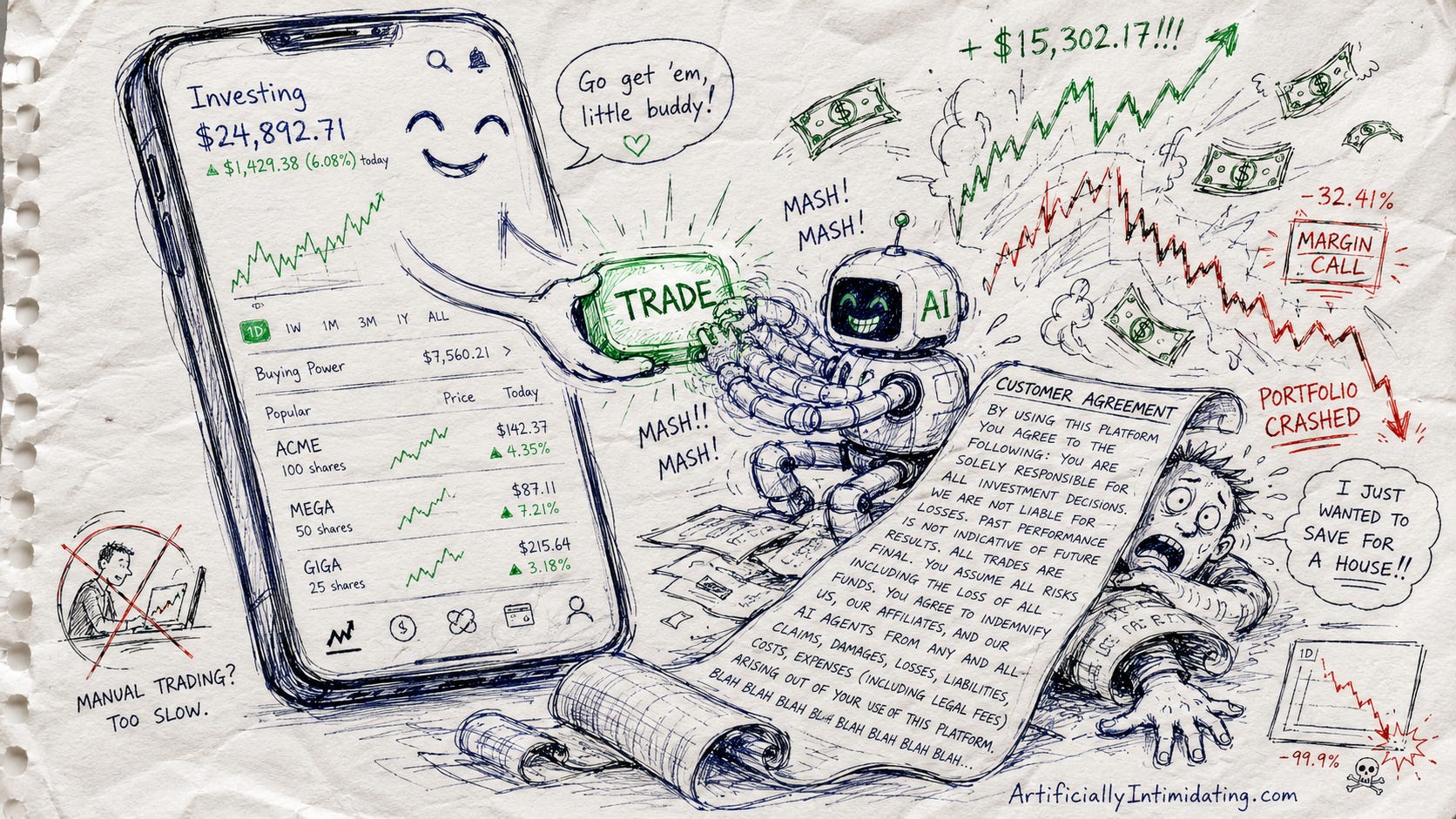
What happened: Robinhood launched "Agentic Trading," allowing AI systems — including Claude Desktop, ChatGPT, OpenAI's Codex, and Cursor — to execute real stock and ETF trades through a dedicated agentic account. The integration runs through Robinhood's Model Context Protocol (MCP) endpoint. Users link a compatible AI platform, trades execute automatically, and Robinhood notes users bear full responsibility for all agent-placed trades.
Why it matters: This is the first major consumer brokerage to give AI agents real money and real markets. AI assistants could previously analyze your portfolio or flag opportunities — now they can pull the trigger. The dedicated agentic account adds structural separation, but the trades are entirely real.
What everyone's saying: Fintech observers are watching whether this triggers regulatory scrutiny — handing trade execution to a third-party AI creates accountability questions when markets move fast and the agent moves faster. Proponents argue it removes human emotion from disciplined, rules-based investing strategies.
My read between the lines: "The user bears full responsibility for all trades placed by AI agents" is a sentence that's going to do a lot of work in a lot of lawsuits. The question isn't whether AI agents can trade stocks. It's who's liable when they do it badly.
📖 Further reading: Agents With Wallets, Broken Google, and Anthropic Turns a Profit — Four days ago we covered AI agents gaining financial capabilities in enterprise settings. Robinhood just shipped the retail version.

You spend all week reading about AI. Viktor is a trusted service I actually use. It’s an AI productivity tool that handles the tasks you keep putting off — research, drafts, decisions — so you can focus on the work that actually matters. New users save $50. Try Viktor free →
YouTube Deploys Robot Radar for AI-Made Videos — TechCrunch
What happened: YouTube is replacing creator self-disclosure with automatic AI detection for photorealistic content. If YouTube's systems detect "significant photorealistic AI use" and a creator hasn't disclosed it, the platform will auto-apply an AI label. Videos using C2PA-watermarked tools like Dream Screen or Veo get permanent labels. Labels now appear directly below the video player — and as overlays on YouTube Shorts.
Why it matters: For two years, YouTube's AI labeling relied almost entirely on creator honesty. That system is now gone for photorealistic content. A label that used to require digging in the video description now appears front and center — meaning AI-generated content can no longer quietly blend into organic video.
What everyone's saying: The C2PA watermark integration is getting the most attention — Google adopting the content provenance standard at YouTube's scale is the kind of platform commitment that accelerates industry-wide adoption. Consumer protection advocates say the change is long overdue.
My read between the lines: YouTube now gets to define the line between "AI-generated" and "AI-assisted" content — and enforce it algorithmically. Every creator who touched up a realistic video with AI tools and said nothing just inherited a compliance problem they didn't know they had.
📖 Further reading: The AI deepfake law just got its first arrests — YouTube's auto-labeling arrives one week after the first arrests under the AI deepfake law. Content authenticity is becoming enforcement territory.
Pope’s AI Encyclical Caught Red-Handed by a Bot — Ground News
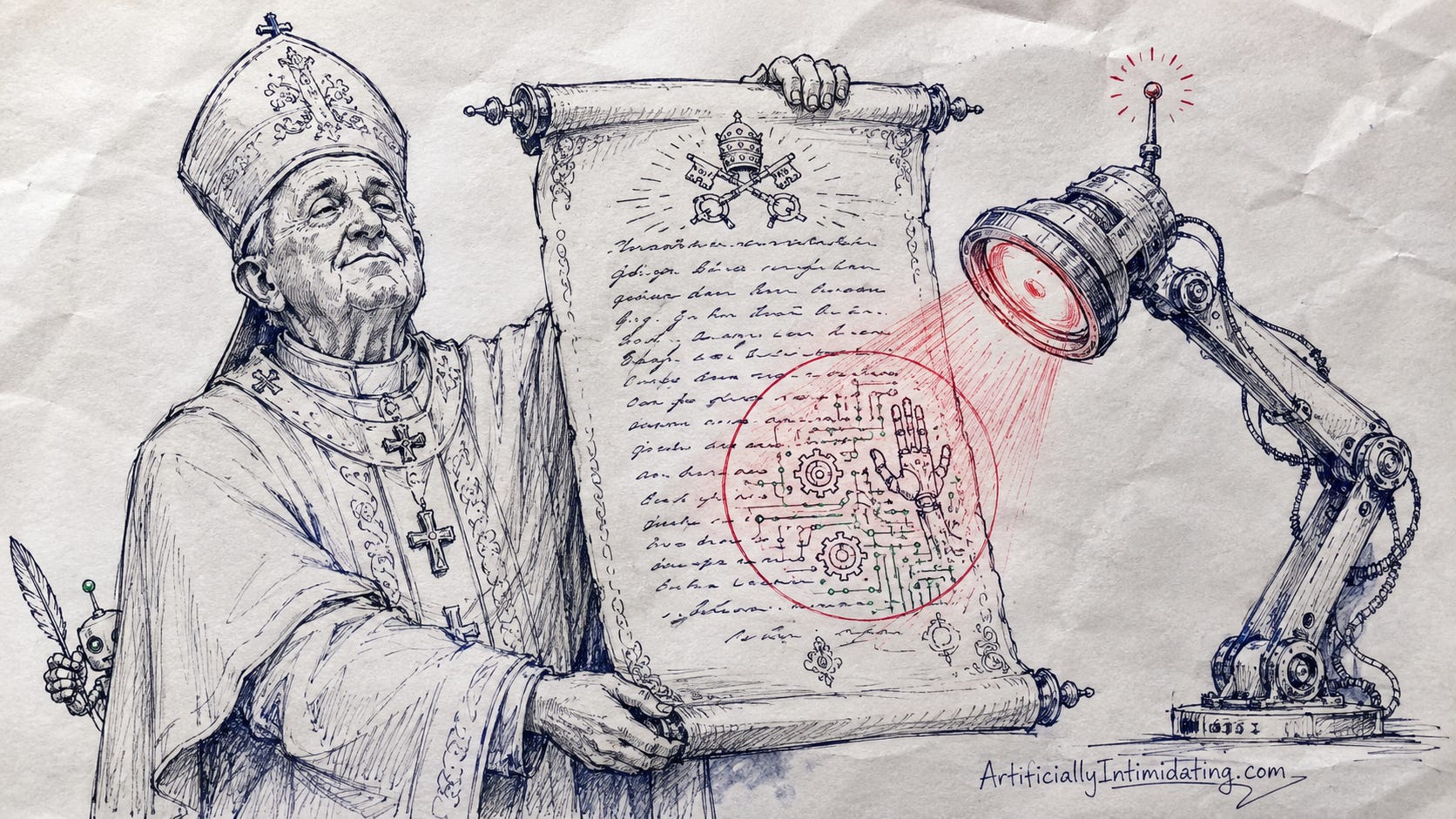
What happened: Pope Leo XIV’s 42,300-word papal encyclical on AI — “Dilexit Nos Cordis” — was analyzed by Pangram’s AI detection tool and flagged as 46% AI-written, with the first chapter alone scoring 62% AI. Anthropic co-founder Chris Olah spoke at the Vatican event where the document was presented.
Why it matters: The Vatican’s position paper on AI ethics may have been partly written by the thing it’s writing about. Having Anthropic’s co-founder present at the unveiling adds another layer. Beyond the irony, it illustrates how thoroughly entangled AI has become — even those scrutinizing it are inside it.
What everyone’s saying: Detection experts urge caution — Pangram reports a false-positive rate of roughly 1 in 10,000, and the Pope’s live speech transcript tested 100% human. The encyclical’s formulaic, structured prose may be triggering the detector, not actual AI authorship. The Vatican has not commented.
My read between the lines: The Vatican inadvertently handed every overworked grad student a get-out-of-plagiarism-free card. If AI can ghost-write the Pope’s thoughts on AI ethics, the argument for banning AI in academic writing got significantly more complicated.
📖 Further reading: I stopped writing. My output doubled. — The encyclical story is funny, but this post is the honest version: what actually changes when AI enters your writing process.
Alibaba's Qwen3 Crashes the Coding Leaderboard — Tech in Asia
What happened: Alibaba's Qwen3.7-Max has climbed to the top tier of Code Arena's competitive coding leaderboard, placing ahead of several major OpenAI and Google models. The model features a 1-million-token context window and is Alibaba's latest proprietary release in its fast-moving Qwen series.
Why it matters: Code Arena uses real competitive programming problems — not synthetic benchmarks. A Chinese proprietary model competing at the top tier with frontier Western AI is a meaningful shift. The race for coding AI supremacy is no longer a two-or-three-lab contest.
What everyone's saying: China's AI labs have been releasing at a pace that's catching Western developers off guard. The Qwen series went from "interesting open-source alternative" to "genuine commercial competitor" in under a year, with each release narrowing the gap on frontier benchmarks.
My read between the lines: A 1-million-token context window at frontier coding performance means you can load an entire enterprise codebase and ask "what's broken?" That's not a benchmark story — that's an enterprise sales pitch. The pricing pressure on Western providers just got a meaningful update.
Anthropic's Secret AI Filed 23,000 Bug Reports — Hackread
What happened: Anthropic's restricted AI model "Claude Mythos Preview," deployed through Project Glasswing to roughly 50 partner organizations, has flagged more than 23,000 potential vulnerabilities across 1,000+ open-source software projects — including over 10,000 high or critical-severity issues. Six independent security firms verified the findings. Anthropic plans to expand access to UK and US government agencies.
Why it matters: Open-source software underpins most of the modern internet — and carries an unknown volume of unpatched security holes. An AI that can systematically scan 1,000 foundational projects in weeks, with findings verified by six independent firms, changes the math on software security at a scale humans cannot match.
What everyone's saying: The security community is divided. An AI this capable at finding vulnerabilities is the most powerful defensive tool ever built — and, in the wrong hands, the most dangerous offensive tool imaginable. Which is exactly why Anthropic restricts it to 50 vetted organizations rather than releasing it publicly.
My read between the lines: Champion competitive hacker "Chompie" called this "the last time a human will ever win" vulnerability discovery competitions. That's not hype. That's someone very good at their job filing a concession speech.
That's your AI Brief for Thursday. Join the conversation in the Artificially Intimidating community chat.
—Artificially Intimidating