

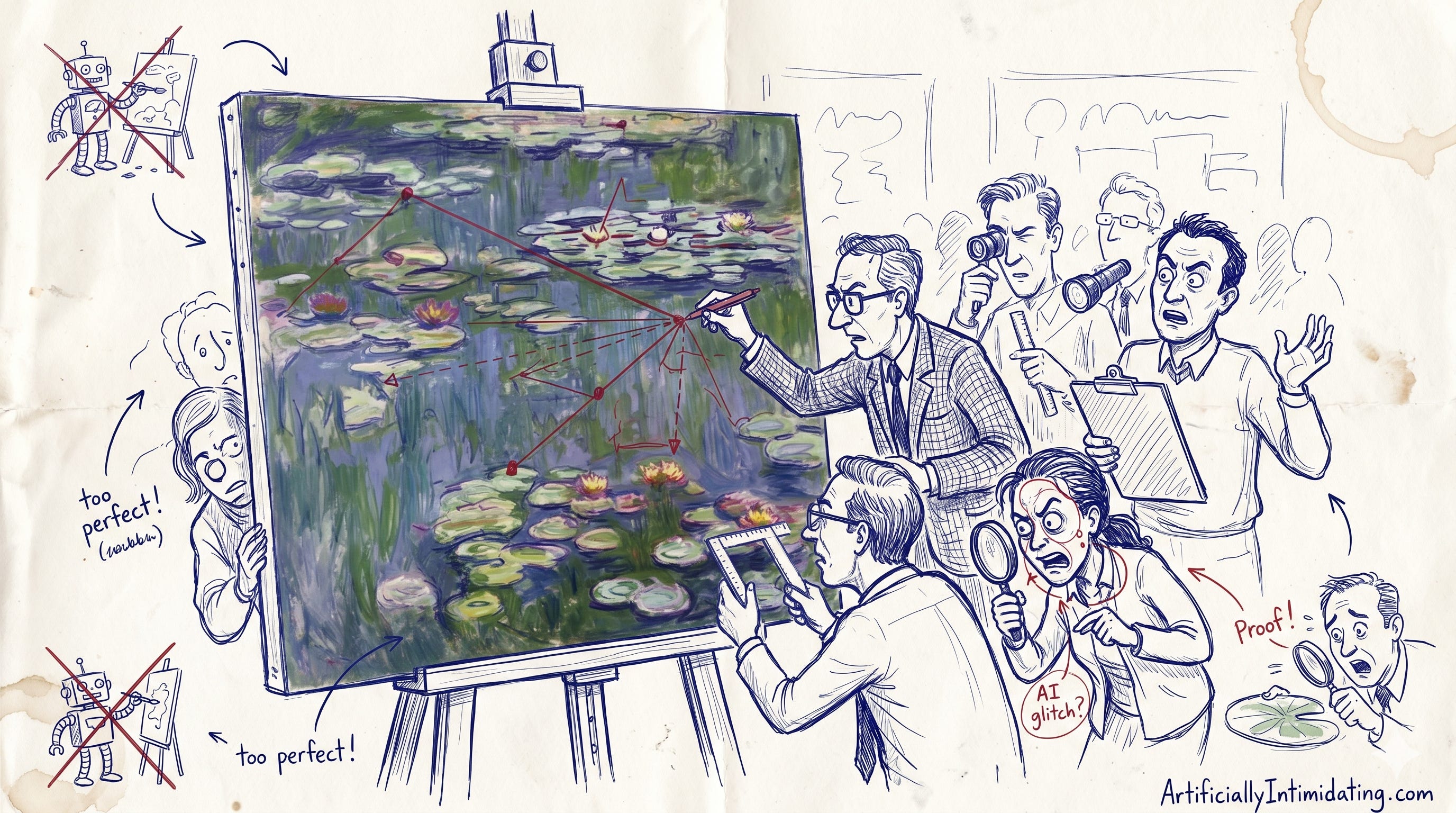
Good day, humans. Anthropic’s Mythos AI just found a previously unknown way to break into Apple’s macOS — and security researchers say we haven’t seen anything like it before. Meanwhile, an anonymous artist posted a real Monet labeled “Made with AI,” and thousands of confident critics explained exactly why it was soulless slop. Both stories will tell you more about this moment than any benchmark ever could.
📬 Before we dive in: The sharpest AI Brief tips come from readers who are actually in the weeds. If you spot a story worth covering, share it in the community chat. The best tips make tomorrow’s edition.
Mythos Hacked Apple. Apple Is Reviewing It. AppleInsider
What happened: Security researchers at Palo Alto firm Calif used Anthropic’s unreleased Mythos AI to find a new way into Apple’s macOS — chaining two bugs together to corrupt memory and gain access to restricted parts of the device. Apple says it’s “reviewing and validating” the findings.
Why it matters: Apple security is among the hardest targets in the world. Finding new macOS vulnerabilities is genuinely rare. That an AI model Anthropic considers too dangerous to release publicly managed to find one — with human researchers alongside — means the AI-powered security arms race just entered a new phase.
What everyone’s saying: Mozilla used Mythos to find 271 vulnerabilities in Firefox. Bruce Schneier called it “a step change in cyber capabilities.” The consensus: AI finding flaws and defenders patching them is the new normal — but right now, finding is outpacing fixing.
My read between the lines: Keeping Mythos locked up is Anthropic’s smartest PR move. “Our AI is so powerful we won’t release it” is the most effective scarcity marketing since the iPhone line.
📖 Further reading: Your laptop has been in the way this whole time — Mythos shows what Anthropic AI can do when fully unleashed; this piece explains what Claude’s managed agents are already doing in your stack right now.
You spend all week reading about AI. WisprFlow is the one I actually use. It’s voice dictation that works across every app on your Mac — speak, and it writes. No switching, no copying, no friction. If you’re still typing everything, this is the upgrade. Try WisprFlow free →
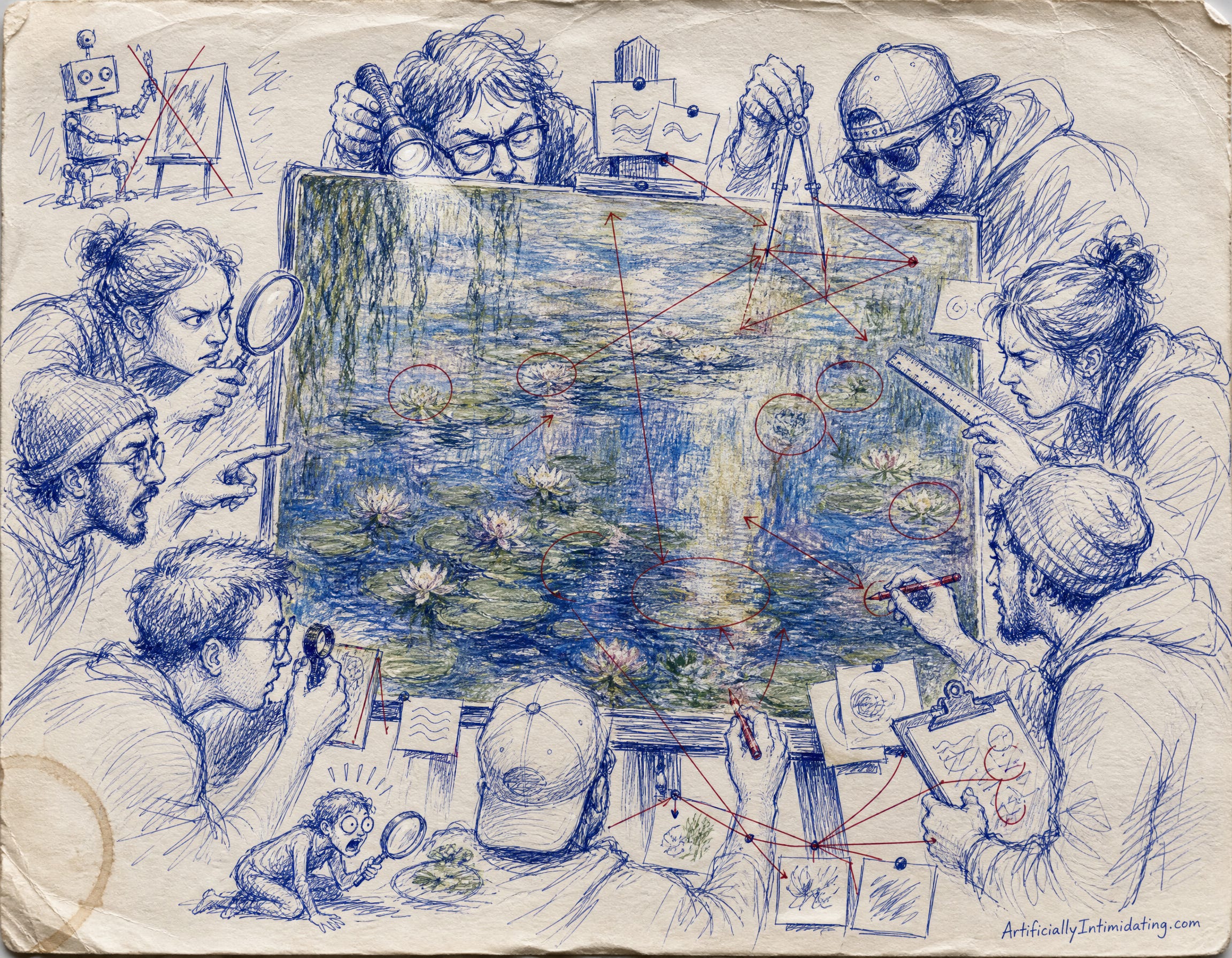
They Posted a Real Monet. Labeled It AI. The Critics Arrived. PetaPixel
What happened: Artist SHL0MS posted a cropped Monet Water Lilies painting on X with a “Made with AI” label, then invited critiques. Thousands delivered — one wrote an 850-word analysis of its poor composition. Another drew diagrams showing bad “eye lines.” Once the reveal dropped, the deletes came fast.
Why it matters: Yesterday we covered how AI chatbots can lock users into distorted realities — today the bias runs the other direction. A single label changed what thousands of people saw. Research has confirmed this effect repeatedly; the internet just ran a live version at Monet’s expense.
What everyone’s saying: Online art communities are grappling with what some call an “anti-AI witch hunt” — real artists with decades of pre-AI work are being falsely flagged as generative. The Monet prank exposed how often these confident verdicts are really just vibes with footnotes.
My read between the lines: The funniest part isn’t the bad takes — it’s that a Monet painting was called “crap.” If Monet were alive today, he’d be banned from r/Art and thriving on Etsy.
Two Ex-Meta Sisters Raised $30M to Manage Your Brand’s DMs BusinessWire
What happened: Nectar Social, founded by sisters Misbah and Farah Uraizee (both ex-Meta product and engineering leaders), raised a $30M Series A led by Menlo Ventures’ Anthology Fund — a vehicle created in partnership with Anthropic to back agentic AI companies. Google Ventures and Gwyneth Paltrow’s Kinship Ventures also participated.
Why it matters: Nectar’s AI is already handling 10 million autonomous customer conversations per week across social media — up fivefold in three months. Brands using it see DM conversion rates of 12%, compared to 1–3% for email. That’s not a feature. That’s a category shift.
What everyone’s saying: The agentic marketing space is heating up fast. Menlo’s dedicated Anthropic-powered fund signals that major VCs believe the next wave is AI that takes action on your behalf — not just AI that answers questions.
My read between the lines: Gwyneth Paltrow investing in an AI marketing startup sounds like a joke until you remember Goop built a lifestyle empire on influencer trust. She knows the customer better than most VCs do.
📖 Further reading: Coinbase Built the AI-Powered Org. Meta Built the AI Slop Machine. — Nectar is betting on the Coinbase side of that equation: AI as a genuine business operation, not a marketing bolt-on.
BrowserAct Open-Sources a Skeleton Key for the Web GlobeNewswire
What happened: Singapore-based ECOCREATE released two open-source tools — browser-act and browser-act-skill-forge — that let AI agents navigate real websites, including those protected by Cloudflare and DataDome anti-bot systems. CAPTCHA solving is included free. The tools integrate with Claude Code, Cursor, and Codex.
Why it matters: AI agents mostly operate in controlled environments today. The real web is gated by anti-bot systems that block them. BrowserAct removes that wall — meaning AI can now act on your behalf on websites that were never designed to be automated.
What everyone’s saying: The company claims agents using browser-act see 90% fewer error-and-retry loops and 93% lower token consumption. Developers building agentic systems are paying close attention — this removes a core blocker to real-world deployment.
My read between the lines: “Explore once, reuse forever” is a beautiful tagline. The security teams at Cloudflare and DataDome are reading it with somewhat less enthusiasm right now.
📖 Further reading: Your laptop has been in the way this whole time — BrowserAct unlocks the web for AI agents; this piece explains what they can actually do once they’re inside your stack.
The Pope Is Writing an AI Encyclical. The Church Has Been Warming Up. US News
What happened: Pope Leo XIV — the first American Pope, who named himself partly in response to AI’s impact on labor — is expected to release his first encyclical in the coming weeks, focused on artificial intelligence. On May 12, he told journalists that AI “requires responsibility and discernment in order to ensure that it can be used for the good of all.”
Why it matters: An encyclical is the Catholic Church’s highest-level teaching document, addressed to 1.4 billion Catholics and often read far beyond that audience. When the Pope formally weighs in on AI governance with 2,000 years of institutional moral authority behind him, it lands differently than any tech CEO’s blog post.
What everyone’s saying: Vatican observers expect the encyclical to frame AI through the lens of “human dignity, justice, and labor” — following the tradition of Leo XIII’s Rerum Novarum, written at the height of the industrial revolution. Expect a call for AI that protects workers rather than displacing them.
My read between the lines: The first American Pope writing the Church’s formal position on AI while Silicon Valley pours money into autonomous agents that replace human workers is either the most ironic timing in recent history, or the most perfectly timed intervention. We’ll find out in a few weeks.
That’s your AI Brief for Saturday, May 16. Join the conversation in the Artificially Intimidating community chat.
—Artificially Intimidating