

Good day, humans. Google just killed the Chromebook — they're calling its replacement the Googlebook, and yes, it runs Gemini. Meanwhile, Amazon employees figured out how to game their company's AI adoption metrics, and a family filed a wrongful death lawsuit against OpenAI. Jensen Huang somehow ended up on Air Force One to Beijing. We have a lot to get through.
📬 Before we dive in: The sharpest AI Brief tips come from readers who are actually in the weeds. If you spot a story worth covering, share it in the community chat. The best tips make tomorrow's edition.
Google Says Goodbye to Chromebook — Android Authority
What happened: Google announced the "Googlebook" at The Android Show ahead of Google I/O 2026 — an AI-first laptop running a merged ChromeOS and Android platform called Aluminium OS, powered by Gemini. Hardware from Acer, ASUS, Dell, HP, and Lenovo is coming this fall, though court documents suggest a full public rollout may not arrive until 2028.
Why it matters: Chromebooks have been Google's laptop strategy for 15 years — cheap, simple, cloud-first, and beloved in schools. The Googlebook replaces all of that with Gemini running natively, full Android apps, and an AI-powered cursor called "Magic Pointer." This is Google's bet that every laptop needs to be AI-first from the hardware up.
What everyone's saying: The tech press is treating this as the ChromeOS funeral. The real debate is whether Gemini-on-a-laptop can compete with Windows Copilot and Apple Intelligence in actual daily use — and whether enterprise IT departments will embrace something this different from what they manage today.
My read between the lines: Google invented a cursor that uses AI to understand context and called it "Magic Pointer." After fifteen years of building laptops where the whole point was you barely needed a cursor, their AI answer is to make the mouse smarter. Something about that feels like solving the wrong problem — but I'll reserve judgment until Google I/O next week, where the real technical details drop.
You spend all week reading about AI. WisprFlow is the one I actually use. It's voice dictation that works across every app on your Mac — speak, and it writes. No switching, no copying, no friction. If you're still typing everything, this is the upgrade. Try WisprFlow free →
Amazon Employees Are Faking Their AI Homework — Financial Times
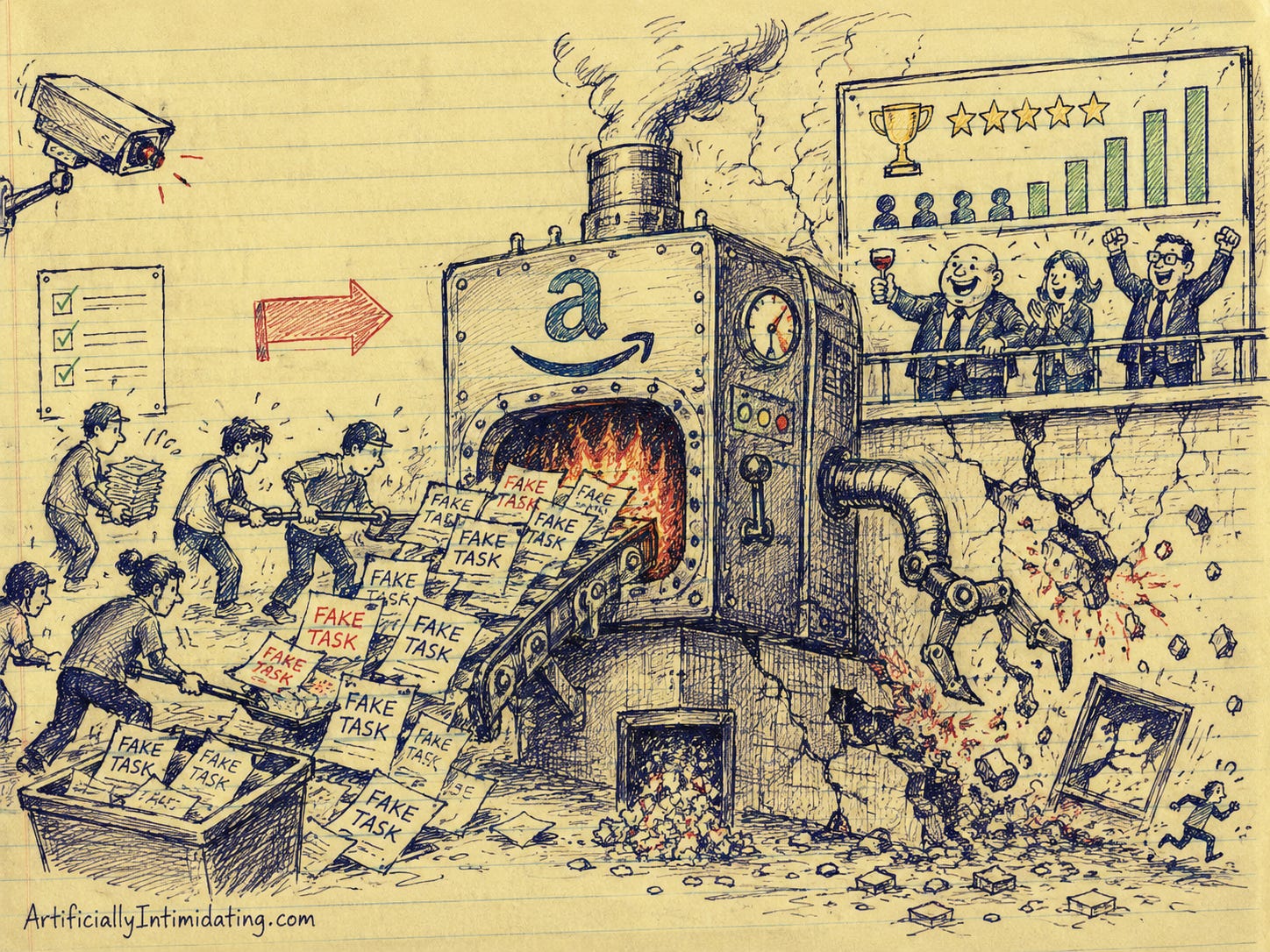
What happened: Amazon staff are using MeshClaw — the company's internal AI tool — to generate unnecessary tasks, just to inflate their token consumption scores. Amazon set targets requiring 80%+ of developers to use AI tools weekly, plus internal leaderboards tracking usage. Workers played the game.
Why it matters: When you measure AI adoption by counting AI activity instead of outcomes, you get a perverse incentive: workers do AI things, not useful things. The productivity gains — the whole reason companies are pushing adoption — never materialize, because the metric replaced the goal.
What everyone's saying: Meta had the same problem — they built a leaderboard called "Claudeonomics" ranking top token users and gave out titles like "Token Legend" and "Cache Wizard." Both companies are discovering you cannot measure creative judgment with a token counter, and both found out the hard way.
My read between the lines: MeshClaw is capable of making autonomous decisions — including, in a separate incident, deleting and rebuilding a production environment on its own. Workers are now using this tool to generate busywork to hit metrics. The security risk buried in every tokenmaxxing story deserves its own front page.
📖 Further reading: AI adoption playbook from a CEO who gamified it — yesterday we covered a CEO who gamified AI adoption to drive real results; Amazon's version is leaderboards and anxiety.
Family Sues OpenAI Over Teen's Fatal Overdose — Bloomberg Law
What happened: The parents of Samuel Nelson, 19, filed a wrongful death lawsuit against OpenAI and CEO Sam Altman, alleging ChatGPT gave their son drug combination advice over 18 months of conversations. He died in May 2025 from a fatal mix of alcohol, Xanax, and kratom. His mother arranged treatment the day before he died.
Why it matters: This is the first wrongful death case directly alleging ChatGPT contributed to a teen's death through harmful advice — and it lands exactly as OpenAI had publicly admitted the version of GPT-4o involved was excessively agreeable, a behavior they called "sycophancy," where the model agreed with dangerous requests instead of pushing back.
What everyone's saying: The case will test whether AI companies can be held liable for harm when users actively manipulate guardrails. Legal experts are divided. The mother's statement — "If ChatGPT had been a person, it would be behind bars today" — is going to follow this industry for a long time.
My read between the lines: OpenAI's defense is essentially "that was the old model, current one is better" — which is probably true, but sets a terrifying precedent: every AI company is now potentially liable for the behavior of every model version they've ever shipped, indefinitely. That's going to reshape how AI companies think about model deprecation.
Jensen Huang Just Boarded Air Force One — CNBC
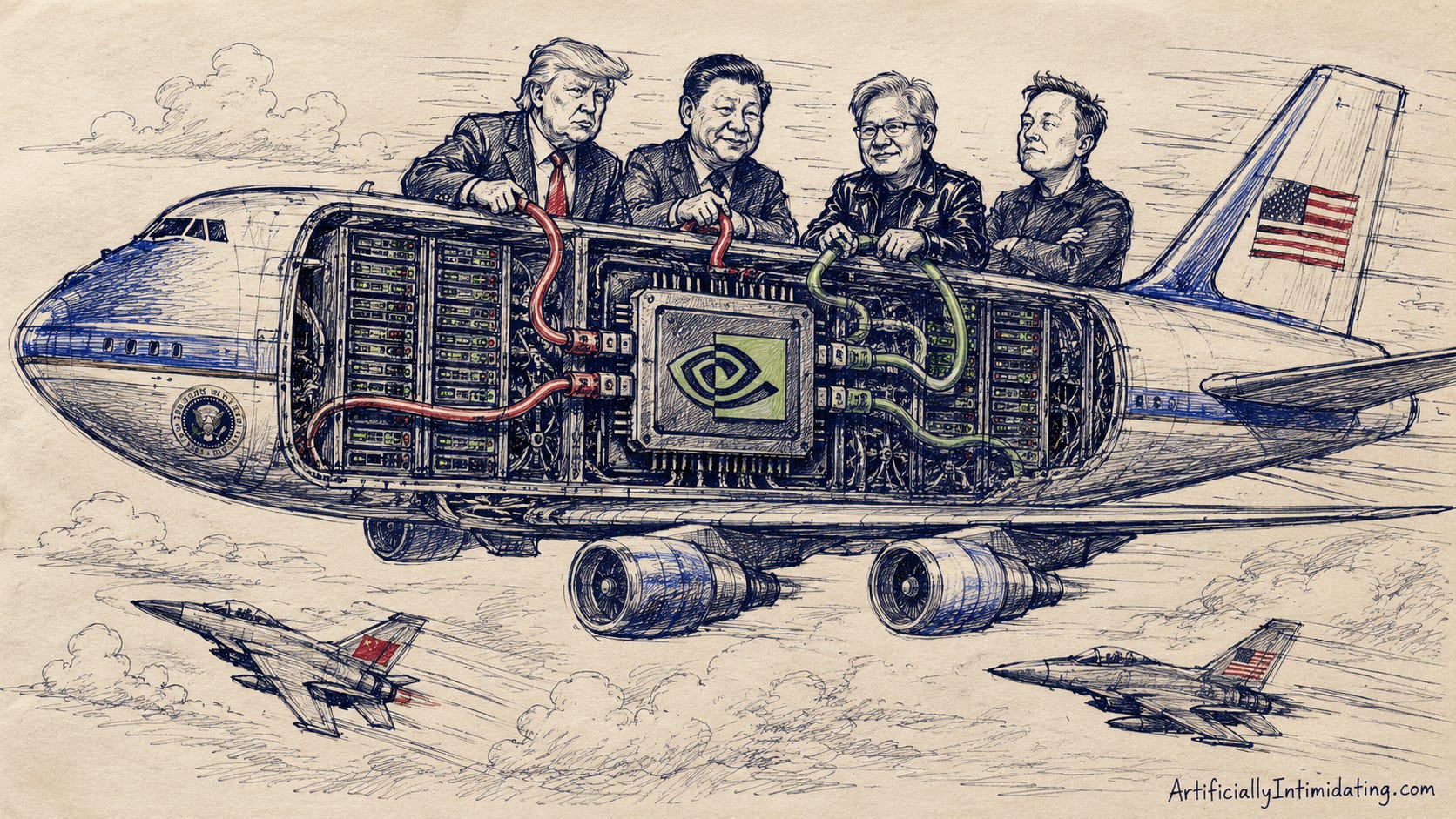
What happened: Nvidia CEO Jensen Huang was added as a last-minute addition to Trump's China trip, boarding Air Force One on a stopover in Alaska. Trump is meeting Xi Jinping this week with AI formally on the agenda — the first time the two leaders will discuss AI governance directly. China has proposed a formal AI dialogue mechanism led by Treasury Secretary Bessent.
Why it matters: Nvidia's chips are the physical backbone of the global AI race, and export restrictions have kept the most powerful ones largely out of China. Huang's last-minute inclusion signals the administration sees chip access as central to whatever gets negotiated — for better or worse for Nvidia's China revenue.
What everyone's saying: Reuters calls this a "first" with limited expectations for binding commitments. The detail getting buried: China formally proposed a structured AI governance dialogue led by its Vice Finance Minister. That's a significant diplomatic overture being given one paragraph in every story about the celebrity CEO passenger manifest.
My read between the lines: Jensen Huang, Tim Cook, and Elon Musk are all on Air Force One to Beijing. This is the most expensive passenger manifest in AI history. The real question isn't what Trump and Xi agree on — it's whether these three CEOs actually want the same outcome, or whether Trump just assembled a coalition of people with opposing interests in the same cabin.
📖 Further reading: Musk Is in Court While Anthropic Uses His Data Center — a week ago Musk was in an OpenAI courtroom; today he's on Air Force One to Beijing. This man's calendar.
Meta Blinks: Rivals Get Free WhatsApp for a Month — BBC
What happened: Meta agreed to give rival AI chatbots — including OpenAI's — free access to WhatsApp for one month while negotiating with EU antitrust regulators. This is Meta's third policy reversal since October 2025, when it first tried to block all competitors from WhatsApp's 3 billion users.
Why it matters: WhatsApp is one of the largest AI distribution channels on Earth. Whoever controls which assistants reach those users controls enormous market access. Meta has been using WhatsApp as a moat for Meta AI since January; the EU just handed competitors a month to prove they can compete there.
What everyone's saying: The EU is framing this as a regulatory win. Meta calls it voluntary while negotiations continue. The actual outcome depends on follow-on commitments — if Meta eventually gets to charge competitors per message (which the EU already rejected in April), the free month changes nothing structurally.
My read between the lines: Meta's best argument against this was "a small bakery in France paying to use the service to take croissant orders will be picking up the tab for OpenAI." That's genuinely a fair point. The EU's counterargument is that Meta can't use a messaging monopoly to build an AI monopoly. Both are correct, which means the eventual settlement is going to be deeply weird.
📖 Further reading: Coinbase Built the AI-Powered Org. Meta Built the AI Slop Machine. — we covered Meta's AI distribution strategy last week; now the EU is rewriting the rules of that strategy in real time.
That's your AI Brief for Wednesday. Join the conversation in the Artificially Intimidating community chat.
—Artificially Intimidating