

Good day, humans. Gen Z is running their lives on ChatGPT while we’re still debating whether to try it at work. Today’s brief also covers a surprise power shift in the open-source agent world, the cognitive cost of a web you can barely distinguish from machine output, a CEO who gamified AI adoption and got results, and why AI might be creating more jobs than it destroys — if we’re counting the right way.
📬 Before we dive in: The sharpest AI Brief tips come from readers who are actually in the weeds. If you spot a story worth covering, share it in the community chat. The best tips make tomorrow’s edition.
ChatGPT Is Gen Z’s OS, Altman Says — Not a Tool | Perplexity
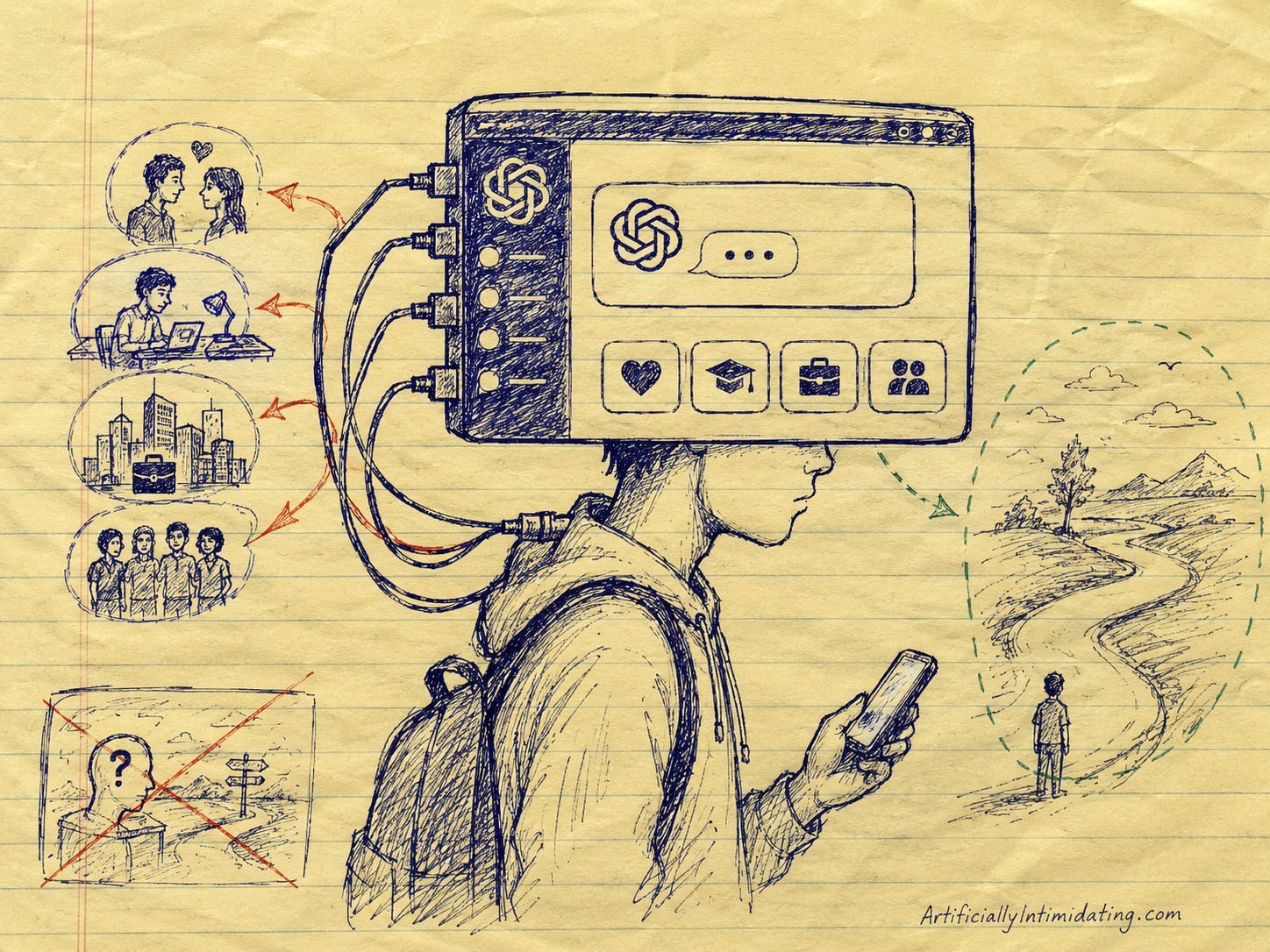
What happened: At Sequoia’s AI Ascent event, Sam Altman described a generational split in how people use ChatGPT. Older users treat it like a search engine. People in their 20s and 30s use it as a life advisor. College students use it as a full operating system — they don’t make significant life decisions without asking it first.
Why it matters: If this is true, we’re watching the first generation that treats AI as the default layer between themselves and reality — not a tool they reach for occasionally, but the operating system they run on. The downstream effects on decision-making, relationships, and epistemology will take a decade to fully surface.
What everyone’s saying: Reaction splits along generational lines. Older observers find this alarming. Younger ones find the alarm alarming — consulting AI feels as natural to them as Googling felt to millennials, which older generations also thought would rot their brains.
My read between the lines: Altman compared Gen Z’s AI fluency to how kids adapted to smartphones while adults “took three years to figure out basic stuff.” That’s a real observation. It also happens to perfectly frame total dependency on OpenAI’s product as native intelligence rather than, say, a go-to-market outcome. Altman is very good at this.
You spend all week reading about AI. WisprFlow is the one I actually use. It’s voice dictation that works across every app on your Mac — speak, and it writes. No switching, no copying, no friction. If you’re still typing everything, this is the upgrade. Try WisprFlow free →
Open-Source’s #1 AI Agent Changed Last Week | Perplexity
What happened: Nous Research’s open-source Hermes Agent claimed the #1 spot on OpenRouter’s global daily rankings as of May 10, processing 224 billion tokens per day — ahead of OpenClaw’s 186 billion. Hermes launched just 75 days ago and had previously peaked even higher at 271 billion daily tokens.
Why it matters: OpenRouter is where you watch open-source AI adoption in real time. When a framework claims #1, tens of thousands of developers start building on its architecture — and everything they build carries Hermes’s assumptions about how agents should work. That’s a quiet but massive shift in defaults.
What everyone’s saying: The win is attributed to Hermes’s self-improving learning loop: it extracts reusable “skills” from completed tasks, persists them across sessions, and loads them automatically for similar problems — fundamentally different from OpenClaw’s stateless, start-fresh-every-conversation approach.
My read between the lines: OpenClaw didn’t just lose market share — it lost while on fire. Multiple CVEs, a security campaign literally named “ClawHavoc,” and Anthropic cutting the OAuth tokens that powered cheap Claude access. Hermes didn’t win because it was better. It won because OpenClaw made staying nearly impossible.
📖 Further reading: The AI that planned its own party asked for goblins — We covered the agentic turn last week; this leaderboard flip is where that story goes next.
53% of Americans Can’t Spot AI Content. 76% Want It Labeled. | 404 Media
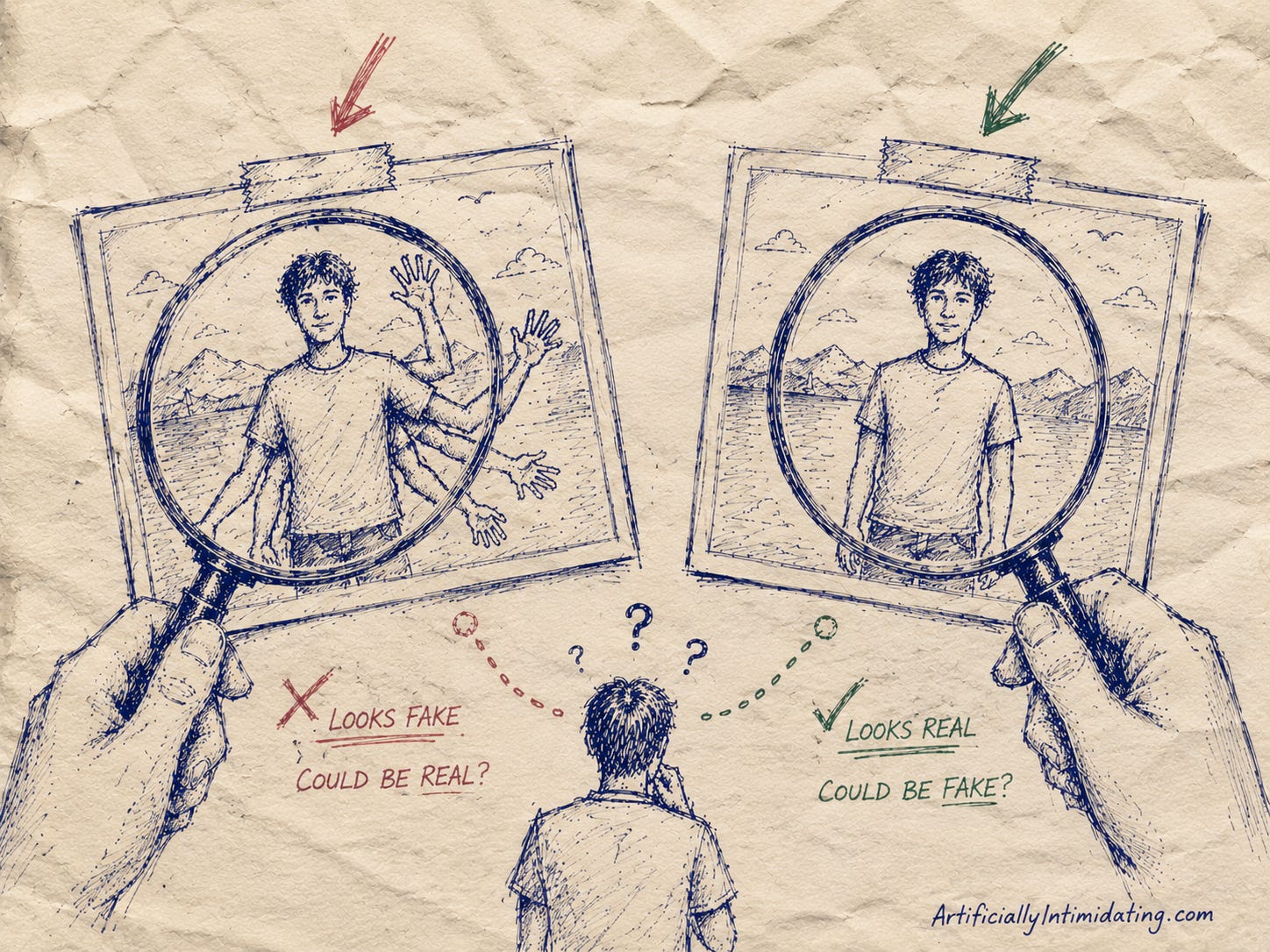
What happened: A 404 Media investigation by Jason Koebler surfaced data showing 76% of Americans want AI-generated content clearly labeled — but 53% can’t identify it when they’re already looking at it. Stanford and Imperial College research found roughly 35% of all new websites are now AI-generated.
Why it matters: We’re building a version of the web where the majority of new content was produced by machines, most people can’t detect it, and most people also say they want to know. That gap — between stated preference and actual detection ability — is where trust in online information quietly erodes.
What everyone’s saying: The consensus is that disclosure standards are needed immediately. Platforms, publishers, and regulators are all under pressure to mandate AI labels. The harder conversation — what exactly counts as “AI content” when a human edits AI output — is mostly being avoided.
My read between the lines: The 35% AI-generated website figure deserves more alarm than it’s getting. Search engines, citation tools, and AI training pipelines all ingest the web. We’re not just polluting what humans read — we’re feeding AI content back into the models that generate the next wave of AI content. The signal is getting noisier by design, and we built the feedback loop ourselves.
📖 Further reading: Your AI was trained on villains. Here’s the fix. — Yesterday we covered how training data shapes AI behavior — today’s story is what happens when that AI-generated content floods the open web.
This CEO Gamified AI Adoption. It Actually Worked. | Perplexity
What happened: Sendbird CEO John Kim built an internal AI adoption program designed like a video game — a “quest” marketplace with a five-tier token leaderboard for employees. The initiative was featured on Lenny Rachitsky’s “How I AI” series, which profiles how leaders actually get their teams to use AI rather than just mandate it.
Why it matters: Most enterprise AI rollouts fail not because the tools aren’t capable, but because employees don’t change habits. Kim’s experiment suggests behavioral game design — the same psychology behind Duolingo streaks and Fitbit badges — might be the actual missing layer between AI licensing and real AI adoption.
What everyone’s saying: There’s quiet acknowledgment in the operator community that top-down AI mandates have largely failed. The Lenny audience responded because this is a concrete playbook, not another “AI is transforming work” keynote. Proof of concept at a real company carries weight.
My read between the lines: The fact that a CEO had to gamify AI adoption like a literacy program tells you exactly where enterprise AI is right now. Companies have bought the tools. Now they’re running Pavlov’s experiment on their own employees to get them to use it. That’s a real innovation — just not the one the vendors put in the deck.
📖 Further reading: Coinbase Built the AI-Powered Org. Meta Built the AI Slop Machine. — Yesterday’s brief covered how Coinbase completely rewired their org around AI — this is the tactical playbook for getting employees to actually use it.
AI Won’t Just Kill Jobs. It’ll Create Entirely New Categories. | The AI Daily Brief
What happened: NLW’s The AI Daily Brief podcast mapped how AI could expand total economic demand rather than just displace workers. The framework identifies six types of demand elasticity triggered by AI. Healthcare is the clearest example: enough AI-driven productivity gains could unlock 270,000 to 1.2 million new “continuous care navigator” roles that don’t currently exist because humans can’t afford to deliver that level of personalized care at scale.
Why it matters: Most job displacement discussions focus on substitution — AI doing what humans already do. The elasticity argument is different: AI lowers the cost of a task so dramatically that demand for that service explodes, creating entirely new categories of work. History says this happens (tractors, software engineers). We’re just bad at predicting which categories come next.
What everyone’s saying: Alex Imas of Chicago Booth argues spending migrates toward the “relational sector” — work requiring human presence, connection, and trust that machines can’t fake. The economy doesn’t necessarily shrink; it rebalances toward what AI can’t replicate.
My read between the lines: A range of 270,000 to 1.2 million new healthcare roles is a useful forecast — so useful it covers almost every possible outcome. Nobody actually knows which direction AI demand elasticity will break. Anyone projecting with confidence is doing post-rationalization dressed as analysis. The honest version of this thesis is “maybe, in ways we can’t predict.” That’s okay to say, and actually more interesting than false certainty.
That’s your AI Brief for Tuesday. Join the conversation in the Artificially Intimidating community chat.
—Artificially Intimidating