

Good day, humans. OpenAI is rebuilding ChatGPT into an everything app while Microsoft celebrates being “set free” from OpenAI — the AI industry's most lucrative marriage is now officially an open relationship. Also today: Google squeezes real AI into your phone, Apple preps tomorrow's WWDC keynote, and an author chooses the machine over the byline.
📬 Before we dive in: The sharpest AI Brief tips come from readers who are actually in the weeds. If you spot a story worth covering, share it in the community chat. The best tips make tomorrow's edition.
OpenAI is building the everything app — Yahoo Finance
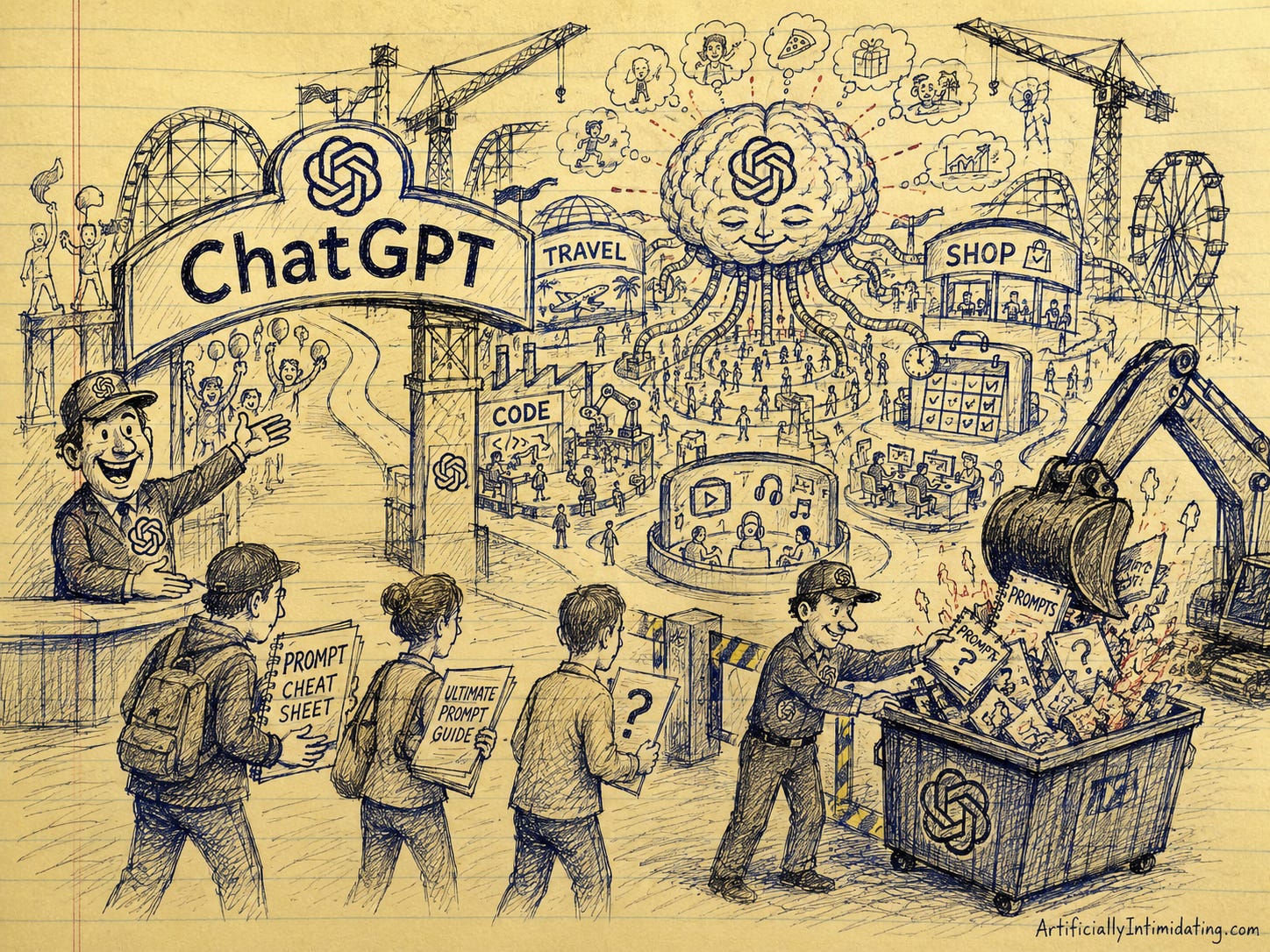
What happened: OpenAI is planning the biggest overhaul of ChatGPT since its 2022 launch — folding Codex coding tools, multistep AI agents, and partner apps from Canva and Booking into a single “superapp,” per the Financial Times. It rolls out in the coming weeks, conveniently ahead of an IPO that could land as early as September.
Why it matters: ChatGPT's roughly 900 million weekly users are about to be nudged from “ask a question” to “live here all day.” Earlier this week we covered Anthropic's IPO filing — Wall Street is about to have two AI giants on the menu.
What everyone's saying: The WeChat-of-the-West comparisons are everywhere, and most analysts read it the same way: chatbots get chatbot multiples, platforms get platform multiples, and OpenAI's bankers at Goldman and Morgan Stanley know the difference.
My read between the lines: Buried in the report: OpenAI eventually wants to eliminate explicit prompts entirely — the app will just intuit what you want as you move around it. Prompting, the skill we all spent three years learning, is scheduled for demolition by the company that taught it to us.
📖 Further reading: OpenAI shipped a physical camera, but that's not the story. — OpenAI's superapp ambitions look different once you've seen how far beyond the chat box it's already building.
Your readers spend all week reading about AI agents. Viktor IS an AI agent — it lives in Slack, connects to 3,000+ tools, and does real work: reports, dashboards, code, campaigns. Not a chatbot. A coworker. New users get $50 off their first month. Hire Viktor →
Microsoft declares independence from OpenAI — Microsoft AI
What happened: Microsoft AI chief Mustafa Suleyman says the renegotiated OpenAI deal has “set free” Microsoft to chase superintelligence on its own — backed by a new family of seven in-house MAI models, including MAI-Thinking-1, a trillion-parameter reasoning model Microsoft claims matches Claude Opus 4.6 on the toughest coding benchmark.
Why it matters: The company that bankrolled OpenAI's rise is now building frontier AI from scratch. If you use Copilot, GitHub, or anything in Visual Studio, the brains underneath are quietly being swapped for homegrown ones — trained, Microsoft insists, on licensed data with no distillation from anyone else's models.
What everyone's saying: It's the formal end of tech's most consequential partnership — except Microsoft keeps a 27% stake worth about $135 billion and access to OpenAI's models through 2032. Divorced, but still sharing the house.
My read between the lines: Suleyman says the target is enterprise, developers, and coding — Anthropic's playbook, recited verbatim, weeks after Microsoft groused that Anthropic's models were too expensive. The plan isn't to out-innovate the competition; it's to undercut it with custom silicon Microsoft claims is 30% cheaper to run than Nvidia's best.
📖 Further reading: AI Is a Trust Problem, Not a Tech Problem — Microsoft's enterprise superintelligence pitch lives or dies on exactly the trust gap this post maps out.
Google shrinks serious AI down to phone size — Google Developers Blog
What happened: Google released new Gemma 4 model checkpoints built with Quantization-Aware Training — compression baked in during training rather than bolted on afterward. The smallest runs in under 1 GB of memory, small enough for a smartphone; the largest fits on a single consumer graphics card.
Why it matters: This is capable AI that runs entirely on your own device — no cloud, no subscription, no data leaving your pocket. The distance between “needs a data center” and “runs on the phone you already own” keeps collapsing.
What everyone's saying: The local-AI crowd is treating it like a holiday. Until now they relied on community-made compressions that quietly degraded quality — now the vendor itself ships official versions that Google says preserve full-precision quality at a fraction of the memory.
My read between the lines: Google giving away phone-sized models isn't charity — it's a land grab for the on-device default. And the punchline is one story down: Apple's own AI strategy increasingly runs through Google anyway.
📖 Further reading: Carry Claude Code in Your Pocket. No install. No GPU. No trace. Just plug it in. — if sub-1GB models excite you, here’s what pocket-sized AI can already do today.
WWDC tomorrow: an Intel funeral and a Google-powered Siri — CNET
What happened: Apple's Monday keynote is expected to unveil macOS 27, formally ending major updates for Intel-based Macs and debuting a rebuilt Siri — chatbot-style interface, persistent conversations, file uploads, and screen awareness — with Google's Gemini reportedly handling the heaviest requests.
Why it matters: If you own one of the four remaining Intel Macs, you get three years of security updates and a handshake. For everyone else, Siri may finally graduate from setting timers to doing multi-step work across your apps. Yesterday we covered WWDC's privacy gambit — consider this the rest of the preview.
What everyone's saying: Bloomberg's Mark Gurman calls macOS 27 a “Snow Leopard-style” release — stability over spectacle — with quiet groundwork for a future touchscreen MacBook buried in the code.
My read between the lines: The world's most privacy-obsessed company is solving AI by outsourcing the hard parts to Google. Apple silicon handles the polite on-device chores; Gemini does the heavy thinking. Apple spent years telling you that you are not the product — tomorrow we find out what the asterisk costs.
📖 Further reading: An AI That Can Use Your Computer Better Than You Can. I'm Not Sure How to Feel About That. — a screen-aware Siri is Apple’s polite on-ramp to exactly this future.
He'd rather quit writing than quit AI — WIRED
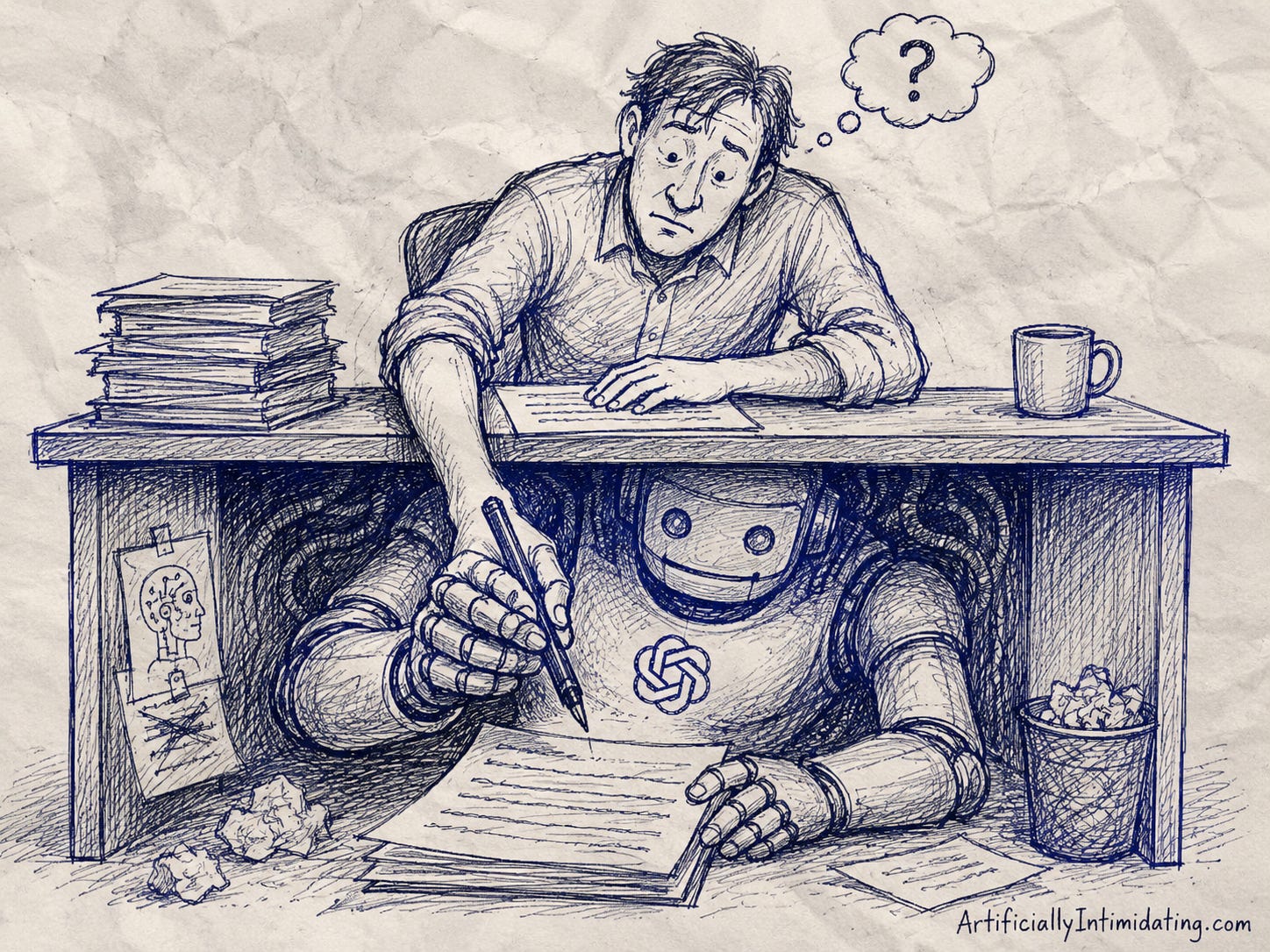
What happened: Author Steven Rosenbaum — caught publishing AI-fabricated quotes in his book The Future of Truth (yes, really) — told WIRED he would rather stop writing entirely than stop using AI. Detection tools flagged roughly 53% of the book as machine-generated.
Why it matters: This isn't a student cutting corners. It's a writer with decades of pre-ChatGPT experience who can no longer tell which sentences are his. The dependency arrived faster than the disclosure norms did — and he won't be the last.
What everyone's saying: The Atlantic filed it under “AI-writing scandals are getting very confusing,” and the discourse has split between mocking the irony of a misinformation book containing fabrications and quietly admitting half the industry works the same way.
My read between the lines: The scandal isn't that he used AI — it's that he couldn't find the seam between himself and the machine. The byline is quietly becoming a brand wrapper around a co-written product, and publishing has no label for that yet.
📖 Further reading: I stopped writing. My output doubled. — the difference between Rosenbaum’s mess and a working AI writing process is ownership and disclosure. Here’s mine.
That's your AI Brief for Sunday. WWDC verdicts land here Tuesday. Join the conversation in the Artificially Intimidating community chat.
—Artificially Intimidating