

Good day, humans. Washington is reportedly eyeing equity stakes in the very AI companies it is supposed to oversee, Anthropic is warning that AI may soon start building its own successors, and somewhere in a call center your support rep is quietly being swapped for a model. Five stories, four bullets each. Let us get into it.
📬 Before we dive in: The sharpest AI Brief tips come from readers who are actually in the weeds. If you spot a story worth covering, share it in the community chat. The best tips make tomorrow's edition.
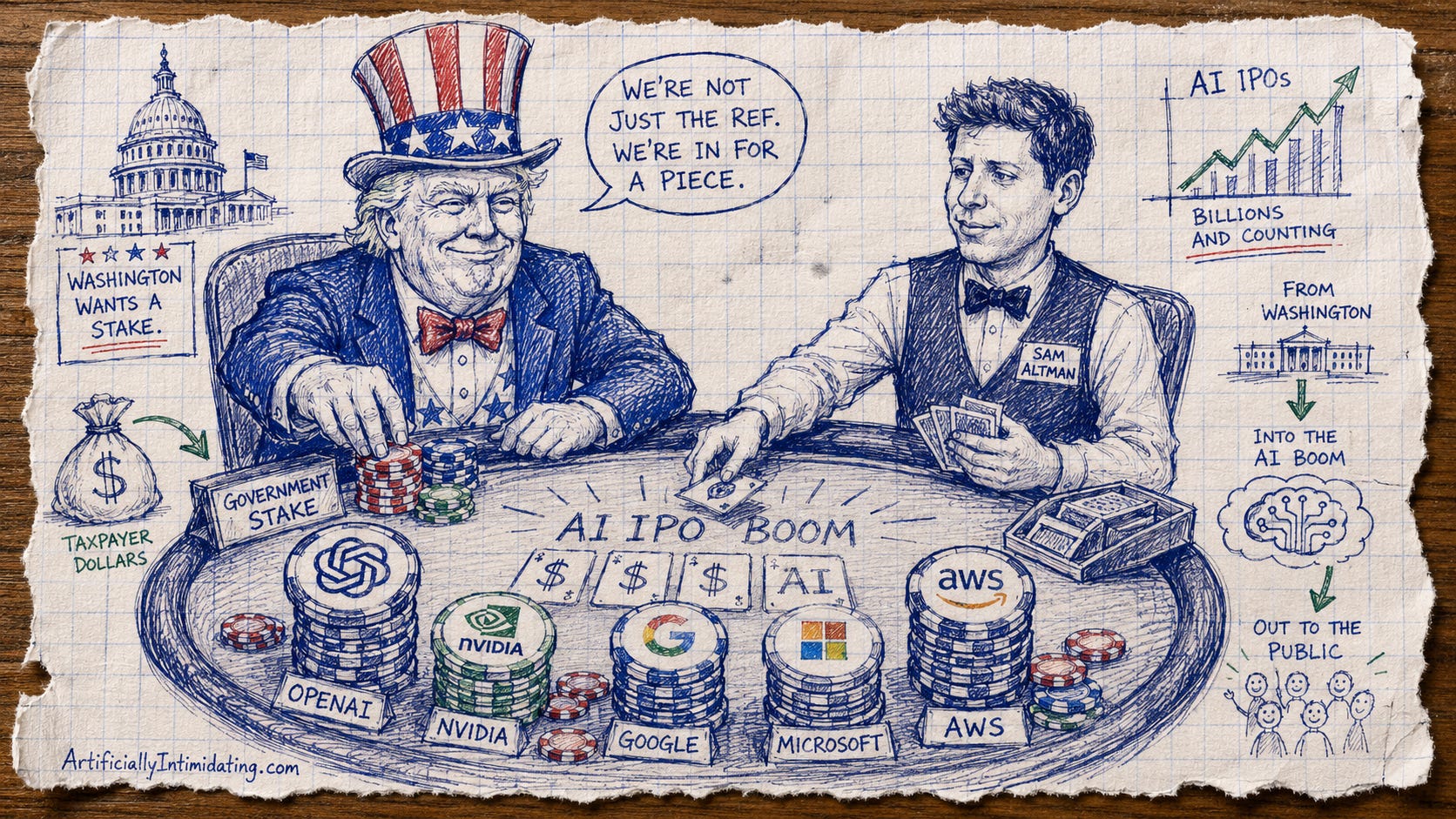
Washington Wants a Stake in the AI Boom
Source: Reuters
What happened: Senior U.S. officials are reportedly exploring taking equity stakes in major AI companies like OpenAI and Anthropic — voluntary deals that could route future profits into public projects and even pay dividends to households. Sam Altman has floated a version of this as an 'American Equity Fund.'
Why it matters: If the government owns a slice of the biggest AI firms, the line between regulator and shareholder gets blurry fast — and ordinary taxpayers could end up with a direct financial stake in whether AI pays off.
What everyone's saying: Reactions split hard: some see a clever way to share AI's windfall broadly, others warn it is the government picking winners right as OpenAI and Anthropic line up for IPOs.
My read between the lines: Nothing says 'we think this bubble is real' like the Treasury wanting shares before the IPO. When the house wants a seat at the table instead of just taxing the winnings, pay attention to what the house knows.
📖 Further reading: Anthropic Filed for Its IPO. Wall Street Is Having Dot-Com Flashbacks. — if Washington wants equity before the bell rings, our IPO breakdown lays out the valuations it would be buying into.
You spend all week reading about AI doing other people's jobs. Viktor is the one I actually put to work. It is not a chatbot — it is an AI coworker that lives in your Slack, plugs into 3,000+ tools, and does the work: pulls the data, builds the report, ships the dashboard. Not a tool. A hire. New readers get $50 off. Meet Viktor →
Anthropic Says AI May Soon Build Its Own Successor
Source: Anthropic
What happened: In a new essay, Anthropic says AI is closing in on recursive self-improvement — systems capable enough to help design their own successors. It notes Claude now writes more than 80% of the code in its own production environment, and urges rival labs to coordinate and even slow down. Two days after we covered Anthropic filing for its IPO, the same company is asking the industry to tap the brakes.
Why it matters: 'AI that improves AI' is the scenario safety researchers have flagged for years — once the loop closes, progress could compound faster than humans can supervise it.
What everyone's saying: Safety researchers are uneasy that the warning comes from a company that recently dropped its earlier pledge to halt development if safety could not keep pace — and is now racing toward a public offering.
My read between the lines: It is a neat trick to call for a global slowdown while shipping at full speed: the pause is always meant for everyone else. 'Please regulate me' hits different once you have already filed the paperwork to go public.
📖 Further reading: AI Is a Trust Problem, Not a Tech Problem — self-improving AI is exactly the control question we argued is really about trust, not raw capability.
Verizon's CEO Just Said the Quiet Part Out Loud
Source: Bloomberg
What happened: At Bloomberg Tech 2026, Verizon CEO Dan Schulman said AI will take over a large share of customer service work — password resets, basic questions — and predicted artificial general intelligence could arrive within two to four years.
Why it matters: Customer service is one of the country's biggest entry-level employers; when a Fortune 50 CEO openly plans to automate it, that is a preview of how fast frontline support jobs could change.
What everyone's saying: Schulman's bluntness stood out — most executives dodge the layoffs question, while he tied AI directly to a $5 billion cost-cutting target and warned of high unemployment without serious reskilling.
My read between the lines: Watch the framing: announce the cuts as 'AGI is coming' rather than 'we are trimming headcount.' Same spreadsheet, better press release — and the reskilling caveat is the corporate version of thoughts and prayers.
📖 Further reading: An AI That Can Use Your Computer Better Than You Can — the same kind of automation Verizon is betting on is already doing real knowledge work today.
The Internet Is Now Mostly Robots
Source: Cloudflare's Matthew Prince
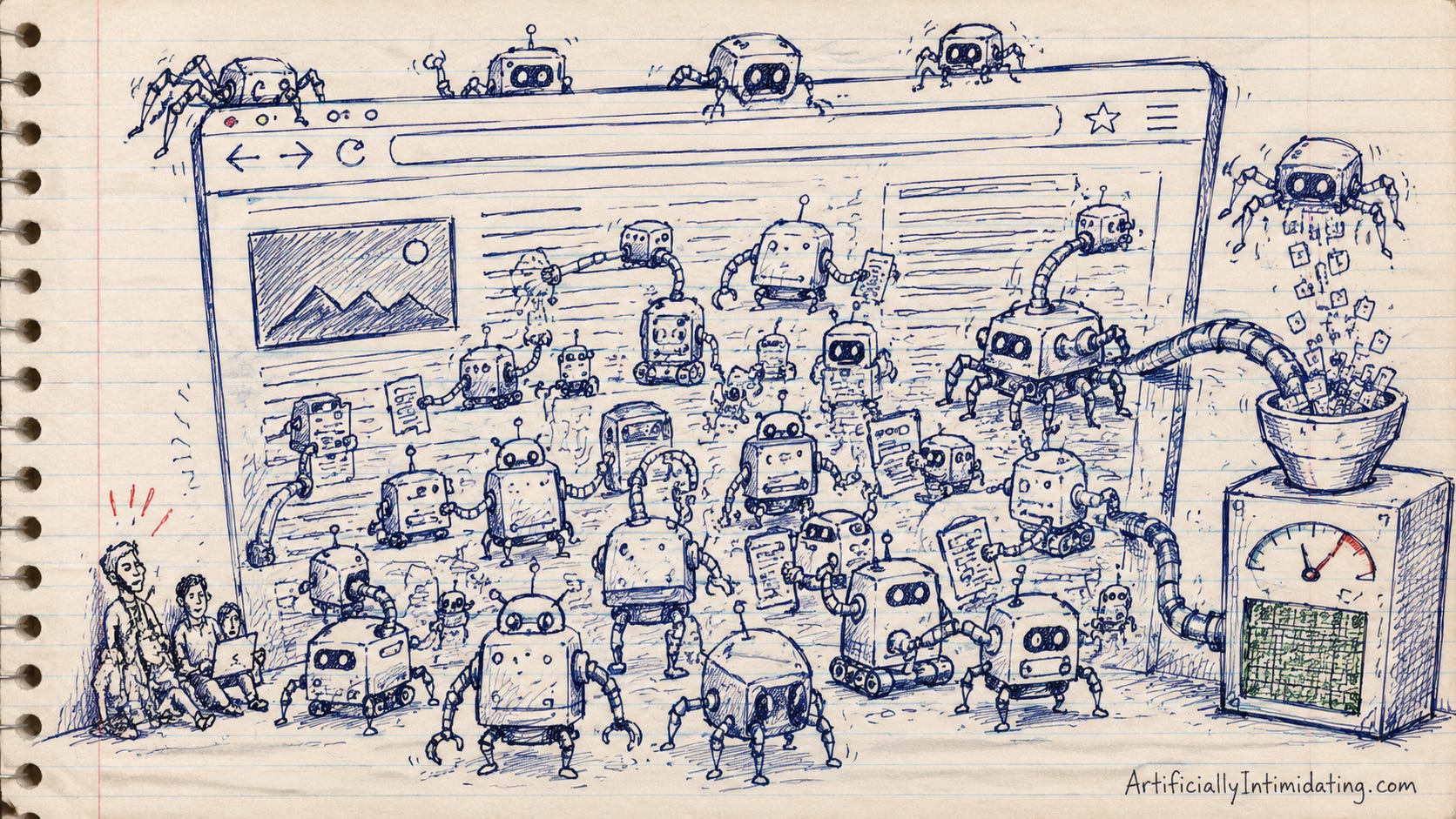
What happened: Cloudflare CEO Matthew Prince says automated bots now account for 57.5% of web requests for HTML content — officially more than humans at 42.5%, and 18 months ahead of his own forecast.
Why it matters: The web was built and monetized for human eyeballs; if most traffic is now AI crawlers and agents, the economics of advertising, publishing, and the humble 'page view' start to wobble.
What everyone's saying: Analysts note automated traffic is growing roughly eight times faster than human usage, fueled by generative AI tools that visit far more pages than any person ever could.
My read between the lines: We spent thirty years optimizing the internet for human attention, and the machines just quietly took the majority share. 'Dead internet theory' used to be a meme; now it is a line on a Cloudflare dashboard.
📖 Further reading: AI Detectors Are Now Flagging Humans for Writing Like Humans — if most web traffic is already bots, telling human from machine online only gets harder from here.
ChatGPT's Memory Now Updates Itself
Source: OpenAI
What happened: OpenAI rolled out 'Dreaming V3,' a rebuilt memory system that automatically synthesizes and updates what ChatGPT knows about you, replacing the old manual approach. It is live for Plus and Pro users in the U.S., with Free and Go tiers to follow.
Why it matters: Memory is what turns a chatbot into an assistant that actually knows your context; making it automatic — and reportedly 5x cheaper to run — is how OpenAI plans to make personalization the default for everyone.
What everyone's saying: Practitioners read it as OpenAI's move in the personalization race, paired with a dedicated controls page so users can manage or delete what the model retains.
My read between the lines: They named it 'Dreaming,' which is a bold choice for software that quietly decides what is worth remembering about you. Convenient, sure — but an assistant rewriting its own notes on you, automatically, is a lot of trust to hand over to skip a few re-introductions.
💬 Keep talking. Reply to this email or come chat with us in the Artificially Intimidating Discord — today’s stories, your takes, no algorithms.
That's your AI Brief for Friday. Join the conversation in the Artificially Intimidating community chat.
—Artificially Intimidating