

Good day, humans. Anthropic filed for its IPO this week, and Wall Street is pulling out the dot-com charts. Google is secretly buying Android developers' code — without telling them it's for AI training. Perplexity announced an 'air traffic controller' that routes your AI tasks between your own laptop and the cloud in real time. And Sam Altman's biggest customer burns 100 billion tokens a month. Wednesday.
🗽 Tired of AI meetups that are just pitch fests?
Same.
This Thursday (June 4) I'm hosting Not Your Average AI Meetup on the Lower East Side, NYC — 8–10 PM.
No slides, no agenda.
Founders, makers, designers, and people who think AI is more fascinating than frightening.
Drinks, good food, and just maybe a lightning round: "What's the most interesting thing you did this week?"
RSVP here →
📬 Before we dive in: The sharpest AI Brief tips come from readers who are actually in the weeds. If you spot a story worth covering, share it in the community chat. The best tips make tomorrow's edition.
Anthropic Filed for Its IPO. Wall Street Is Having Dot-Com Flashbacks. — Yahoo Finance
What happened: Anthropic confidentially filed for an IPO with the SEC on June 1 — the first major generative AI company to reach public markets, at a $965 billion valuation and $47 billion in annualized revenue. SpaceX filed its S-1 publicly in May and is expected to list around June 12 at $1.75–2 trillion. OpenAI confidentially filed in May as well. Together, the three companies represent more than $3 trillion in potential new market cap — roughly the GDP of France. Research firm TS Lombard published a note warning that surges in IPO volume have historically coincided with major market peaks, citing dot-com and the 2022 bear market as precedents.
Why it matters: The entire U.S. IPO market raised just $45 billion in all of 2025. Three companies are attempting to raise more than that in a matter of weeks — and none of them are profitable. OpenAI expects to lose $14 billion this year. SpaceX posted a $4.28 billion loss in Q1 2026 alone. Investors who bought transformative-technology IPOs on "profits will come later" logic in 1999 know how the next chapter reads.
What everyone's saying: 61% of all global venture capital flowed into AI in 2025 — a level of concentration that analysts say creates systemic risk. The FT estimates nearly $500 billion in expiring lock-ups could hit markets in H2 2026. The bull case: these companies are fundamentally different from dot-com shells. The bear case: 'different this time' is always the last thing said before it isn't.
My read between the lines: Anthropic filing before OpenAI is a tactical move — first to file frames the narrative and captures the 'responsible AI' premium before OpenAI's more complicated story hits the S-1 stage. The race is no longer about model benchmarks. It's about who gets to public markets with the better story, and Anthropic just claimed first-mover advantage on that.
📖 Further reading: Anthropic Raises $65B, Mythos Goes Public, and the Internet Has a Tell — Last week we covered the $65B raise. The IPO filing is the next chapter.
You spend all week reading about AI. Viktor is the one I actually use. It's an AI productivity tool that handles the tasks you keep putting off — research, drafts, decisions — so you can focus on the work that actually matters. New users save $50. Try Viktor free →
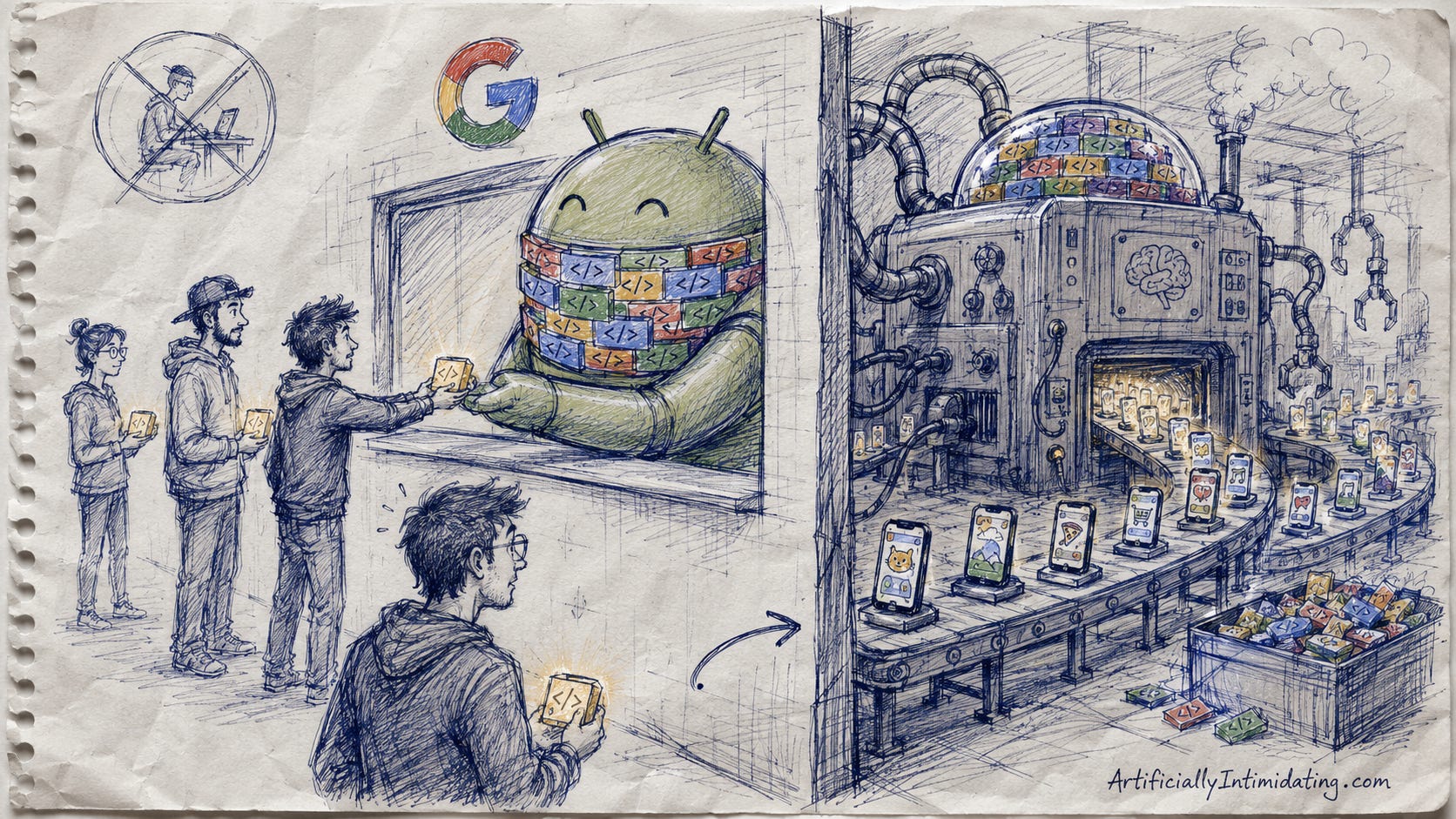
Google Is Secretly Buying Android Developers' Code to Train AI — 404 Media
What happened: 404 Media's Jason Koebler reported that Google is running a confidential program that directly contacts Play Store developers and purchases their code to train an AI coding tool. Developers are not told the code will be used for AI training. The covert outreach runs alongside Google's public announcement of AI-powered Android app creation in AI Studio — which lets users build native apps without traditional coding skills.
Why it matters: Yesterday we covered Anthropic paying 1,000 engineers openly through Snorkel AI to evaluate code for Claude Code training. Google appears to be doing structurally the same thing — but covertly, and without informing developers what their code is being used for. That distinction matters ethically and potentially legally, as data provenance becomes a more scrutinized part of AI model development.
What everyone's saying: The broader pattern is now undeniable: every major AI lab building a coding product is paying significant sums to acquire expert human judgment about what good code looks like. The difference is whether developers know. Google's program joins a growing list of covert data acquisition efforts that are shaping the models used to automate the work of the people whose work trained them.
My read between the lines: Google buying Android developers' code to build an AI that helps people build Android apps without needing Android developers has a certain elegant irony to it. The developers whose expertise trained the model are the same developers whose work the model is being designed to replace.
📖 Further reading: Anthropic has 1,000 secret engineers you've never heard of — AI Brief June 2 — Yesterday's brief on Anthropic's Project Marlin is the open version of what Google appears to be running quietly.
Perplexity Built an "Air Traffic Controller" That Routes AI Between Your PC and the Cloud — Bloomberg
What happened: At Computex 2026, Perplexity CEO Aravind Srinivas unveiled what the company calls the world's first 'hybrid local/server agentic inference orchestrator' — announced alongside Intel CEO Lip-Bu Tan during Intel's keynote. The system evaluates each AI request in real time and routes it: simple tasks run on your PC's processor, complex multi-step tasks go to cloud servers. The routing is invisible to the user. The platform is chip agnostic, working with both Intel and Nvidia RTX hardware. Perplexity's revenue has reached $500 million.
Why it matters: AI inference workloads are projected to account for nearly 40% of all data center power demand by 2030 — and agentic AI can consume up to 1,000 times more tokens than single-turn queries. Distributing that load across billions of personal computers already in circulation, rather than building ever-larger data centers, is one of the only mathematically plausible responses to that curve. This is the first commercial attempt to implement hybrid inference at that scale.
What everyone's saying: Two angles are getting the most attention: privacy (sensitive queries handled locally never reach the cloud) and cost (offloading simpler tasks to local hardware eliminates inference cost for those requests entirely). The 'chip agnostic' positioning is Perplexity staying neutral in the Nvidia/Intel hardware war — a smart posture for a software company.
My read between the lines: What Perplexity is describing is structurally a new kind of browser — a software layer that abstracts away what hardware you're running on, sitting between the user and whatever AI model they need. The company that owns 'the thing every user touches first' tends to end up in a very powerful position. Perplexity is building for that layer.
Altman Says OpenAI's Biggest Customer Burns 100 Billion Tokens a Month — Axios
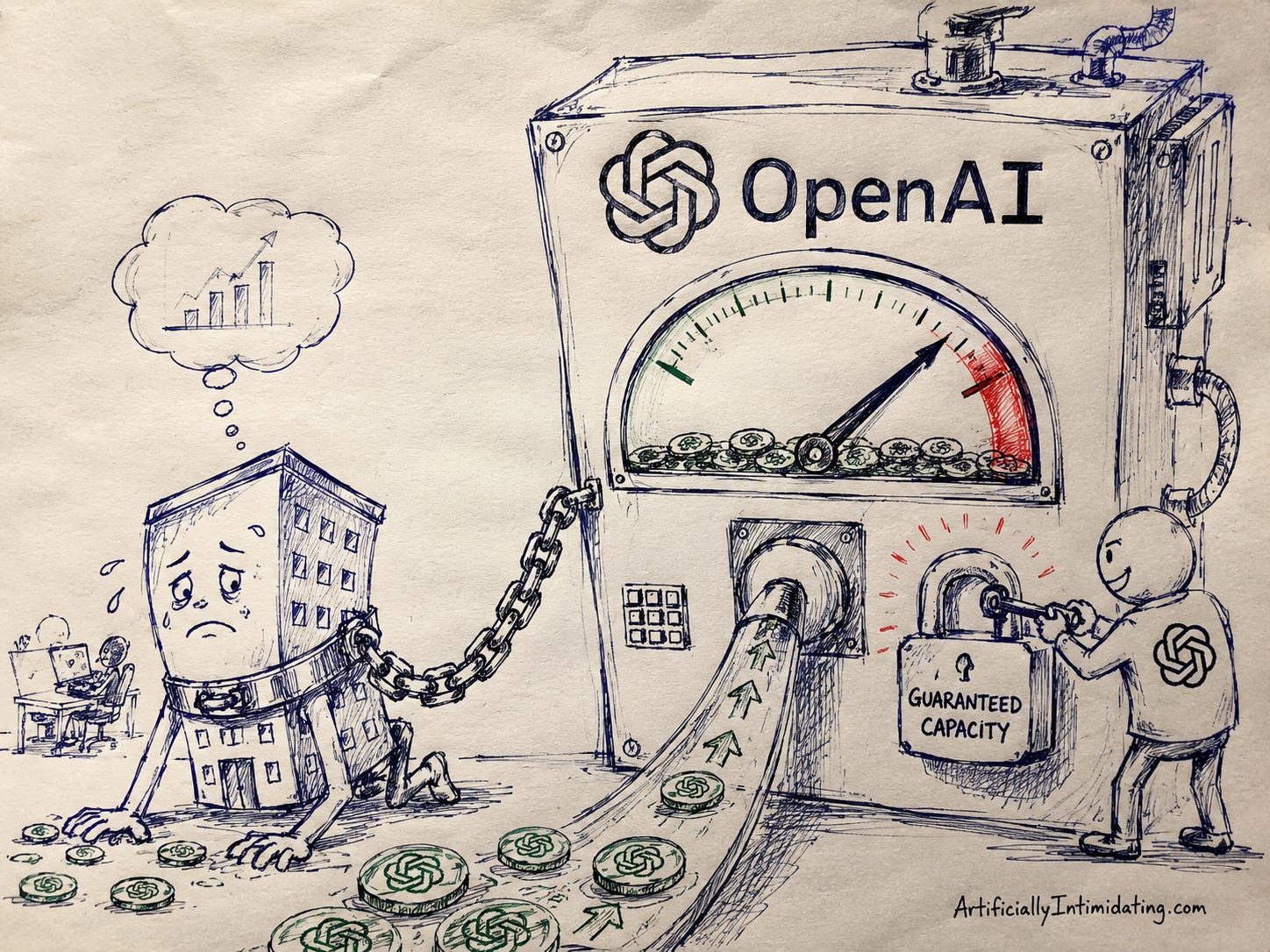
What happened: Sam Altman disclosed that OpenAI's single largest enterprise customer processes approximately 100 billion tokens per month — and noted that at least one individual outside OpenAI's own operations exceeds even that volume. He called escalating token costs a 'major issue.' OpenAI has since launched a Guaranteed Capacity service allowing customers to commit to 1-, 2-, or 3-year contracts for dedicated compute. The company now counts over 9 million paying business users and runs at roughly $2 billion per month in revenue.
Why it matters: 100 billion tokens per month at typical API pricing represents tens of millions of dollars in monthly spend for a single client. That's not a department budget — that's a transformative infrastructure commitment that would be extraordinarily expensive and disruptive to unwind. The disclosure illustrates how deeply some organizations have embedded AI into operations in a way that creates real dependency.
What everyone's saying: The timing is notable — Altman's disclosure comes as Anthropic files for its IPO and both companies battle for enterprise dominance. The April warning about a 'capacity crunch' now reads as a strategic move to lock in customers before supply tightens, ahead of both companies' IPO roadshows.
My read between the lines: The 'Guaranteed Capacity' product is OpenAI monetizing the dependency they've created. A company spending $20–50 million per month on API tokens doesn't have leverage at contract renewal — OpenAI does. The customer who burns 100 billion tokens a month is not a customer. They're a hostage with a very large monthly check.
📖 Further reading: Your Company Might Be Next After the $500M Claude Accident — The other end of the enterprise AI spend story: what happens when nobody watches the meter.
The Admin Department Is Going AI. Small Businesses Are Already There. — MIT Technology Review
What happened: MIT Technology Review profiled Sam Finnegan-Dehn, a tutor who uses AI to run his entire back office — accounting, design, and market research — tasks that would previously require hiring three different contractors. A 2026 LinkedIn report found most U.S. small businesses already use AI for emails, notes, data analysis, and strategy. The U.S. Small Business Administration now actively publishes AI adoption guidance for small business owners, with the caveat that humans should review all AI-generated outputs.
Why it matters: The AI adoption conversation tends to focus on enterprise scale — billion-dollar companies deploying AI at trillion-token scale. This story is the other end of the spectrum: one person running a full back office with AI tools, competing in markets where they previously couldn't afford the overhead. That's a structural shift in what it means to start and run a small business in 2026.
What everyone's saying: The SBA's formal AI guidance signals this is no longer fringe — it's mainstream enough that the federal government is publishing best practices. The 'have a human review the output' caveat feels increasingly like advice that exists to be ignored by the people who need it most and followed by the people who need it least.
My read between the lines: The tutor in this story is running his accounting, design, and market research with AI — functions that would have required three different contractors a few years ago. He's not a tech person. He just figured it out. The quietest revolution in AI adoption isn't happening at OpenAI or Anthropic. It's happening in one-person businesses that nobody writes about, until MIT Technology Review does.
📖 Further reading: I stopped writing. My output doubled. — The personal version of the small business AI story: what actually changes when you let AI into your daily work.
That's your AI Brief for Wednesday. Join the conversation in the Artificially Intimidating community chat.
—Artificially Intimidating