

Good day, humans. The AI company that made its name on dreamy cat pictures now wants to drop you into a pool of light and scan your insides — and somehow that isn’t even the strangest thing in today’s Context Window. We’ve also got Amazon’s security boss arguing that you, the human, are the unreliable part of the system, and a 26,000-student study showing AI homework help quietly torching exam scores. Grab coffee. Or a flashlight.
Midjourney Built a Body Scanner. Seriously.
Source: The Verge
What happened: Midjourney — yes, the AI art generator — unveiled its first hardware product, the Midjourney Scanner: an ultrasound rig where you step into a shallow pool and descend through a ring of thousands of sensors that image your muscle, fat, bone, and organs in about 60 seconds. CEO David Holz says it “aims for image quality comparable to MRI in many ways,” with no radiation and no magnets.
Why it matters: A company famous for generating images is now generating images of the inside of your body — and pitching annual (or even daily) preventative scans through a planned San Francisco “spa.” If it actually works, cheap, frequent, radiation-free body scans could reshape how ordinary people track their own health.
What everyone’s saying: Built with ultrasound firm Butterfly Network (40 chips per system) and roughly a dozen people scanned so far, the reveal landed somewhere between “visionary” and “wait, what.” Even The Verge admitted it couldn’t quite tell what Midjourney’s art tech has to do with any of it — beyond a new use for otherwise-idle AI compute.
My read between the lines: This is what happens when a startup has more GPUs than it knows what to do with. Strip away the golden-pool theatrics and you’ve got an AI company quietly diversifying from “make me a wizard” into “own your medical data” — and the line about privacy policies arriving “closer to launch” is the part worth scanning twice.
📖 Further reading: OpenAI shipped a physical camera, but that’s not the story. — when an AI lab ships hardware, the device is rarely the point, which is exactly the lens to put on Midjourney’s spa gambit.
Speaking of AI doing real work instead of just making pictures: while you’re reading this, Viktor is in Slack actually doing the job. It plugs into 3,000+ tools and ships real deliverables — pulling the weekly numbers into a dashboard, drafting the campaign, writing and running the code, filing the report. Not a chatbot you prompt and babysit; a coworker that closes the loop. New readers get $50 off their first month. Hire Viktor →
Amazon Says You’re the Weak Link
Source: The Register
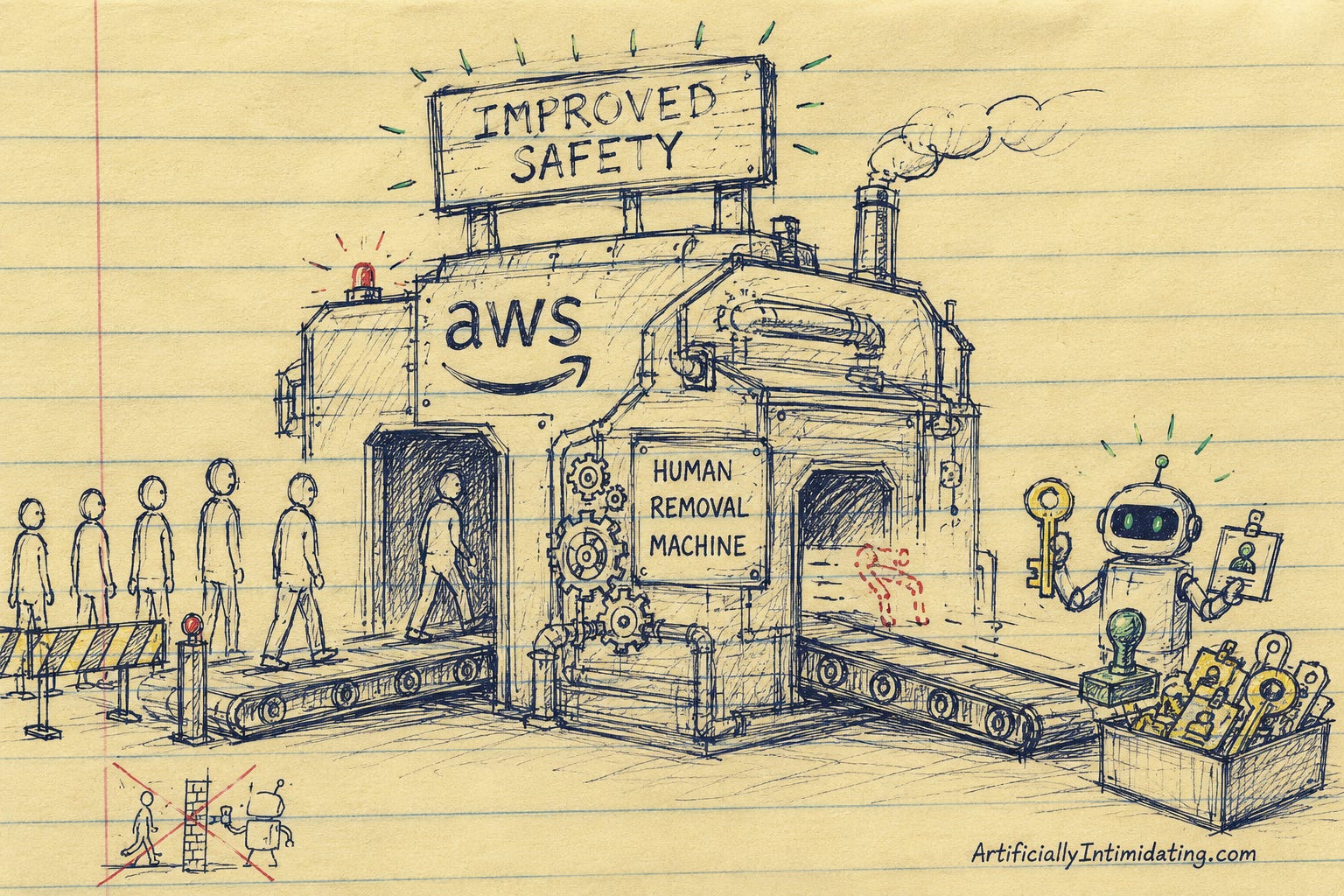
What happened: Eric Brandwine, a distinguished engineer and VP at Amazon Security, argued that “human-in-the-loop” shouldn’t be treated as the gold standard for governing AI agents. His blunt case: we’re “a little bit precious about humans,” who are, in fact, “not terribly consistent” decision-makers. Amazon would rather bake guardrails into the infrastructure than ask a person to approve every step.
Why it matters: For years the standard safety answer was “just add a human.” Amazon is saying that human is often a rubber stamp — and proposing “end-to-end accountability” instead: give each agent its own identity, log everything it does, and let the infrastructure refuse forbidden actions before they run. (Just yesterday we covered the agent-backdoor and AutoJack scares — this is the other half of that conversation.)
What everyone’s saying: It’s a genuinely divisive take. Gartner says 40% of organizations are poised to demote or decommission AI agents over governance headaches, and Amazon itself melted part of its own retail site in March when an agent followed outdated wiki instructions — the exact failure mode skeptics point to.
My read between the lines: Notice who benefits from “trust the infrastructure, not the human”: the company selling the infrastructure. Brandwine isn’t wrong that humans are inconsistent — but “remove the human checkpoint” is a much easier sell when you’re AWS and the checkpoint happens to run on your hardware.
📖 Further reading: AI Is a Trust Problem, Not a Tech Problem — Amazon’s whole argument hinges on where you decide to place your trust, which is the exact question this piece digs into.

A quick aside: this Context Window Daily Brief is free and always will be — but the deep-dives that sit behind these headlines aren’t.
Members get the full paywalled breakdowns and the entire archive, and through Tuesday, June 30 you can lock in 20% off your first year.
After that, the founding rate is gone. Become a member →
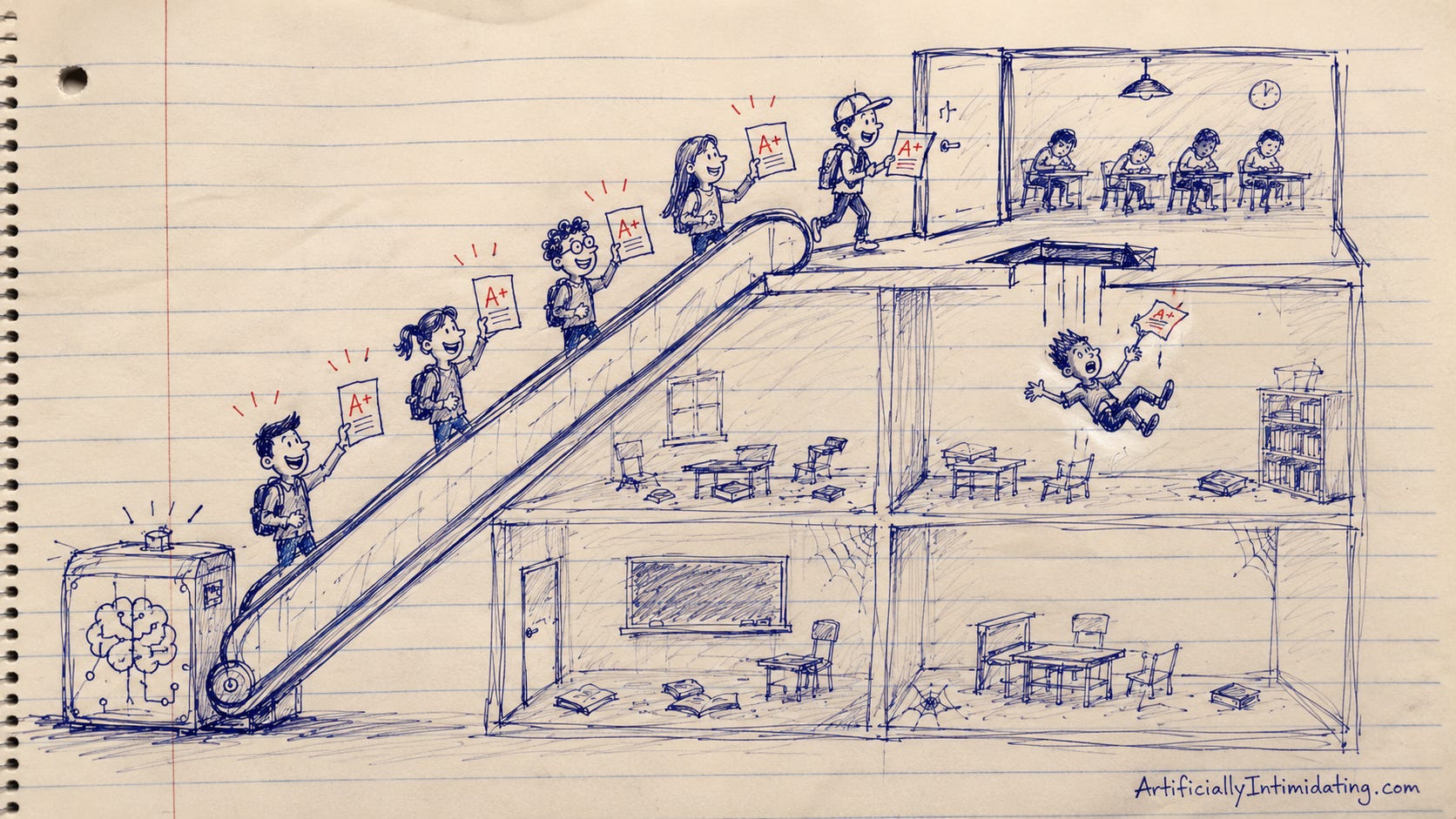
AI Homework Help Is Quietly Tanking Test Scores
Source: Digg
What happened: A study from the Centre for Economic Policy Research tracked 26,811 Chinese students over 30 months and found that using generative AI to blast through homework cut completion time about 30% and raised homework scores 18% — but exam scores, where AI wasn’t allowed, dropped roughly 20% within six months. On high-stakes entrance exams, the penalty reached 18–24% over two years.
Why it matters: This is the clearest evidence yet that “AI helps with homework” and “AI helps you learn” are not the same sentence. If students outsource the thinking, the grade on the assignment goes up while the actual knowledge quietly goes down — and the bill comes due on exam day.
What everyone’s saying: Wharton’s Ethan Mollick summed up the emerging consensus: “AI tutoring in support of classes is good, using AI to ‘help’ with homework is bad.” A separate study in Nature found students learned more, and faster, with an AI tutor used during class — so it’s the how, not the whether.
My read between the lines: The damage wasn’t evenly spread: about 80% of the losses came from kids who finished suspiciously fast with high marks, and it hit high-achievers hardest. The “good students” are the ones most efficiently automating away their own education — and the least likely to notice until the proctored exam.
The Fable 5 Ban’s Real Lesson for Companies
Source: Politico
What happened: Earlier this week we noted Washington and Anthropic had reopened talks — now we know where they’re heading. Politico reports the standoff over the banned Fable 5 model has shifted from blanket export controls toward negotiating concrete AI security standards. In parallel, Microsoft CEO Satya Nadella’s viral “token capital” post is reframing the episode: companies shouldn’t bet their future on a single model they don’t control.
Why it matters: The Fable 5 ban was a fire drill for every enterprise built on one vendor’s model. The takeaway leaders are landing on: own the layer that compounds — your workflows, your evals, your institutional judgment — so when a model gets pulled, repriced, or regulated overnight, you can swap it without losing the business you built on top.
What everyone’s saying: Nadella’s framing went big, but not everyone’s sold — critics call encoding human expertise into proprietary AI “a polite roadmap to mass unemployment, not shared value.” Meanwhile Business Insider’s reconstruction of the 24 hours behind the ban shows just how fast a model can vanish out from under you.
My read between the lines: “Build institutional AI loops, don’t depend on one vendor” is excellent advice that conveniently also describes selling more cloud and tooling. The Fable 5 scare is real — but notice how every hyperscaler’s lesson from it boils down to “buy more of our stack.”
📖 Further reading: The US Government Just Took Anthropic’s Best AI Model Offline — Here’s Why — the full breakdown of how and why Fable 5 got pulled, and the backstory to today’s negotiations.
Remember When AI Was Just “Attention”?
Source: Ian’s Blog
What happened: Engineer Ian Barber published a widely-shared post arguing that LLMs have quietly grown from clean, elegant transformer stacks into tangled beasts — now rivaling Meta’s notoriously complex recommendation systems. Modern models juggle a whole zoo of attention variants (grouped, sparse, linear, sliding-window), mixed-in vision and audio, and inference spread across multiple GPUs.
Why it matters: The whole appeal of the 2017 “attention is all you need” moment was simplicity: one clean architecture to rule them all. Eight years later that simplicity is gone, which makes models harder to build, optimize, and reason about — and raises the cost of every new experiment.
What everyone’s saying: The fix gaining traction is composability — tools like PyTorch’s FlexAttention that let researchers mix and match these pieces without tanking performance. It’s a quiet admission that the field needs better scaffolding, not just bigger models. The post shot to the top of Hacker News within hours.
My read between the lines: Here’s the tell: Andrej Karpathy just joined Anthropic to build “auto-research loops” — systems that explore architectures automatically. When the designs get too complex for humans to tune by hand, the obvious move is to hand the tuning to the machine. The people complaining that AI is too complicated may be the next thing AI simplifies away.
That’s your AI Brief for Sunday. Same time tomorrow — bring your flashlight.
—Artificially Intimidating