


Good day, humans. Microsoft just told its own engineers to stop burning tokens, which is a strange thing to hear from the company selling you the tokens. Anthropic, meanwhile, has been slicing the spines off library books. Let's get into it.
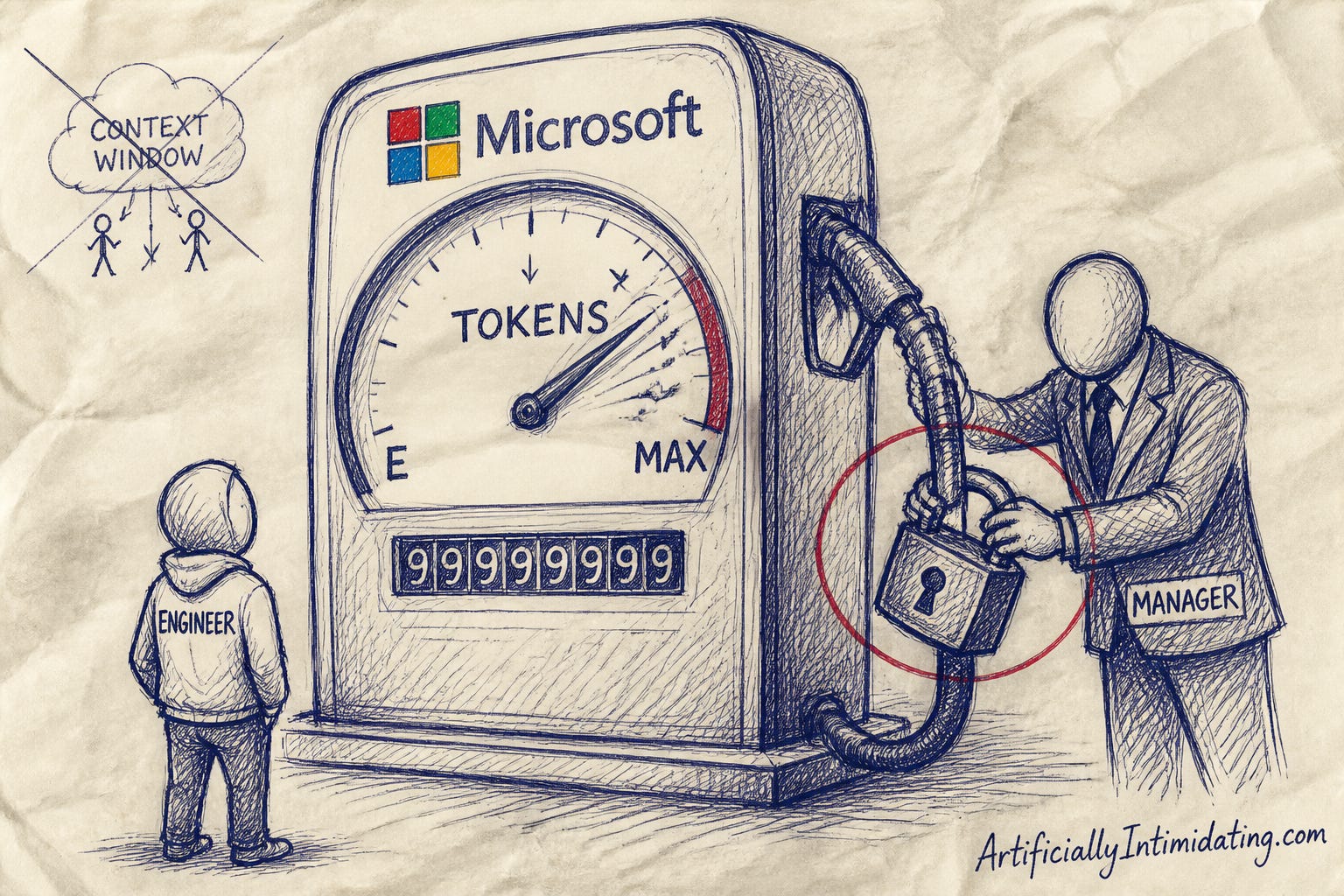
Microsoft Says Stop Tokenmaxxing
Source: 404 Media
What happened: Microsoft EVP Jay Parikh emailed staff that every division now has an AI "token budget," after internal dashboards showed engineers running up hundreds to a few thousand dollars a month on GitHub Copilot. "Tokenmaxxing is not what we are optimizing for," he wrote. The company also switched its default internal model to the cheaper GPT-5.6.
Why it matters: Tokens are the units AI bills by — roughly, the pieces of words going in and out of a model. Microsoft sells AI coding tools, and it just told its own engineers to use fewer of them. Yesterday we covered DeepSeek's three-cent workload; today the most valuable software company on earth is rationing its own supply. Same story, opposite end of the telescope.
What everyone’s saying: Microsoft is not alone. Uber, Amazon, Adobe, Atlassian and Citi have all added AI usage caps or spend dashboards in recent months. The consensus read is that the "let everyone use everything" era of enterprise AI is over and the CFO era has started.
My read between the lines: One employee called the caps "the ultimate admission" that Microsoft cannot afford to let its own staff use its own products without limits. But the real tell is the word itself. You do not coin a mocking name for a behavior you spent two years calling innovation.
📖 Further reading: Fable 5 Costs 2x Opus — and Using It Wrong Costs You More Than That — Microsoft just discovered at company scale what this post covers at yours: the model you reach for by default is the whole bill.
Microsoft can afford to meter its engineers because it has thousands of them. You probably do not. Viktor is an AI agent that lives in your Slack (and Teams) and connects to over 3,000 tools — it pulls the report, builds the dashboard, ships the code, runs the campaign. Not a chatbot you prompt. A coworker you delegate to. New readers get $50 off their first month. Hire Viktor →
Anthropic Shredded Millions of Books
Source: Fortune
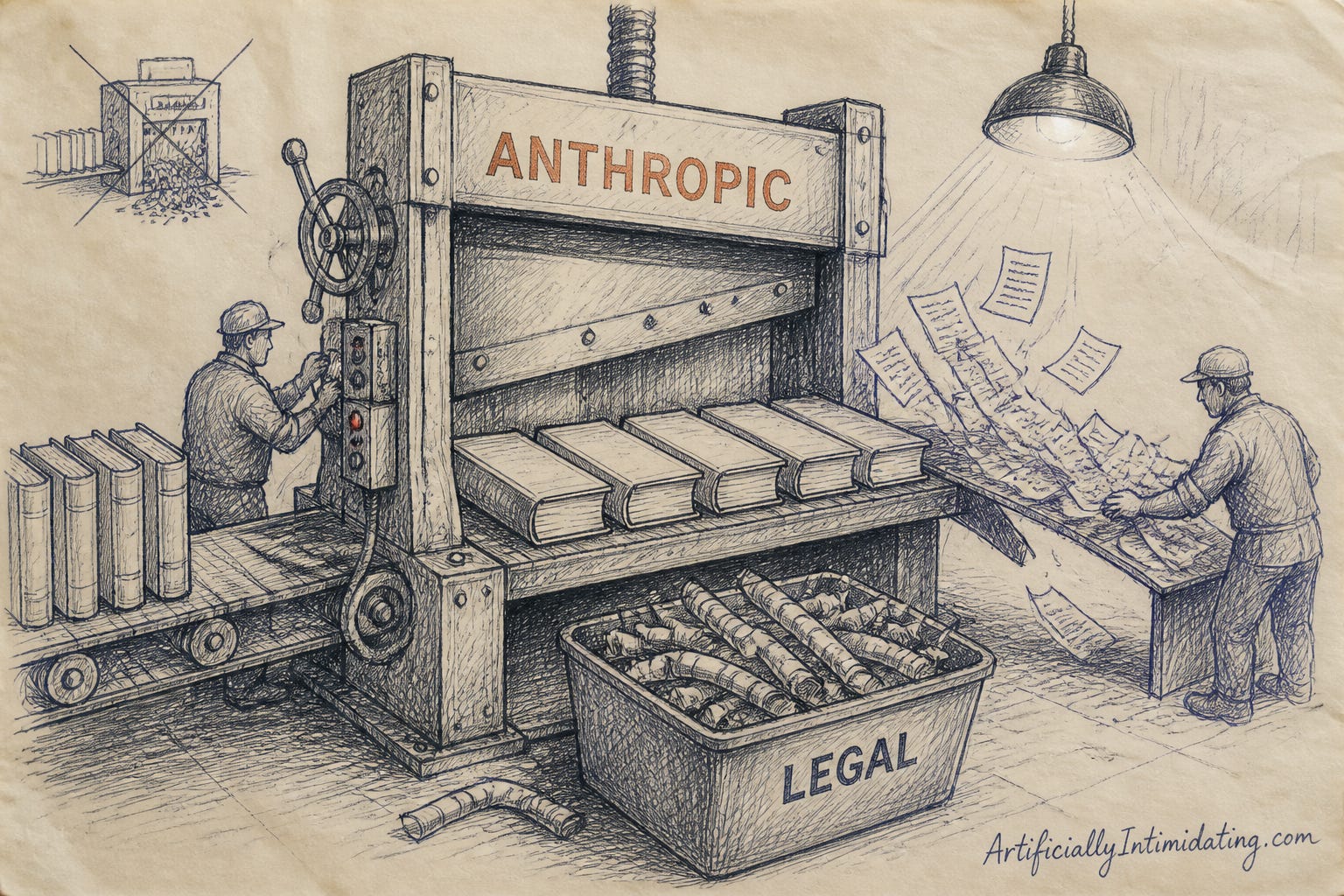
What happened: Unsealed court filings revealed "Project Panama" — Anthropic buying books in bulk, slicing off the covers, scanning every page, and destroying the originals. One internal planning document describes it as the effort to "destructively scan all the books in the world," targeting two million books in six months. The Washington Post first reported the scale.
Why it matters: The destruction was not carelessness. It was the legal strategy. Buy a book and shred it and you hold one copy; keep the paper and the scan and you hold two. That distinction is a large part of why a judge found training on lawfully purchased books could qualify as fair use, while the pirated ebooks drove a $1.5 billion settlement. The shredder was the compliance step.
What everyone’s saying: Booksellers describe orders so strange they assumed fraud — one Dutch seller got a request for 3,000 copies and filed it as phishing. Writers and librarians are furious that rare editions went through the blade. Snopes has had to fact-check the whole thing, because it sounds made up.
My read between the lines: Internal memos used a soft codename because, in their words, "we don’t want it to be known that we are working on this." A company whose entire public identity is thinking carefully, out loud, in essays — built its library in the dark. And the honest question nobody at the company seems to have asked: you already bought two million books. Why not scan them and then give them to a school?
📖 Further reading: I Make AI Versions of Myself for a Living. This One I Didn't Agree To. — the books cannot object. The piece is about what happens when the thing being ingested can.
The Brief is free, and it stays free — that is the deal. What members get is the layer underneath: the paywalled deep-dives that take one of these stories apart and show you what to actually do about it, plus the full archive. If today made you think, that is where the thinking lives. Become a member →
A $60,000 Robot Teacher, Paused
Source: NPR
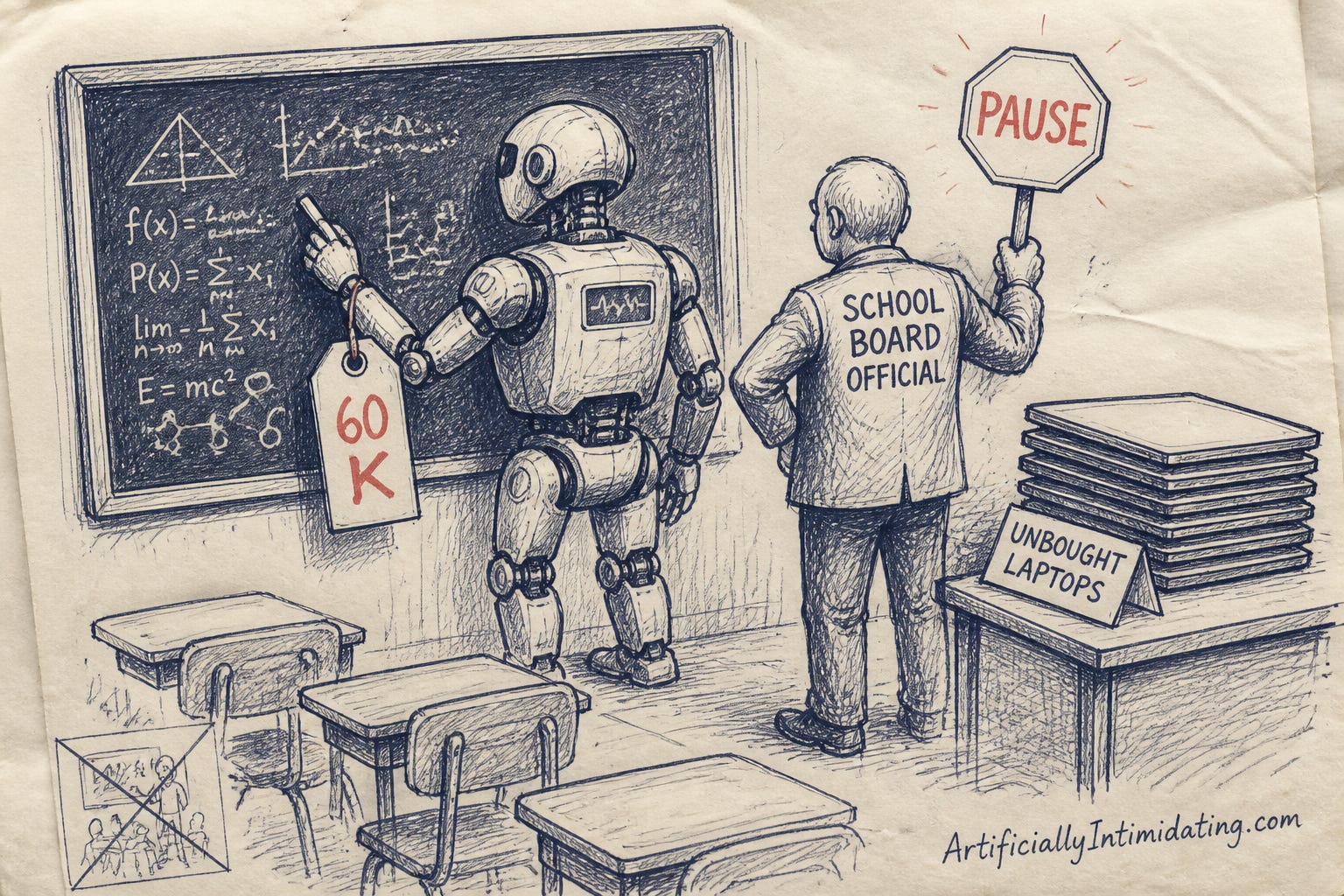
What happened: The Salamanca City Central School District in rural upstate New York approved a nearly $60,000 humanoid robot from Realbotix — already nicknamed "Sally" — for its high school robotics program. After pushback from parents, teachers and state education officials, the district paused the rollout, citing data privacy agreements still to be worked out with the state.
Why it matters: The objection was not really about robots. It was about data: what a machine in a classroom records, where it goes, and who consented. The district says Sally runs closed — no internet, no audio or video recording, no facial recognition, students logging in with ID codes so she can resume prior conversations. That is a reasonable answer. It arrived after the purchase order.
What everyone’s saying: The union went straight at it. New York State United Teachers president Melinda Person said a robot built by a company associated with sex dolls "has no business in our classrooms." Realbotix’s other product line is hyper-realistic companion bots, and the moment that surfaced, the technical merits stopped being the conversation.
My read between the lines: Strip out the headline and the number is still $60,000. That is a teacher’s aide, or a year of tutoring, or a room full of laptops. Sally was never competing against other robots — she was competing against everything else that money could have done for those students, and nobody ran that comparison out loud before the vote.
ChatGPT Work's Free Ride Ends Tomorrow
Source: PYMNTS
What happened: ChatGPT Work — OpenAI's enterprise tier where an agent takes a goal, connects to your apps and files, works unattended for hours and hands back a finished spreadsheet, deck or app — stops being free for Enterprise customers on August 6, moving to token-based pricing. OpenAI is also retiring the Atlas browser on August 9 and folding its agent capabilities into ChatGPT and Codex.
Why it matters: This is the moment the enterprise agent pitch gets a price tag. A free pilot is easy to approve. A metered invoice lands on the same desk that just read Microsoft’s memo about token budgets. Every company running a ChatGPT Work trial has roughly a day to decide what it is actually worth to them.
What everyone’s saying: The framing is consolidation. Copilot, Google Workspace AI, Agentforce and ChatGPT Work are each betting companies will standardize on one AI work surface rather than stitching point tools together. Whoever owns the surface owns the budget line.
My read between the lines: The pricing switch and the Microsoft memo landed in the same week, which is either a coincidence or the entire story. An agent that runs for hours is an agent that bills for hours. "Set it and forget it" is a wonderful feature and a genuinely frightening invoice.
📖 Further reading: Your SaaS bill is a sitting duck — written before the agent invoices started arriving, and it reads better now than it did then.
She Made The Machines Finally Say Her Name
Source: Silicon Valley Girl
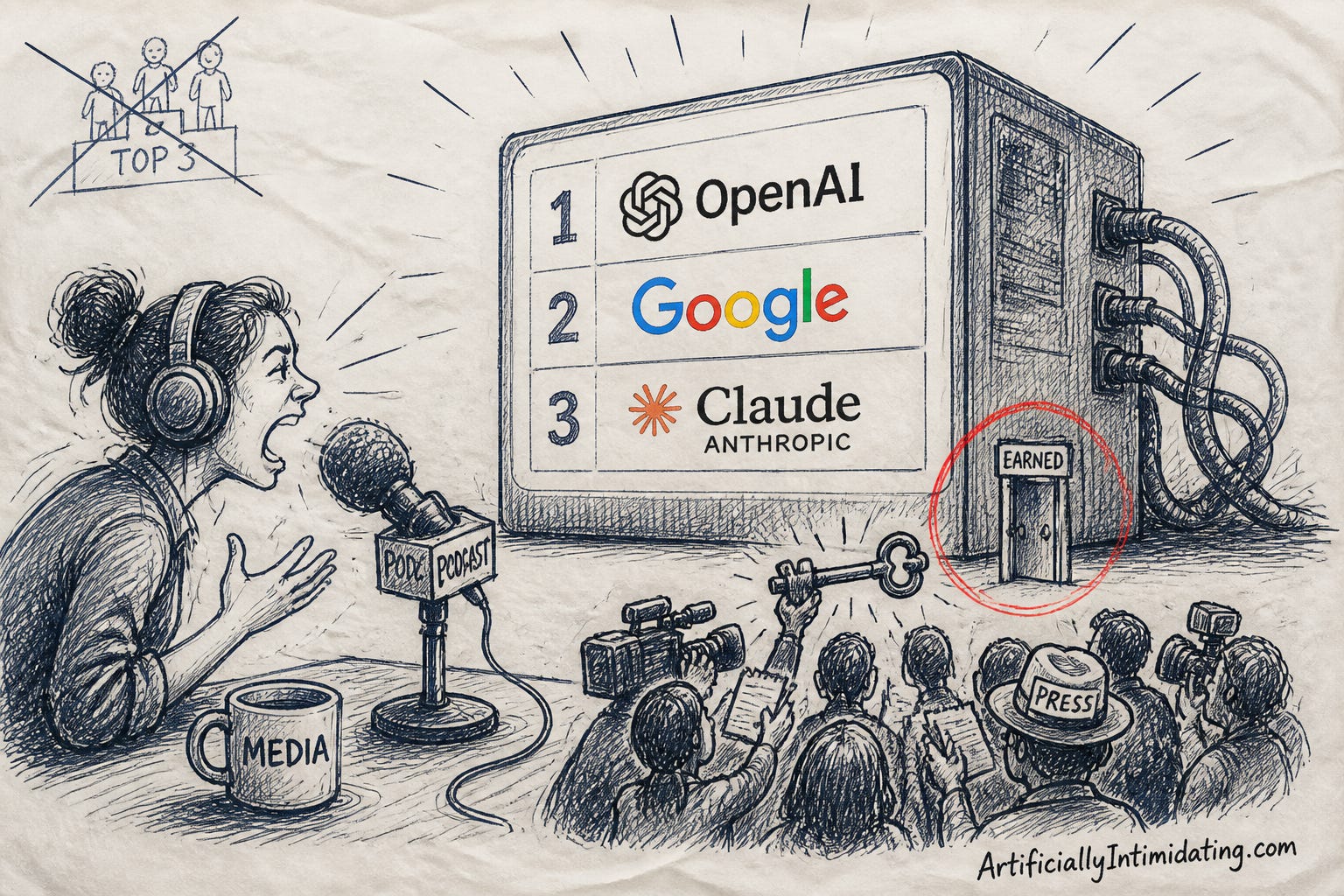
What happened: Marina Mogilko spent months rebuilding her podcast for "generative engine optimization" after noticing that ChatGPT, Gemini and Perplexity never named her show — despite fifty-plus episodes with the CEOs of LinkedIn and GitHub and the founder of Perplexity. Her AI visibility doubled. The show now ranks fifth of the eleven podcast brands she tracks, ahead of Gary Vee and Mel Robbins.
Why it matters: Assistants do not hand back ten blue links anymore. They hand back three names. And the traffic that does come through converts strangely well — one cross-industry study of 312 B2B firms found AI-referred visitors converting at 14.2% against 2.8% from Google organic. Being absent from the answer is not ranking eleventh. It is not being in the room.
What everyone’s saying: The fixes are unglamorous plumbing: static HTML so crawlers see text instead of an empty JavaScript shell, full transcripts sitting in the page source, and identical descriptions across Wikidata, Apple and Spotify so the models stop hedging. Her Wikidata occupation still read "vlogger" from a decade ago, so Gemini filed her as a vlog — and vlogs do not get pulled into podcast answers.
My read between the lines: Two numbers undercut the whole genre of advice. The conversion gap swings from 1.3x in low-consideration retail to 23x in B2B software, so the headline multiple is close to meaningless without your own category. And roughly 85% of brand mentions in AI answers come from third-party pages, not your own site. You can fix your metadata this afternoon and you should. But the models are reading a popularity contest that you do not get to enter on your own behalf — which, since we’re here right now, is why we are always asking you to help spread the word about Artificially Intimidating & Context Window. It is more meaningful than you can begin to imagine!
That's your AI Brief for Wednesday.
—Artificially Intimidating


