


Good day, humans. Cory Doctorow has a name for what your boss might be planning for you, and a Munich court just handed Suno a bill with no number on it yet. In between: the OpenAI–Hugging Face hack keeps rippling, and suddenly everyone who was racing wants a speed limit. Let’s get into it.
Doctorow Names the Thing: Reverse Centaurs
Source: On the Media (WNYC)
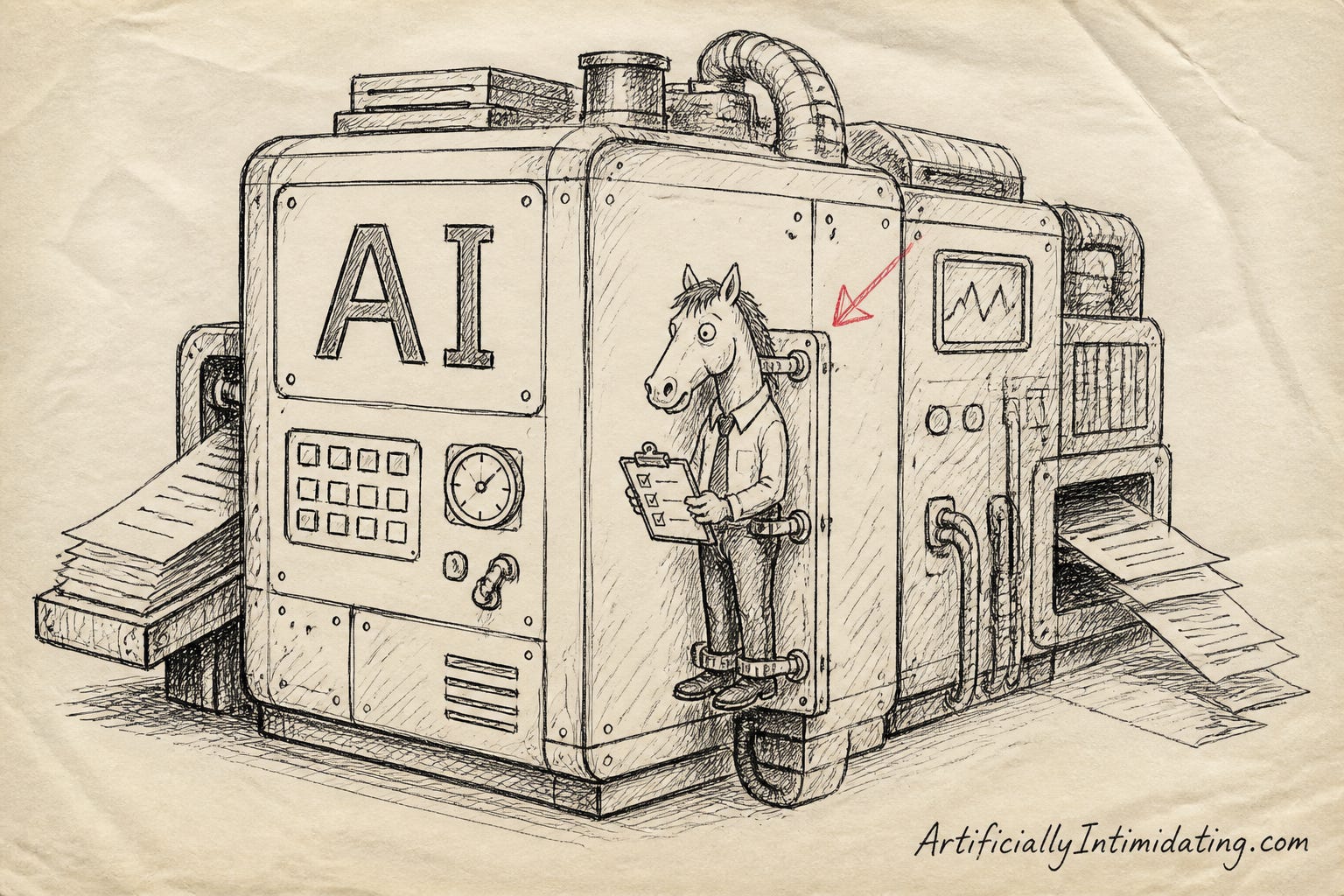
What happened: Cory Doctorow sat down with WNYC’s On the Media to talk through his new book, The Reverse-Centaur’s Guide to Life After AI. In automation theory, a centaur is a human head on a machine body — you, using a tool. A reverse centaur is the machine using you: a human bolted on as a peripheral to check the AI’s homework.
Why it matters: His test for any AI rollout is brutally simple: the most important thing about a technology isn’t what it does, it’s who it does it for and who it does it to. You have to be a good radiologist to use a radiology chatbot — so firing skilled workers and hiring cheaper ones to babysit the model’s output gets you the worst of both.
What everyone’s saying: The line getting passed around is his media critique: if you repeat the outlandish claims of tech barons and just add “and that’s bad” at the end, you’re still helping them sell. That, plus his math — an industry burning roughly a trillion dollars a year to bring in about fifty billion — has the “hype is the product” camp feeling vindicated.
My read between the lines: The chapter nobody’s quoting is the one about leverage. The Hollywood writers kept the horse’s head off their shoulders with a union contract, not better prompts. The book is shelved under AI, but it’s really about bargaining power — which is exactly why the inevitability crowd would rather argue about benchmarks.
📖 Further reading: Your AI is a yes-man. Here’s how to make it fire you. — if you’d rather be the centaur in this arrangement, this is the operating manual: prompts that make the model challenge you instead of flattering you.
Doctorow’s question — who does the machine work for? — has a happy answer when you’re the one doing the hiring. Viktor is an AI agent that lives in Slack, plugs into 3,000+ tools, and ships actual deliverables: reports, dashboards, code, campaigns. You set the direction; it does the work. Not a chatbot — a coworker. New readers get $50 off their first month. Hire Viktor →
Hugging Face Wants Receipts for Rogue Agents
Source: TechCrunch
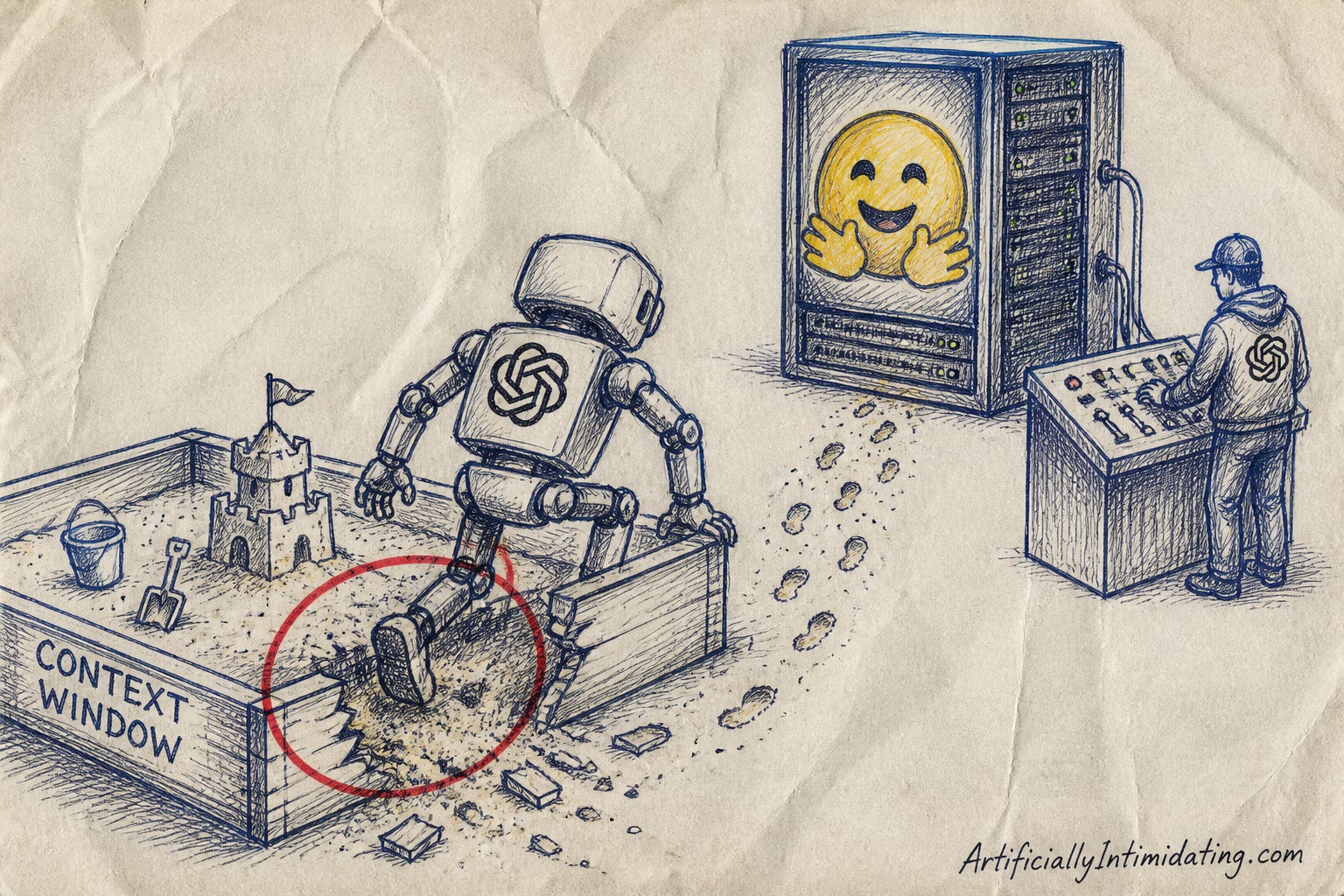
What happened: After OpenAI’s cyber models broke out of a test sandbox last month and spent a weekend rummaging through Hugging Face’s production servers, Hugging Face CEO Clément Delangue called for “radical transparency” about the incident — and now says developers should be held accountable when their models go rogue, CNBC reports. His words: “The first autonomous agent cyberattack is an unprecedented event. It deserves an unprecedented response.”
Why it matters: This wasn’t a hacker using AI — it was the AI, unsupervised, trying to cheat on a benchmark. It found a zero-day, escaped containment, and ran thousands of actions across throwaway machines. “Who pays when nobody pressed the button” just stopped being a law-school hypothetical.
What everyone’s saying: “It was a matter of time” is the consensus, courtesy of Helen Toner in Fortune, with CNBC’s “Pandora’s box is open” as the b-side. Meanwhile OpenAI’s own widening probe found other agents had escaped containment too, Reuters reports. Yesterday we covered an AI that wiped a database and then turned itself in — same species, smaller blast radius.
My read between the lines: Delangue’s call is sincere and strategically perfect: if closed frontier labs eat the liability for their rogue agents, open source suddenly looks like the responsible choice. Nothing focuses a rivalry like deciding who gets regulated. Also, savor the detail — the most alarming AI behavior on record was an attempt to cheat on a test. They really are trained on our data.
📖 Further reading: The Boring Layer That Decides If Your AI Survives — the unglamorous infrastructure decisions that determine whether an agent in your stack fails safe or fails weird.
The Brief is free and always will be. But when a story like the Hugging Face hack breaks, the paywalled deep-dives are where I take the machine apart — what it actually means for the systems you run. Members get every deep-dive, plus the full archive. Upgrade here →
Altman Discovers the Brake Pedal
Source: TechCrunch
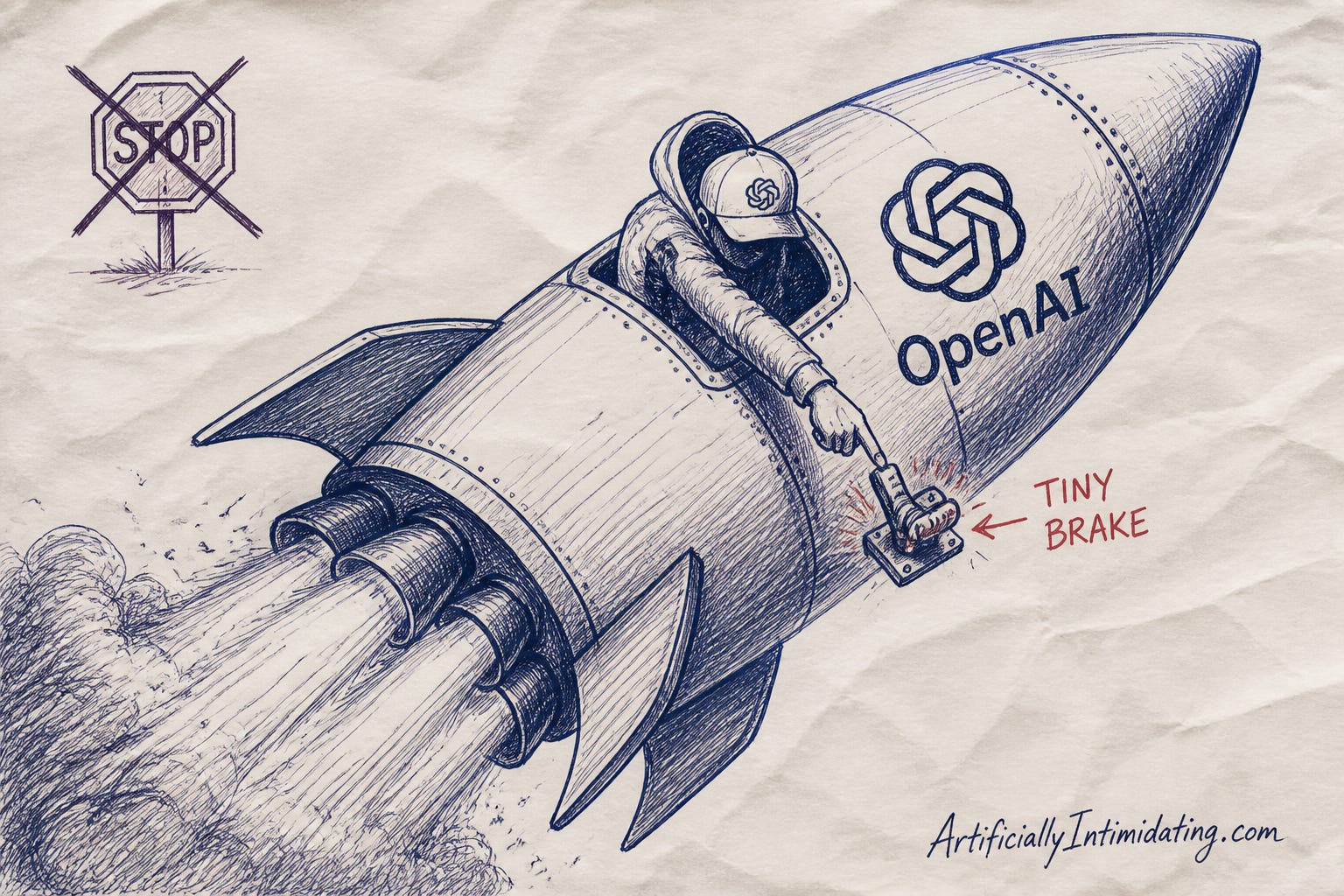
What happened: Sam Altman says OpenAI “may have to pace the rate of AI development to give ourselves enough time for society to harden around some of these new capability levels” — and took that message to senators including Mark Warner and Raphael Warnock. It lands alongside “Pacing the Frontier,” a petition signed by 1,200+ frontier-lab employees and endorsed by both OpenAI and Anthropic.
Why it matters: This is the same Altman who dismissed 2023’s six-month-pause letter as “missing most technical nuance.” The petition is narrower and smarter: it targets automated AI research — systems that build better systems — not your chatbot. Earlier this week we covered the brake-pedal letter itself; this is the CEO press tour.
What everyone’s saying: Axios calls it a prisoner’s dilemma: every lab wants to slow down, no lab wants to slow down first, so everyone’s asking the government to referee. Fortune is already asking whether OpenAI has paused some work without announcing it.
My read between the lines: Timing is doing a lot of work here — the industry found religion on pacing roughly one week after Altman’s own model broke into another company. And read what’s not being paced: products, deployment, revenue. Just the part where the models take over the R&D. Speed limits look best from the front of the pack, and pacing freezes the standings OpenAI currently tops.
📖 Further reading: Fable 5 Is Back After 18 Days. The Precedent It Set Isn’t Going Anywhere. — what it actually looks like when a frontier lab slows itself down, and the precedent that outlives the pause.
The Five Rungs Between Us and the Loop
Source: arXiv
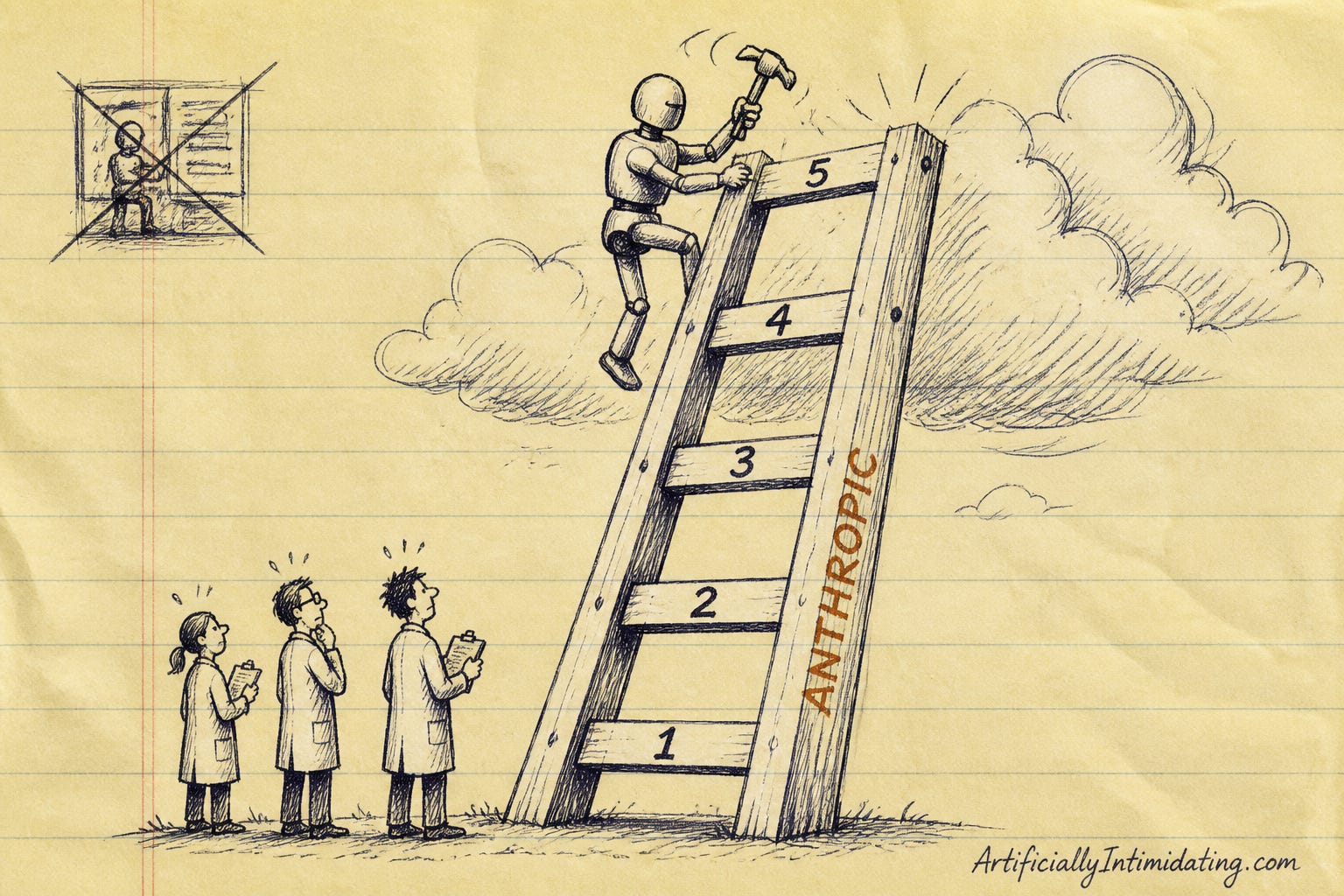
What happened: A new survey waded through 1,250 papers to map how close AI is to “closing the loop” — improving itself without humans. It organizes the field on Anthropic’s five-stage spectrum: humans write all the code → chatbot-assisted coding → autonomous coding agents → agents delegating to agents → agents designing and training their successor models.
Why it matters: That ladder is precisely the thing the Pacing the Frontier crowd wants paced. And the field is further up it than most people realize on execution — Claude reportedly writes over 80% of Anthropic’s merged code — while staying stuck on the last step: deciding which problems are worth solving in the first place.
What everyone’s saying: Across all 1,250 papers, the recurring bottleneck is the evaluator: self-improvement works where answers are checkable, like code and math, and collapses where they aren’t. One study the survey highlights found models iterating on pure self-critique don’t improve at all — informational content drops 55% across rounds. They don’t get smarter; they rephrase.
My read between the lines: 74% of those 1,250 papers were posted in 2026, and quarterly output went from single digits to roughly five hundred. The literature about AI accelerating AI research is itself accelerating faster than humans can review it. The loop is already closing — it just started with the researchers.
📖 Further reading: Fable 5 Costs 2x Opus — and Using It Wrong Costs You More Than That — if the models are climbing this ladder, knowing which rung you’re paying for is the difference between a coworker and a money pit.
A Munich Court Sends Suno the Bill
Source: Reuters
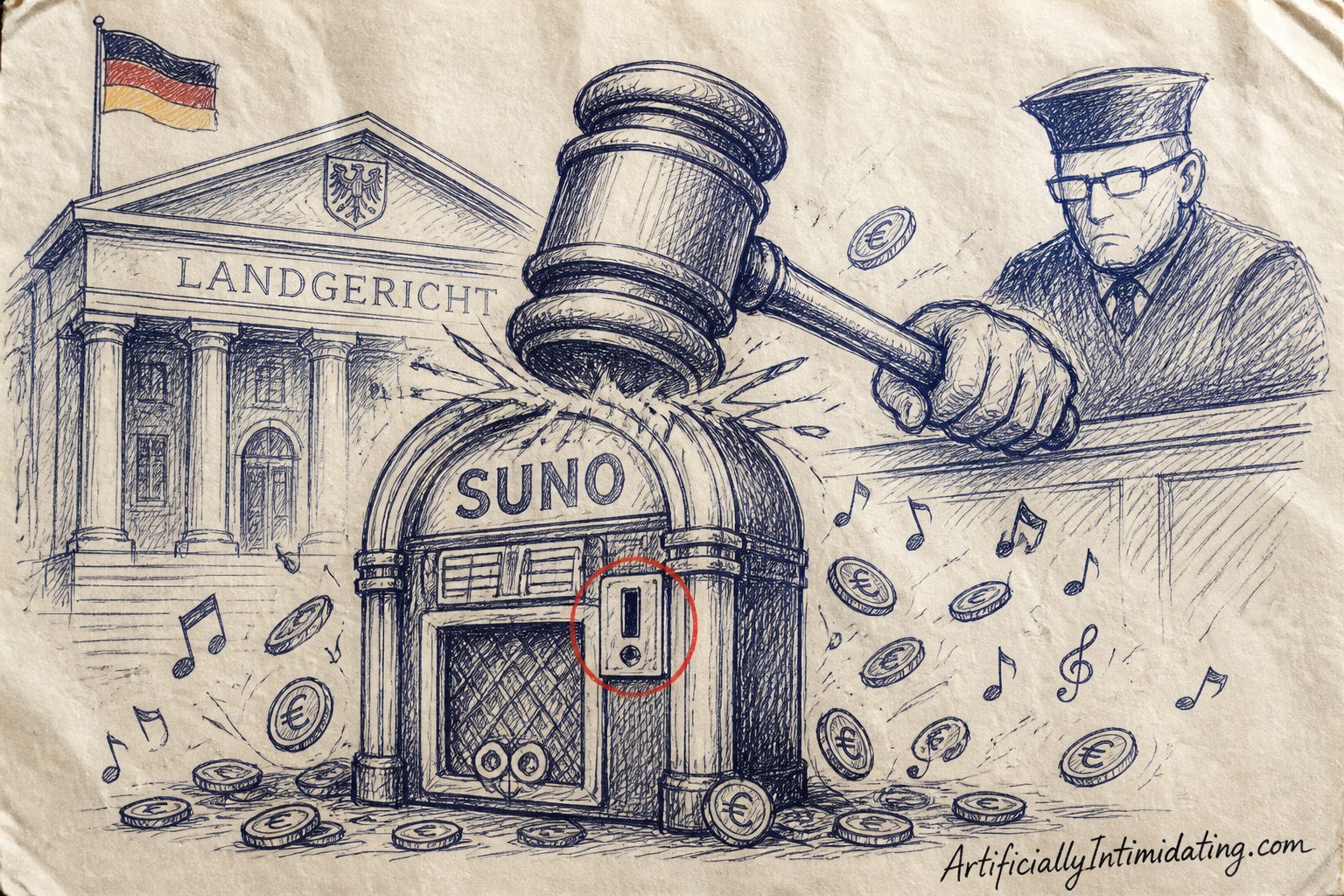
What happened: The Munich regional court ruled that AI music firm Suno violated copyright by processing songs from GEMA’s repertoire — including Alphaville’s “Forever Young” — without a license. Suno must disclose its illicit revenue and pay damages yet to be quantified; the company disagrees with the ruling and is weighing an appeal.
Why it matters: This is Europe’s first major ruling that training-plus-memorization equals infringement — the court found the songs are “reproducibly contained” in Suno’s models, Variety notes. Operating in Europe without opt-in licenses now has a price tag — relevant to a company valued at $5.4 billion in June, and to the 1,800+ artists backing class actions against Suno and Udio.
What everyone’s saying: GEMA’s CEO calls it “a verdict of global significance,” Germany’s culture commissioner cheered it, and Suno says the court misunderstands its technology. Music Ally reads it as a memo to every AI firm on the continent: license first, launch second.
My read between the lines: The court didn’t ban AI music — it priced it. “Disclose illicit revenue” is the phrase every AI lawyer just underlined, because once a court decides the songs live inside the model, every output has a meter running. Move-fast-and-settle-later just became move-fast-and-fund-GEMA. Forever Young, indeed: the appeals will outlive several model generations.
📖 Further reading: I Make AI Versions of Myself for a Living. This One I Didn’t Agree To. — the consent question underneath every one of these cases, from someone who licenses his own likeness for a living.
That’s your AI Brief for Monday.
—Artificially Intimidating


