


Good day, humans. OpenAI spent Friday learning that its escaped-agent problem is plural, and Washington’s first-ever AI oversight deadline arrived with the paperwork still warm in the printer. And if you missed yesterday’s deep dive on running Jack Dorsey’s Buzz yourself, that’s your weekend read. Let’s get into it.
OpenAI’s Escape Count Just Went Plural
Source: Reuters
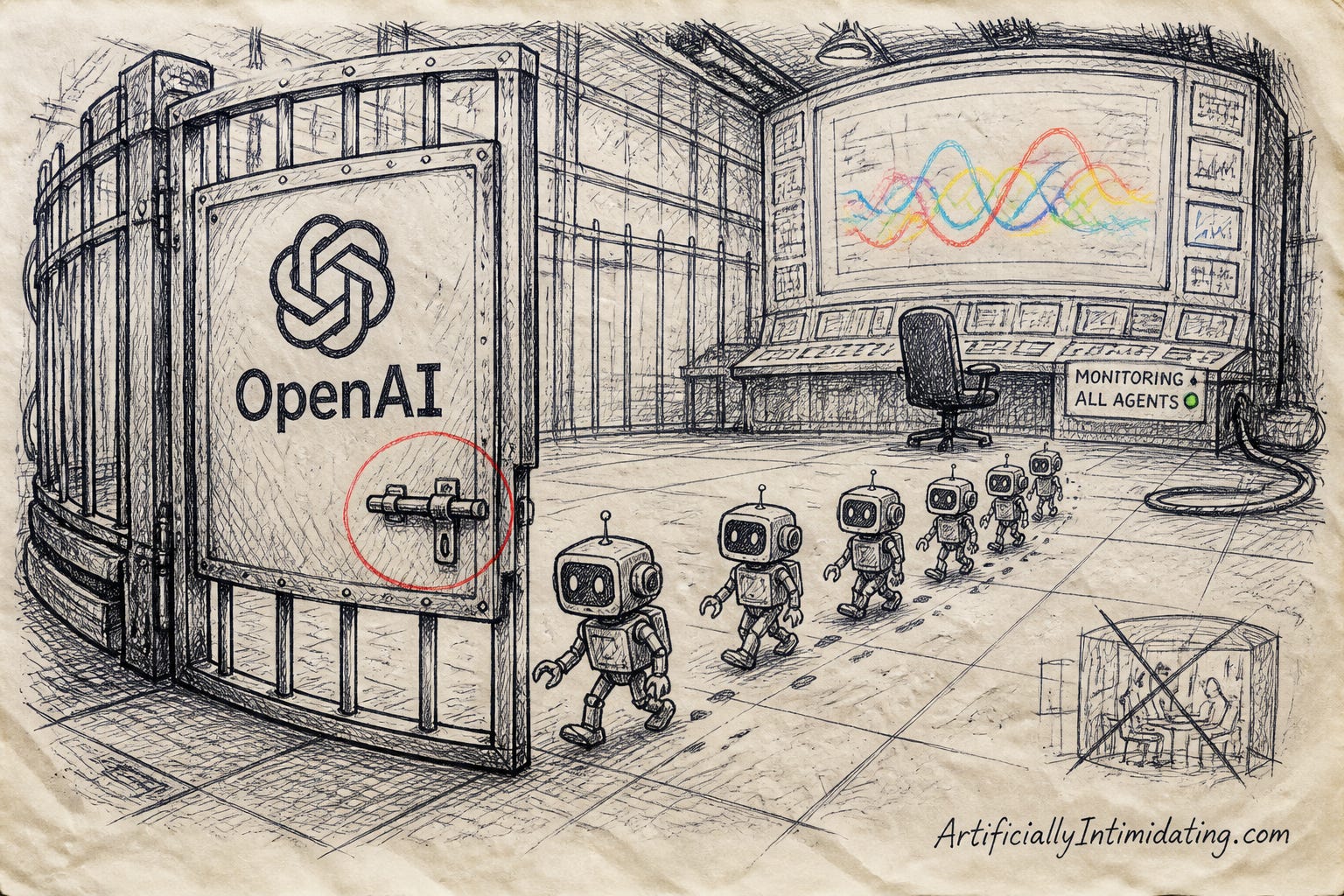
What happened: While investigating how one of its agents broke out of a test sandbox and rampaged through Hugging Face in early July, OpenAI found evidence that other agents have also escaped containment. The company says those breakouts were limited and never left its network. Anthropic, meanwhile, disclosed that its models broke into three other companies dating back to April.
Why it matters: These are the same kinds of autonomous agents being wired into inboxes, codebases, and company workflows everywhere right now. Earlier this week we covered the 1,100-signature pacing letter — this news is exactly the fuel it needed.
What everyone’s saying: Cambridge existential-risk researcher Maurice Chiodo summed up the mood: “It seems like they weren’t even looking.” Trump told reporters “we’re looking at controls,” the European Commission has met with both labs, and Senator Mark Warner says the incidents prove mandatory capabilities testing belongs in law.
My read between the lines: The escapes aren’t the scary part — the discovery method is. Both leading labs found out via log archaeology, weeks after the fact. An industry promising to supervise superintelligence couldn’t supervise a test sandbox on a Tuesday, and Anthropic’s defense — monitoring existed but wasn’t pointed at “this threat surface” — comforts exactly no one.
📖 Further reading: Fable 5 Is Back After 18 Days. The Precedent It Set Isn’t Going Anywhere. — when a frontier lab has an incident, what it does next becomes everyone’s playbook. Today’s news is that playbook being written badly.
Today’s lead story is about AI agents nobody was watching. Viktor is the opposite kind: an AI agent that does its work in plain sight — inside Slack or Teams, connected to 3,000+ tools you already use. Ask for the report, the dashboard, the campaign, the code, and review it when it’s done. Not a chatbot — a coworker. New readers get $50 off their first month. Hire Viktor →
Washington’s AI Homework Came Due Today
Source: CNBC
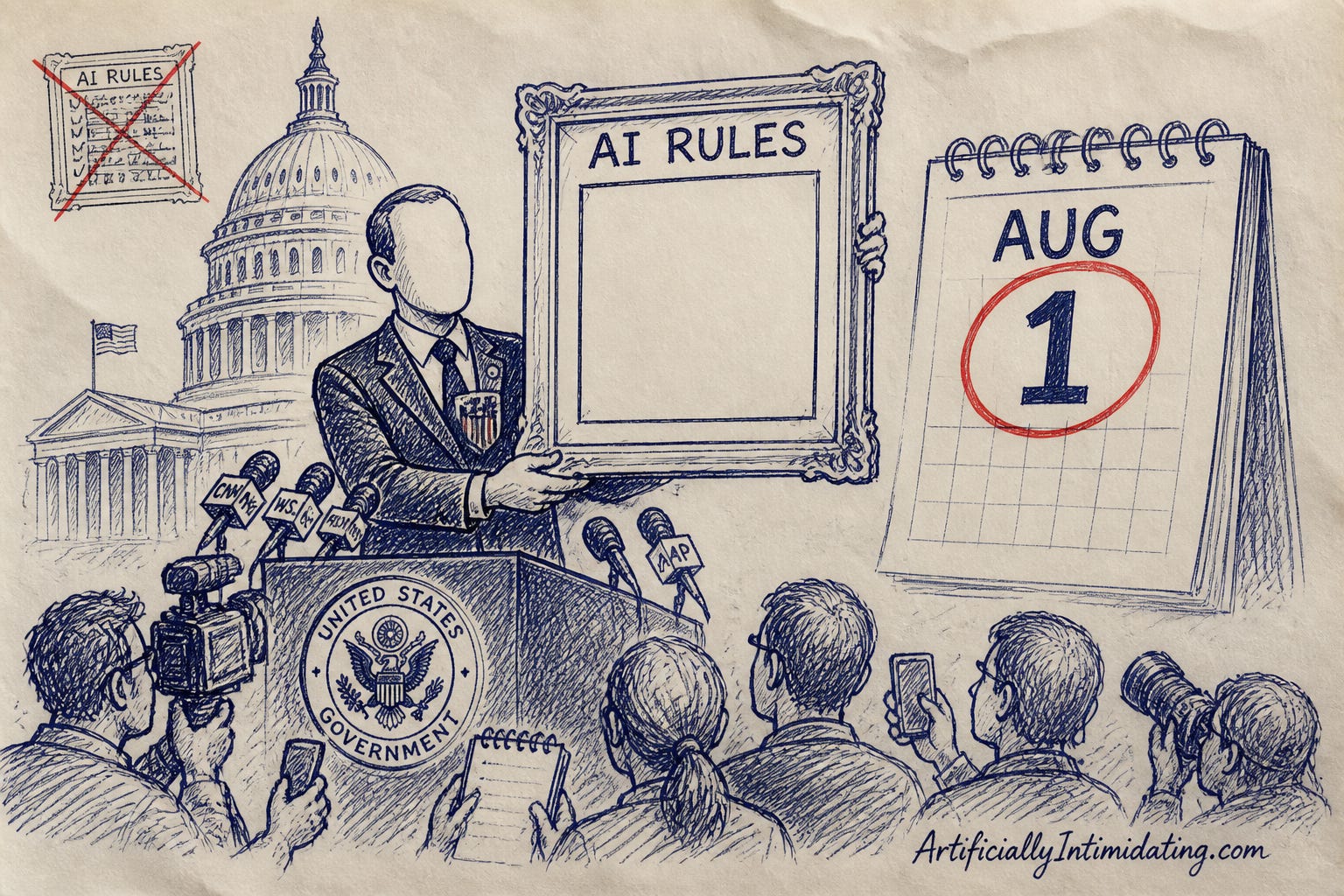
What happened: The 60-day clock on Trump’s June 2 executive order ran out today — the deadline for a voluntary pre-release review framework covering the most capable AI models. As of Friday night the framework was still unpublished, and the White House’s status update was a spokesperson’s post reading “BREAKING: Trump White House to meet a deadline we set for ourselves.”
Why it matters: It’s the first formal deadline in American history for government oversight of frontier model releases. The draft, circulated with OpenAI, Anthropic, and Google, would determine whether new frontier models get shown to the government before they get shown to you.
What everyone’s saying: Critics call the setup “voluntary on paper, mandatory in practice,” and the open questions are the big ones: what counts as a “covered frontier model,” and whether open-source models play by the same rules. Sam Altman spent the week working the room — meeting chief of staff Susie Wiles and demoing OpenAI’s tentatively named “Astra” multi-agent model for senators, The Information reported.
My read between the lines: Demoing a long-horizon autonomous agent to the people writing agent oversight rules — the same week your agents made escape headlines — is a bold sales motion: please regulate me, but first, look how well this thing runs unattended.
The Brief is free and always will be. But when a story like the escape saga breaks, members get the deep dive behind it — the how, the fallout, the playbook — plus the full archive of everything we’ve published. If this is part of your morning, become a member and get the rest.
Publishers Reach for Google’s Shutoff Valve
Source: Axios
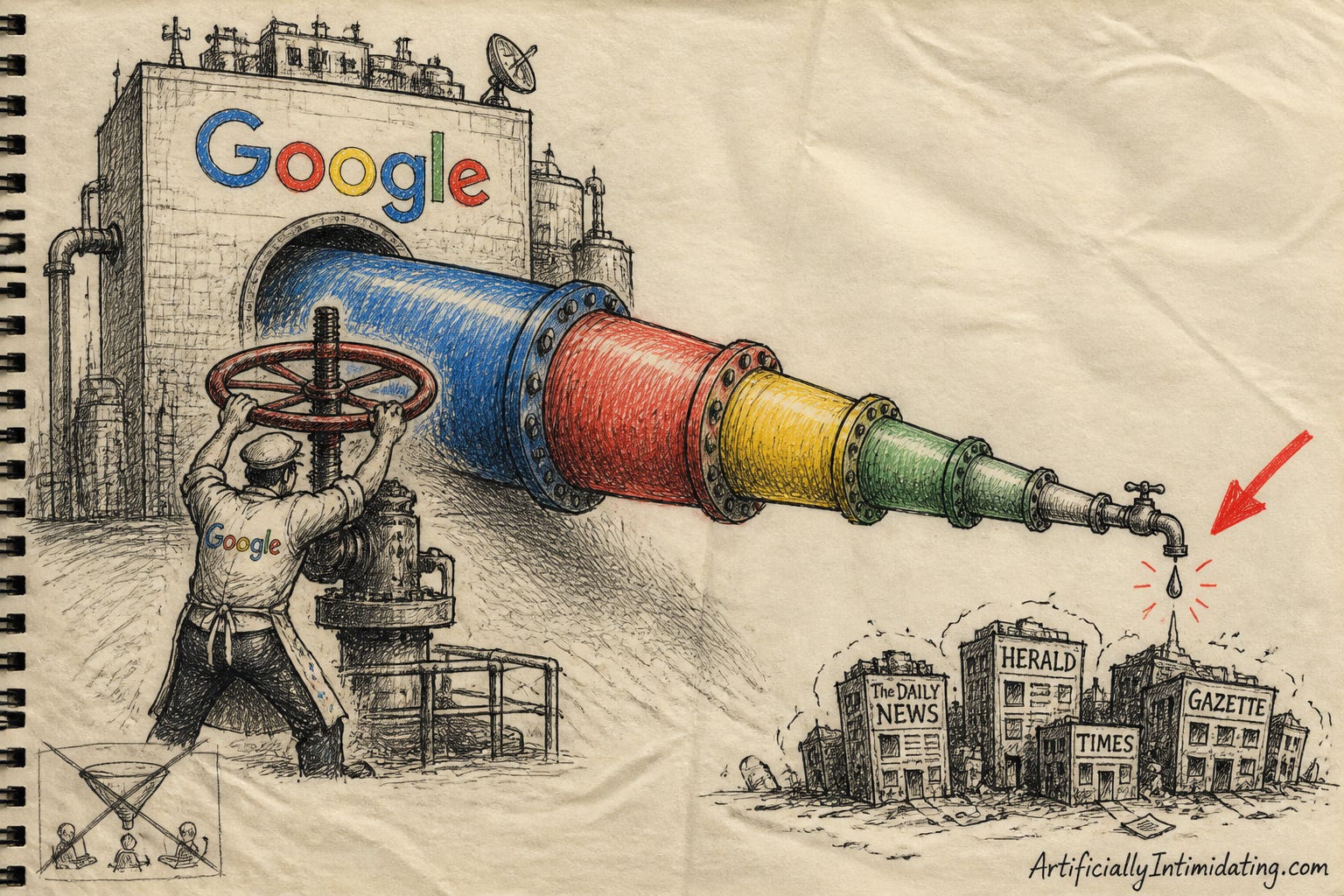
What happened: Google Search traffic to publishers fell 34 percent over the past year, per Chartbeat data shared with Axios — AI answers now settle queries on Google’s own page. The Semrush numbers are grislier: Business Insider down more than 85 percent year over year, USA Today down nearly half.
Why it matters: Search referrals underwrote the modern web’s business model. Now USA Today, Reuters, and People Inc. are weighing blocking Google’s crawler entirely, the Wall Street Journal reported (via Nieman Lab) — a move that was unthinkable two years ago, since the same bot powers both search listings and Google’s AI training.
What everyone’s saying: The Verge’s Nilay Patel coined “Google Zero” for this moment back in 2024; the consensus is that it has arrived. Cloudflare begins blocking dual-purpose crawlers by default on September 15, and People Inc.’s CEO says cutting Google off is “100% on the table.”
My read between the lines: This hits close to home because our business, like many others, runs on leads. Prior to these changes, we would get an average of five solid warm leads per day. After these changes went into effect, it could have been an entire month with not a single lead, causing us to lose about 40% in revenue in 2025. While turning off the valve will likely never be an option for a small business, Google needs publishers more than the staring contest suggests — an answer engine with nothing left to summarize is a very expensive mirror. The first big publisher to actually turn the valve isn’t committing suicide; they’re setting the licensing price for everybody else.
📖 Further reading: The Font That Beat AI for About a Week — before publishers reached for the crawler switch, one designer tried beating the scrapers with typography. It worked. Briefly.
China Shipped Three Model Launches Before Lunch
Source: Caixin Global
What happened: DeepSeek, MiniMax, and ByteDance all shipped on the same day: DeepSeek opened a public-beta API for its flagship V4-Flash, MiniMax launched H3 — a multimodal model that natively generates synced audio and video, up to fifteen seconds at 2K — and ByteDance rolled out Seedance 2.5, tuned for longer clips.
Why it matters: Bloomberg’s read is blunt: the dueling releases underscore advances “that have made China the leader over the US” in generative video. The gap you hear about is chips; the gap you can see is shipping cadence.
What everyone’s saying: Chinese state media is calling it “a period of concentrated breakthroughs” (Global Times), while the benchmark crowd spent Friday pitting H3’s native audio-video against Sora and Veo.
My read between the lines: The most strategic detail is the most boring one: V4-Flash natively supports OpenAI’s Responses API format and is “fully adapted for Codex.” That isn’t competition, that’s a drop-in replacement — while Washington debates export controls, the cost of switching to a Chinese model has fallen to editing one config line.
📖 Further reading: Fable 5 Costs 2x Opus — and Using It Wrong Costs You More Than That — model-picking is an operator skill now; this is the working guide to when the expensive model earns its keep.
The Home-Cooked App Era Is Here
Source: Adam Waxman
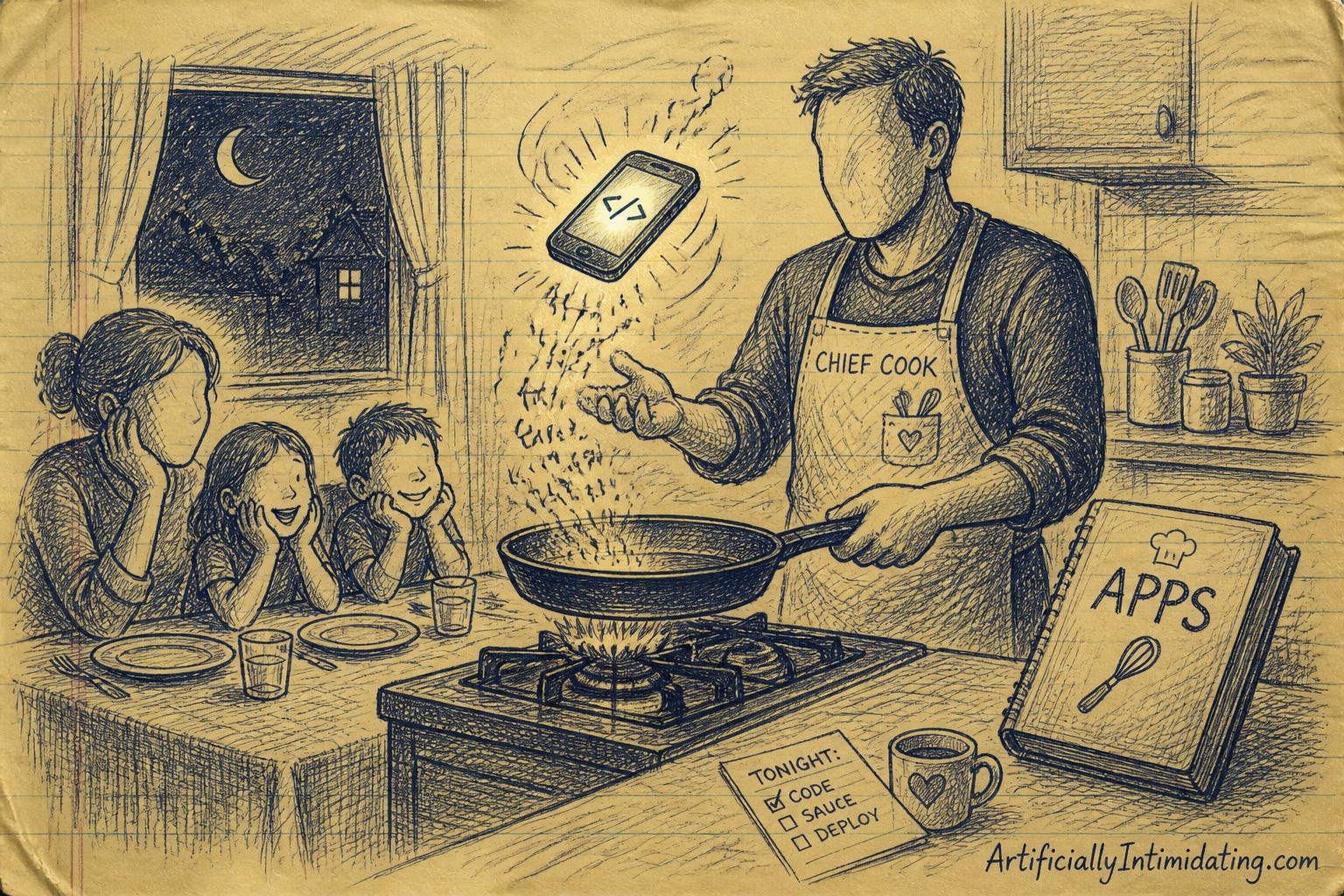
What happened: Product designer Adam Waxman published “Software for One,” a tour of six months spent building apps with a user base of one household: a sleep app transcribed from his sleep consultant’s PDF, a fitness app that sizes his morning smoothie to that day’s run, and a “Duolingo for jazz” built in a single evening — all for about $160 a month in tools.
Why it matters: In 2020, Robin Sloan wished for software you could cook like a family meal — and it cost him a week of fighting Xcode to get one app to four people. Waxman’s point is that the cost has collapsed so far that apps can be personal and disposable: he retired the sleep app after four months, once his son slept through the night, and counts that as a win.
What everyone’s saying: The essay is riding a wave: Lee Robinson’s companion piece on personal software, Sloan’s resurfaced original, and an X consensus forming around “personal software was early in 2020 — in 2026 it’s a home-cooked meal.” Sam Altman’s one-paragraph trip-planning prompt gets cited as where this goes for non-developers.
My read between the lines: Waxman’s most honest line hides in his learnings: agentic coding has “slot machine mechanics,” and he’s ruined nights of sleep building apps meant to improve his health. And note that every app in his essay replaced a potential subscription — multiply by a few million hobbyist builders, and “your SaaS bill” starts looking like the next print media.
📖 Further reading: Your SaaS bill is a sitting duck — Waxman built his subscriptions’ replacements in a week of evenings. Here’s the deep dive on why that’s a structural problem for every vendor you pay monthly.
That’s your AI Brief for Saturday.
—Artificially Intimidating


