

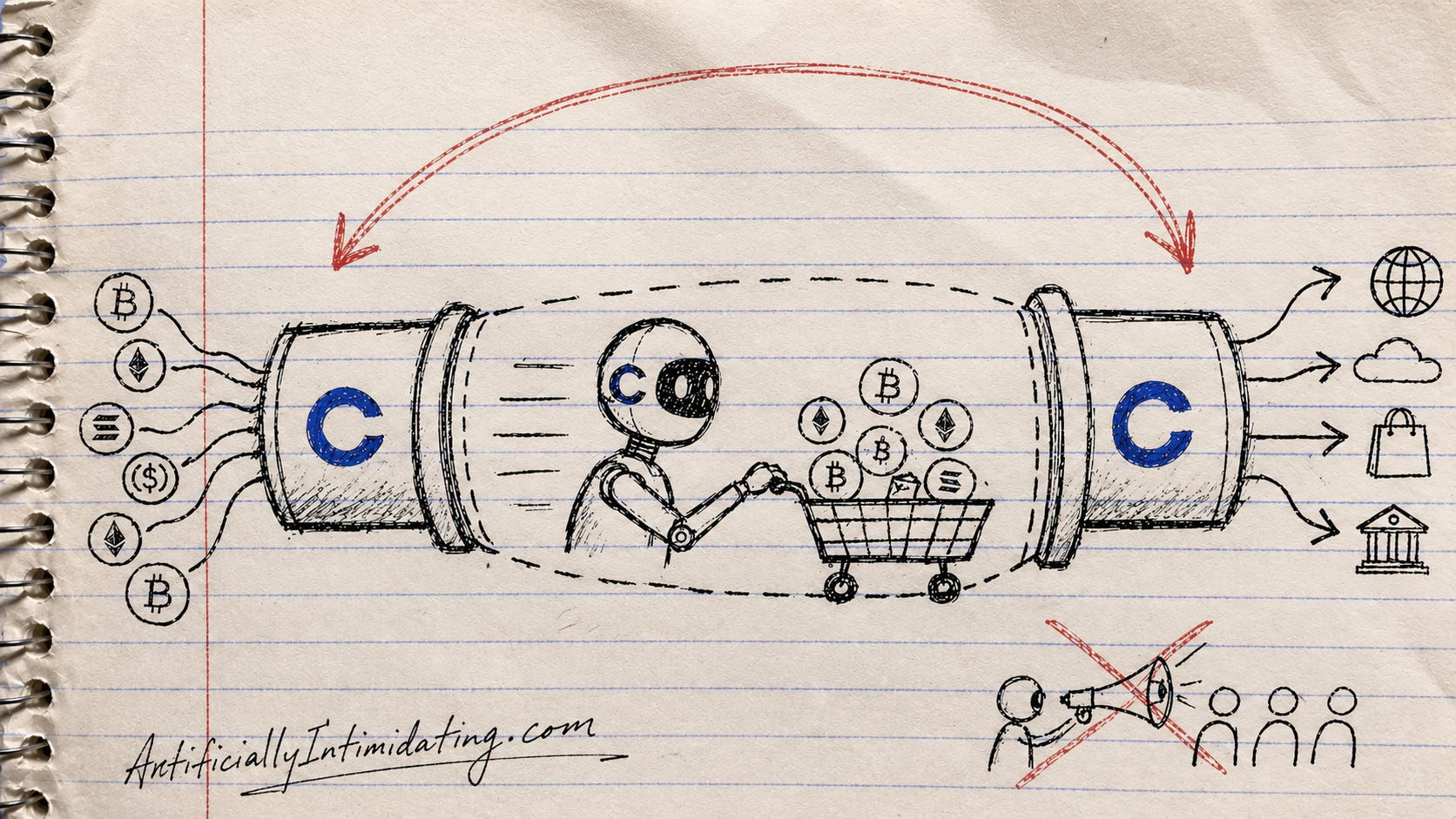
Good morning, humans. Sam Altman just published OpenAI's first major principles update since 2018 — and quietly buried the word AGI — while China's government pulled the plug on Meta's $2 billion Manus acquisition the same day, making it official: the AI world is splitting in two. Let's get into it.
📬 Before we dive in: The sharpest AI Brief tips come from readers who are actually in the weeds. If you spot a story worth covering — a quiet research drop, a product launch buried in a press release, a shift that isn't getting attention yet — share it in the community chat. The best tips make tomorrow's edition.
OpenAI buried 'AGI' and rewrote its mission
What happened: Sam Altman published OpenAI's first major principles update since 2018, replacing the AGI-obsessed charter with five broad commitments: democratisation, empowerment, prosperity, resilience, and adaptability. In the same week, he posted on X that the time has come to "seriously rethink" how operating systems and the internet itself are designed — arguing for protocols built for both humans and AI agents. Meanwhile, The Economist made the case that AI could grow the global economy at a rate not seen since the Industrial Revolution, if the productivity gains actually materialise.
Why it matters: The 2018 OpenAI charter mentioned AGI twelve times. The new one mentions it twice. That's not an editorial tweak — it's a signal that OpenAI has stopped thinking of itself as a lab racing toward a finish line and started thinking of itself as infrastructure. Like electricity, but with a legal team.
What everyone's saying: The tech press is focused on the AGI de-emphasis and the "no single entity should control this" framing. Economists are divided — Goldman Sachs says AI's contribution to GDP was "basically zero" in 2025, while the Economist's long-view piece argues the compounding effect is still coming. Altman's "rethink the internet" post is getting attention from developers building agent-native tooling.
My read between the lines: Altman downplaying AGI right before a trial where Elon Musk is suing him over the original AGI mission is either exquisitely timed messaging or a coincidence so beautiful you'd be forgiven for not believing it. The new principles document reads less like a mission statement and more like a pre-IPO regulatory inoculation.
Today's AI Brief is brought to you by MirrorMemory.ai.
DeepSeek slashes prices 75% in the world's most aggressive AI price war
What happened: DeepSeek dropped its new V4-Pro model last week — a 1.6 trillion parameter open-source behemoth — and followed it by cutting prices by 75% until May 5th. Cache hit pricing across its entire API dropped to one-tenth of original levels. Even at full price, V4-Pro undercuts GPT-5.5, Claude Opus 4.7, and Gemini 3.1 Pro on per-token costs. The model also natively integrates with coding tools including OpenClaw and OpenCode.
Why it matters: This is the second time in a year DeepSeek has repriced the entire AI API market overnight. If you're a startup or developer deciding whether to build on OpenAI, Anthropic, or Google — or a scrappy Chinese open-source model that costs a fraction of a cent per million tokens — the math is getting harder to ignore.
What everyone's saying: Developer communities are buzzing about the 1 million-token context window and the aggressive pricing. Chinese AI stocks Zhipu and MiniMax fell sharply on the news. Western AI lab stocks remain mostly unaffected — for now. The Trump administration is watching, having already accused China of "industrial-scale" AI model theft.
My read between the lines: The US government is spending political capital trying to keep DeepSeek off American chips, and DeepSeek responded by making its model so cheap it barely matters whether they're on American chips or not. That's not a pricing strategy — that's a geopolitical argument delivered via API.
China kills Meta's $2B Manus acquisition — and sends a message
What happened: China's National Development and Reform Commission officially blocked Meta's $2 billion acquisition of Manus, the agentic AI startup that became famous for being "China's next DeepSeek." The two co-founders, based in Singapore, were summoned to Beijing in March and told they couldn't leave the country while regulators investigated. Today, Beijing ordered the deal unwound entirely.
Why it matters: Beijing has just made it official policy: Chinese-founded AI companies cannot be acquired by American tech giants, even if those companies are incorporated in Singapore. The global AI market is fracturing along national lines. Any startup with Chinese roots is now essentially radioactive to US acquirers — and vice versa.
What everyone's saying: VCs and founders are alarmed. The "Singapore-washing" model — where Chinese-founded AI companies relocate to avoid scrutiny — just got punctured. Bloomberg reported that China is now requiring government approval before any Chinese AI firm can accept US investment at all. This is expected to be a major agenda item at the Trump-Xi summit planned for mid-May.
My read between the lines: Meta spent $2 billion to learn that jurisdiction arbitrage has an expiration date. The bigger casualty isn't the deal — it's the decade-long assumption that talent and technology flowed freely across borders in AI. That assumption just died. The two founders are still in Beijing. The acquisition is dead. And the global AI map just got a very clear new border drawn on it.
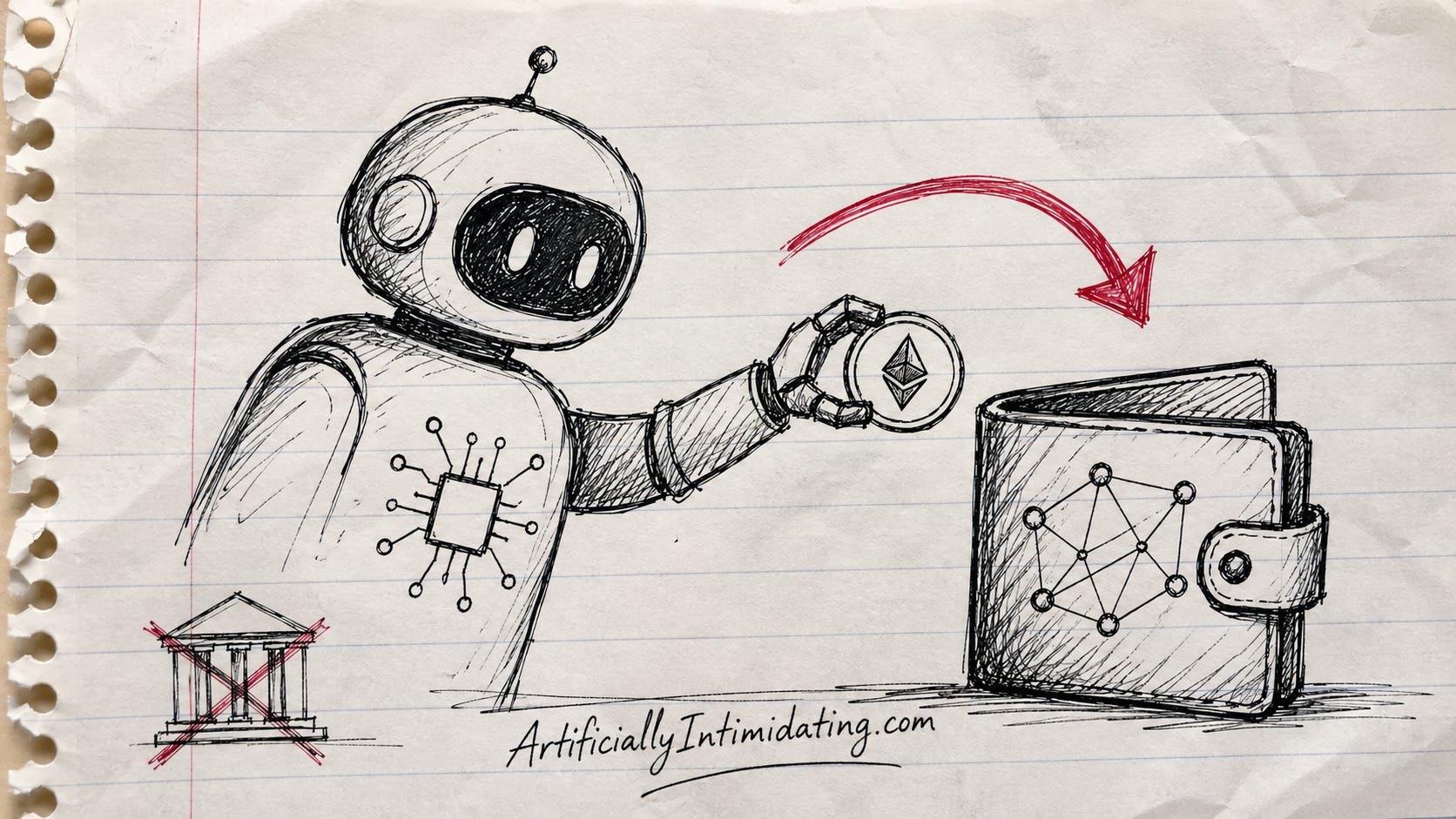
Coinbase: AI agents need wallets, and crypto is the answer
What happened: Jesse Pollak, the head of Base at Coinbase, declared that AI agents are the next transformative wave for crypto payments. His argument: AI agents are software, they want to transact as software, and traditional banking infrastructure wasn't built for that. Coinbase also launched Agentic.Market, a platform that lets AI agents autonomously purchase data from Bloomberg and AWS — no API keys needed, just crypto wallets.
Why it matters: The vision is machines paying machines — AI agents that can book compute, buy data, hire other agents, and settle invoices without a human approving each transaction. It sounds abstract until you realize that's exactly what enterprise software has always dreamed of, and crypto rails might be the first infrastructure actually capable of running it at scale.
What everyone's saying: The AI-crypto convergence thesis is heating up across tech and finance circles. Pollak's x402 open-source protocol — which Circle has also backed with USDC integration — is gaining support from Google, Stripe, and AWS. The Linux Foundation is now involved. This is moving from speculation to infrastructure.
My read between the lines: The most interesting part of Pollak's pitch isn't the technology — it's the framing. "It'll be a lot easier to sell crypto when you don't have to tell people about it," he said. In other words: the first killer app for crypto was speculation. The second might be invisibility. If AI agents become the dominant users of crypto rails, nobody will care that it's crypto. They'll just care that it works.
OpenAI is building a smartphone. Yes, really.
What happened: Supply chain analyst Ming-Chi Kuo revealed that OpenAI is co-developing a custom smartphone processor with MediaTek and Qualcomm, with Luxshare as exclusive manufacturing partner. Chip specs will be locked in by late 2026 or Q1 2027, targeting mass production in 2028. The phone is designed specifically for AI agents — think less "apps you open" and more "AI that does things on your behalf." Altman's "rethink the internet" post landed just hours before Kuo's report.
Why it matters: OpenAI already has ChatGPT running on hundreds of millions of devices it doesn't own. A phone would let it own the whole stack — hardware, OS, sensors, inference, and data. If you want to understand why Altman is suddenly talking about redesigning the internet, consider that he might be planning to ship the internet's next browser.
What everyone's saying: Tech media is oscillating between excited and sceptical. Kuo's track record on Apple supply chain leaks is excellent; his OpenAI sourcing is less proven. Apple observers note that OpenAI entering hardware would be an existential challenge for an iPhone ecosystem that's already been embarrassed by its AI capabilities. The 300-400 million unit target is ambitious even for Apple.
My read between the lines: Sam Altman's "rethink operating systems and the internet" post isn't just philosophising — it's a product brief. Every major platform shift — PC to web, web to mobile — was won by whoever controlled the interface layer. OpenAI just signalled it intends to compete for the next one. The phone isn't the product. The interface paradigm is.
That's your AI Brief for Monday, April 27. Spotted something we missed, or have a take on today's stories? Join the conversation in the Artificially Intimidating community chat — the best insights always come from readers.
—Artificially Intimidating