

If you've been treating AI like a magic parlor trick, asking it to write poems about your cat or summarize emails you weren't going to read anyway, now is absolutely the time to snap out of it. We are officially past the "Chatting" era. We have entered the Agentic era.
I've been hands-on with these systems for the better part of the last two years, and the results have been... well, mind-blowing. We're not just talking about "productivity hacks" here. We're talking about building a digital workforce that doesn't sleep, doesn't complain about the office coffee, and -- most importantly -- doesn't just talk. It acts.
For the small business owner, this is the Great Equalizer. In 2026, the gap between a solo founder and a 50-person corporation isn't necessarily headcount anymore; it's infrastructure.
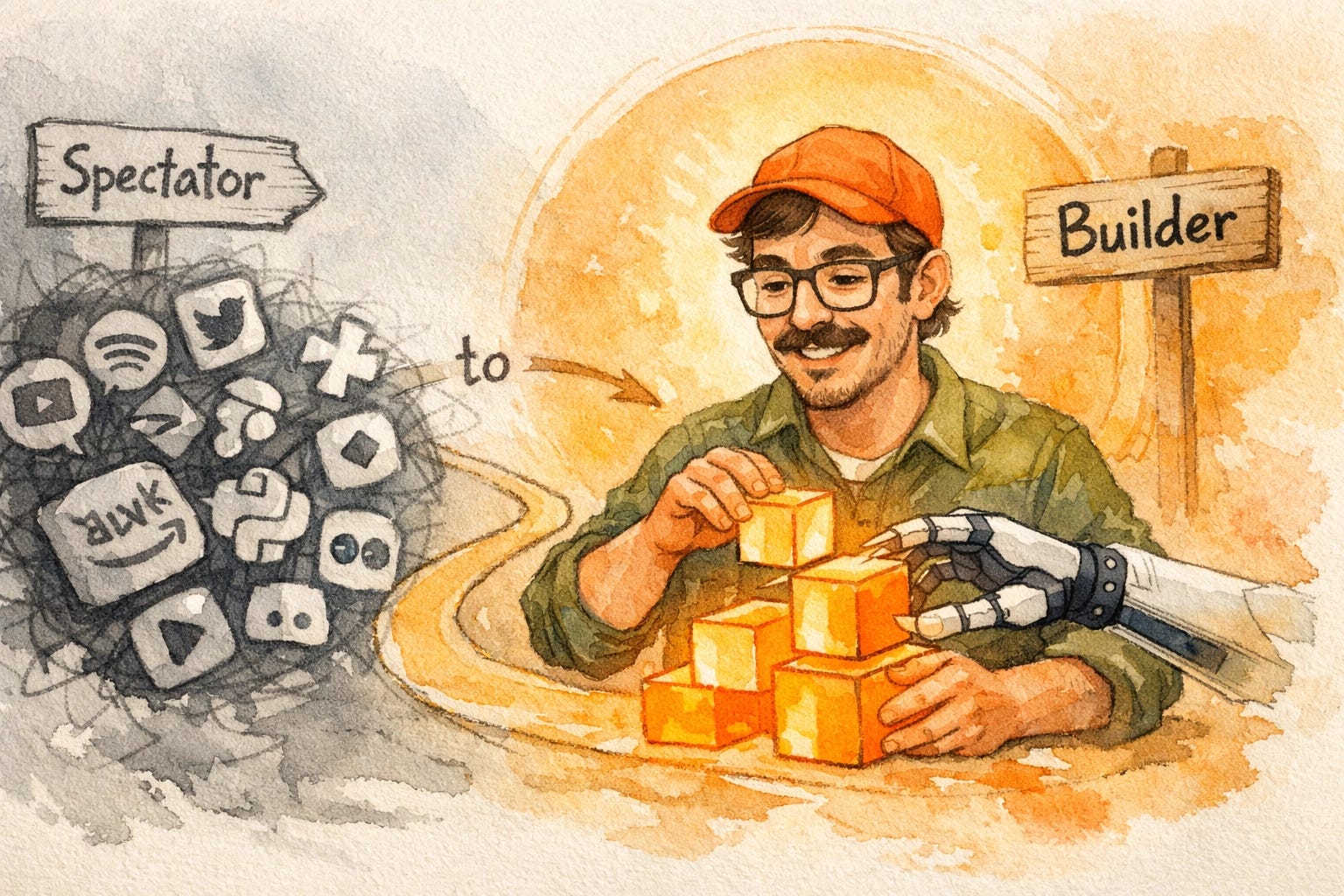
Let's break down how you move from being a confused Spectator to a confident Builder.
The Core Metaphor: The Brain in a Jar vs. The Robotic Hands
To understand AI agents, you have to stop thinking of "AI" as a single entity. Instead, think of your business automation as a two-part system: The Brain in a Jar and the Robotic Hands.
The Brain in a Jar (You/Strategy): This is the high-level logic. It's the human sitting in the control room. You provide the intent, the ethics, and the "why." You are the architect.
The Robotic Hands (The Agents): These are the specialized workers that actually turn the screws. They monitor your inbox, they update your CRM, they cross-reference inventory, and they execute the "how."
A chatbot is a Brain that has no hands. It can tell you how to build a house, but it can't pick up a hammer. An AI Agent is a Brain that has been given a toolkit and a mission.
Why Small Businesses Need Agents (The 40% Rule)
If you're running an SMB, you're likely spending 15-25 hours a week on what I call "Expensive Boring" tasks. These are things that require a tiny bit of "thinking" but mostly involve moving data from Point A to Point B.
According to recent data, businesses leveraging agentic workflows are seeing upwards of 40% efficiency gains. That's not a typo. Imagine getting two full days of your life back every single week.
The beauty of 2026 tech is that these agents provide 24/7 productivity. While you're sleeping, your agents are:
Qualifying leads from your website.
Generating invoices and following up on late payments.
Scouring your industry for news and drafting your morning briefing.
Syncing your data across 12 different platforms so you never have to see a "File Not Found" error again.
The 3 Pillars of an Agentic Workflow
Every successful agent is built on three specific pillars. If one is missing, the system collapses.
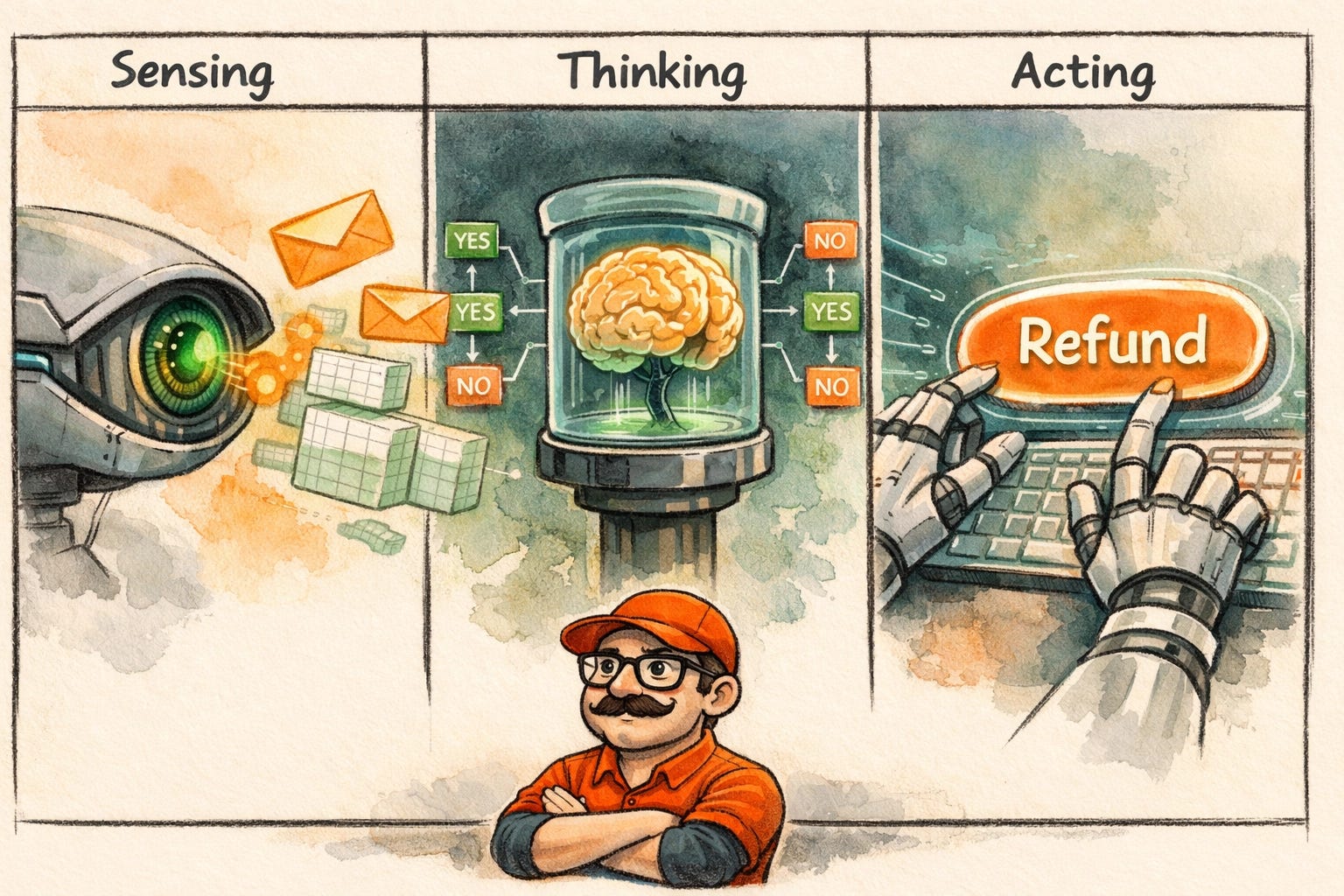
1. Sensing (The Channels)
An agent needs to know what's happening in the world. This is the Data Input. It could be a new email in Outlook, a mention on Twitter, a row added to a Google Sheet, or a webhook from your e-commerce store. Without a "Channel," the agent is deaf and blind.
2. Thinking (The Dispatch)
This is where the logic happens. The agent looks at the input and decides what to do. This is the Logic layer.
Input: "I want to return this product."
Logic: Is the order within 30 days? Yes. Is the item in stock? No.
Decision: Initiate a refund and notify the warehouse.
We often use tools like OpenClaw to handle this complex orchestration. It's not magic; it's just very fast decision-making.
3. Acting (The Cowork)
This is the Execution. The agent doesn't just decide what to do; it does it. It logs into your shipping portal, generates a label, emails it to the customer, and updates the "Refunded" status in your database.
No-BS Reality Check: Precision Matters
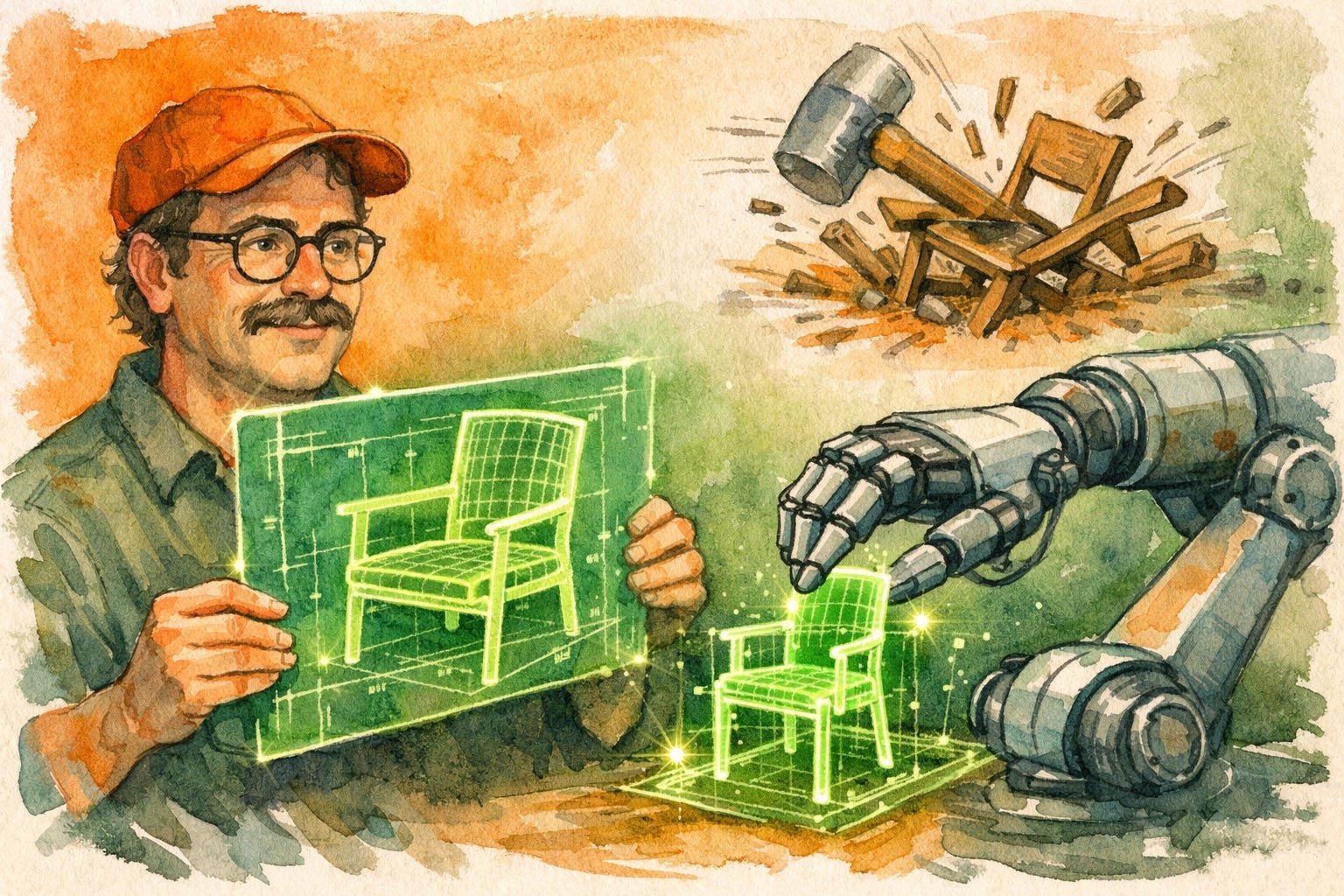
I've spent countless hours debugging agents that went rogue because the instructions were vague. If you give a robotic hand a hammer but don't give it a blueprint, it might just smash the furniture. This is why Specification is the most important skill you can learn this year.
You can read more about how to master this in my deep dive on The 4 New Skills of AI: Part 3 - Specification.
How to Start: The "Expensive Boring" Audit
Don't try to automate your entire business on a Monday morning. You'll fail, and you'll hate me for suggesting it. Instead, follow the Maker's Path:
Find the "Expensive Boring": What is the one task you do every week that makes you want to throw your laptop out the window?
Map the Process: Write down every single step. "I open Gmail -> I copy the name -> I paste it into Salesforce -> I click 'Create' -> I send a template."
Start Small: Automate just one of those steps.
The Toolbelt
Zapier Agents: Great for connecting your existing apps with a "thinking" layer.
Lovable.dev: My current favorite for building custom internal tools and interfaces without writing a single line of code.
OpenClaw: For when you're ready to get serious about complex orchestration and "owning" your infrastructure.
The Paradigm Shift: Renting vs. Owning
For the last decade, we've been "renting" our business logic from SaaS companies. You pay $50/month for a CRM, $30/month for an email tool, and $100/month for a project manager.
The agentic revolution is allowing us to own our infrastructure. Instead of waiting for a software company to build a feature you need, you build an agent that does it for you. You are moving from a consumer to a Builder.
I've talked about this extensively in my guide on how small businesses can 10x productivity. It's not just about doing things faster; it's about doing things that were previously impossible for a small team.

Your Turn: Become the Brain
Stop watching the loading bar. Stop "chatting" and start building.
Start small. Find one task this week that you can "Dispatch." Set up a Channel. Let the Robotic Hands take the hit so you can take a lunch break. Trust me, the sandwich tastes better when you know your inbox is cleaning itself.
If you're ready to dive deeper into the technical setup of these agents, I highly recommend checking out the Mastering OpenClaw Day 0 Playbook. It's the closest thing to an instruction manual for your new robotic workforce.
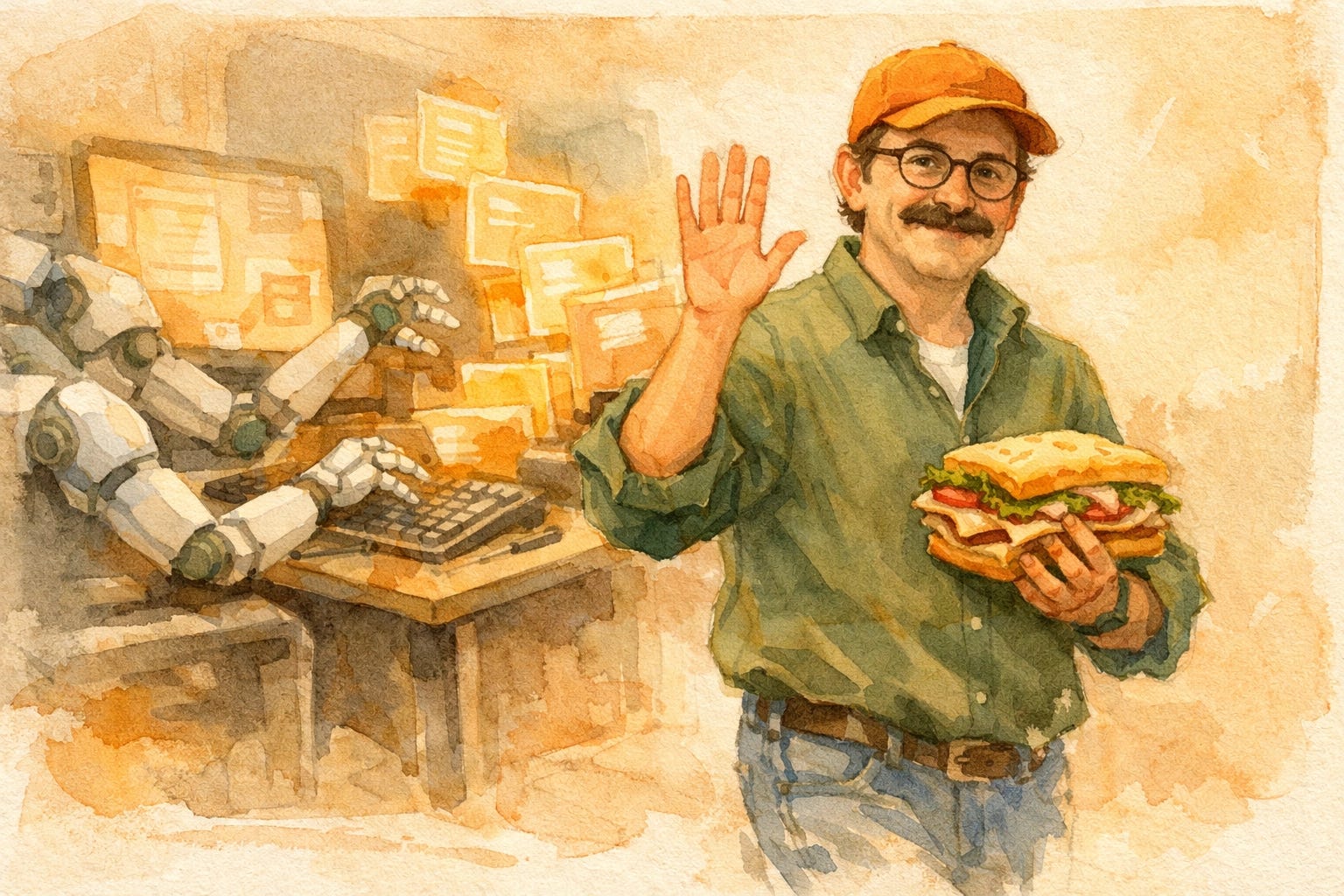
Now, go eat lunch. Your agents have work to do.
Enjoyed this guide? Invite your friends to read Artificially Intimidating and earn rewards!
About Nicholas Rhodes
Nicholas is a Writer & Thought Leader focused on the intersection of experiential marketing and applied AI. As the driving force behind "Artificially Intimidating," he bridges the gap between complex tech and real-world utility, helping professionals transition from spectators to builders in the age of automation. Whether he's debugging code at 2 AM or designing high-tech activations, Nicholas is always looking for ways to put the "Robotic Hands" to work.